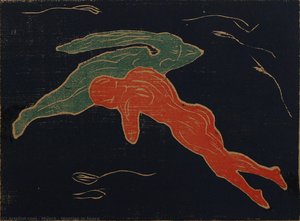
Acrylic On Canvas.

§ 1Catalogue data


§ 2Abstract
Kolekcinio objekto aprašas
Experience Edvard Munch’s iconic black and white winter scene – a haunting depiction of a snowy village with a church and clock, reflecting the artist's profound exploration of anxiety and mortality. Discover this evocative masterpiece and bring its timeless beauty into your home.
 Skaityti daugiau
Autoriaus biografija
Pažinkite Edvardą Munchą (1863–1944), ekspresionizmo pionierį! Atraskite jo ikoninius kūrinius, pavyzdžiui, 'Šauksmą', bei meno tyrinimus apie nerimą, mirtį, meilę ir psichologines temas. Norvegų dailininkas, paveikęs XX a. avangardą.
§ 3Commentary
Unveiling the Silent Echoes of Winter: An Exploration of Munch’s “Untitled (2990)”
Edvard Munch's "Untitled (2990)" isn't merely a depiction of a snowy village; it’s a profound meditation on mortality, isolation, and the unsettling beauty of a world steeped in melancholy. Created during a period of intense personal struggle for the artist – marked by the loss of loved ones and his own battles with mental health – this black-and-white composition resonates with an almost unbearable emotional weight. The scene unfolds with stark simplicity: a small village nestled beneath a heavy blanket of snow, dominated by a church spire that seems to pierce the oppressive sky. Houses huddle together, their roofs burdened with drifts, and a solitary clock hangs as a poignant reminder of time’s relentless march. This isn't a postcard view; it’s a carefully constructed atmosphere designed to evoke a deep sense of unease and contemplation.
- Subject Matter: The painting centers on a winter village, a recurring motif in Munch’s work that often served as a metaphor for the fragility of life and human connection.
- Style & Technique: Executed in stark black and white, the image employs a graphic, almost woodcut-like quality, reminiscent of early Expressionist techniques. The deliberate lack of color amplifies the emotional intensity, stripping away any superficial beauty to reveal the underlying anxieties. Munch’s brushwork is loose and gestural, contributing to the painting's sense of movement and instability.
The Weight of Symbolism: Mortality and Isolation
Munch was deeply preoccupied with themes of death and illness throughout his career, and “Untitled (2990)” is a prime example. The church, a traditional symbol of faith and salvation, here appears diminished and distant, perhaps reflecting a loss of spiritual comfort or the artist’s own questioning of religious dogma. The clock, a recurring image in Munch's work, represents the passage of time and the inevitability of death. Its presence underscores the fleeting nature of existence and the vulnerability of human life. The solitary bird perched on the building is often interpreted as a symbol of hope or perhaps a fragile messenger – a reminder that even amidst despair, there remains a glimmer of possibility.
- Symbolism: The composition’s starkness and the isolated village contribute to a feeling of profound loneliness and alienation.
- Historical Context: Created in the late 19th century, this work aligns with the broader Expressionist movement, which sought to convey subjective emotions rather than objective reality. Munch was influenced by Symbolism, particularly its focus on psychological states and spiritual themes.
A Window into Munch’s Soul
“Untitled (2990)” is more than just a beautiful image; it's a visceral expression of Edvard Munch’s inner turmoil. The painting reflects his personal struggles with grief, loss, and mental illness – experiences that profoundly shaped his artistic vision. Munch himself described the genesis of this work as stemming from a desire to capture “the feeling of being alone in the world.” This intimate portrayal of emotional vulnerability is what makes the artwork so powerfully resonant today. It’s a testament to Munch's ability to transform personal suffering into universal symbols of human experience.
Perfect for Interior Design and Art Collection
This hand-painted reproduction captures the essence of Munch’s masterpiece, offering a stunning addition to any interior space or art collection. The meticulous attention to detail and the faithful recreation of Munch's distinctive style ensure that this artwork will be a timeless treasure. Whether you are seeking to evoke a sense of quiet contemplation in your home or to add a touch of artistic intrigue to your gallery, “Untitled (2990)” is an exceptional choice.
Klausimai ir atsakymai
Ar „untitled (2990)“ kūrijas Edvardas Munkas žinomas에도 kitais vardais?
Edvardas Munkas taip pat žinomas (a) pavadinimais Edvard Munch, E. Munkas.
Kokia yra „untitled (2990)“ – Edvardas Munkas dominuojanti spalva?
Dominuojanti „untitled (2990)“ – Edvardas Munkas spalva yra Green to Violet Spectrum. Šis tonas yra pagrindinė paletės spalva.
Ar galiu užsisakyti „untitled (2990)“ aliejinę reprodukciją?
Rankumų „untitled (2990)“ – Edvardas Munkas rankumų kopijos yra parduodamos ši ši internetinė svetainė svetainėje: rankomis dažyta aliejaus reprodukcija ant lininio drobos, užsakomos per jos Rankų darbo aliejinis reprodukcija puslapį.


 Perjungti į spausdinamus版作品


 Dėl meno kūrinių ar reprodukcijų, kurių bet kuri pusė yra didesnė nei 105 cm (apie 41 inch), rėmas bus siunčiamas kaip išskaidytas surinkimo rinkinys. Šis metodas užtikrina saugų pristatymą ir apsaugo nuo transportavimo metu galimos žalos.