

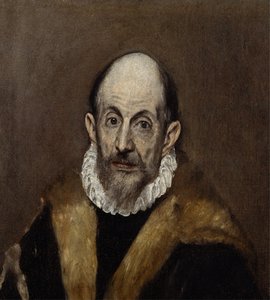
1610. Acrylic On Canvas, 70.0 x 62.0 cm. Prado muziejus.

§ 1Katalogo duomenys

- 70.0 x 62.0 cm


§ 2Abstraktus
Kolekcinio objekto aprašas
 Skaityti daugiau
Autoriaus biografija
Atraskite El Greco dramatiškąjį meną! Apžvelkite Mannerizmo šedevrus, religines scenas ir ištemptas figūras. Pionierius ekspresionizme ir kubizme – apžiūrėkite jo ikoninius paveikslus!
§ 3Komentaras
El Greco: A Master of Dramatic Expression
Doménikos Theotokópoulos, universally known as El Greco (meaning “the Greek”), stands as one of the most singular figures in the history of Western art. His dramatic and intensely emotional works bridged the gap between the Renaissance and the Baroque periods, while simultaneously forging a distinctly personal style—a style that continues to captivate audiences centuries later. This remarkable artist’s oeuvre defies easy categorization, blending Byzantine traditions with innovations drawn from Venetian Mannerism and Florentine Renaissance influences, resulting in an unparalleled visual language.The Painting: Jerónimo de Cevallos
“Jerónimo de Cevallos” by El Greco is a captivating portrait executed in 1613 during his final years in Toledo, Spain. Measuring 70 x 62 cm and housed at the Museo del Prado, this oil on canvas piece exemplifies El Greco’s signature technique—tortuously elongated figures rendered with vibrant pigmentation that borders on hallucinatory intensity. The artist skillfully employs chiaroscuro, creating a dramatic contrast between light and dark to sculpt the subject's form and imbue it with palpable emotion.
The Artist: El Greco (Doménikos Theotokopoulos)
Born in Crete around 1541, Doménikos Theotokópoulos embarked on a transformative artistic journey that began within the confines of Byzantine iconography. Trained rigorously in Constantinople’s monasteries, he mastered the conventions of Byzantine art—precise detail, symbolic color palettes rooted in theological significance, and an unwavering devotion to portraying spiritual ideals. However, El Greco's restless spirit propelled him eastward to Venice and Rome, where he absorbed the dynamism of Mannerism and the opulent splendor of the Venetian Renaissance.
Symbolic Significance & Artistic Context
El Greco’s stylistic choices were initially met with bewilderment by his contemporaries. Yet, his work resonated deeply with artists of subsequent generations—particularly those influenced by Romanticism—who recognized in it a profound expression of inner turmoil and spiritual yearning. The elongated figures, often depicted in poses that defy anatomical realism, serve as conduits for conveying psychological states—fear, sorrow, ecstasy—rather than merely representing physical likenesses. Furthermore, the dark background amplifies the luminosity of the subject’s flesh tones, creating an illusionistic depth that enhances the painting's dramatic impact.
Relevance and Legacy
The Museo del Prado, established in Madrid during the reign of Philip II, stands as one of Europe’s premier art museums—a repository of masterpieces spanning from the Gothic to the Romantic eras. El Greco’s “Jerónimo de Cevallos” occupies a prominent position within its collection, alongside other seminal works by Titian, Rubens and Velázquez. Its enduring appeal testifies to El Greco's genius as an artist who transcended stylistic boundaries and achieved a level of expressive power unmatched by his peers—a legacy that continues to inspire admiration and scholarly debate.
Klausimai ir atsakymai
Kokia bendra „Jerónimo de Cevallos“ – El Greko nuotauda?
„Jerónimo de Cevallos“ dvelkia Dramatic atmosfera.
Atsižvelgiant į spalvas, oje rekomenduojamas „Jerónimo de Cevallos“ – El Greko?
Atsižvelgiant į jo Earthy spalvas, kūrinys „Jerónimo de Cevallos“ puikiai tiktų Living Room kambariui.
Kokia „Jerónimo de Cevallos“ – El Greko emocinė nuotaika?
„Jerónimo de Cevallos“ siejama su Mysterious jausmu. Emocinis tonas aprašo įspūdį, kurį sukelia kūrinys.


 Perjungti į spausdinamus版作品


 Dėl meno kūrinių ar reprodukcijų, kurių bet kuri pusė yra didesnė nei 105 cm (apie 41 inch), rėmas bus siunčiamas kaip išskaidytas surinkimo rinkinys. Šis metodas užtikrina saugų pristatymą ir apsaugo nuo transportavimo metu galimos žalos.


