


 Peržiūrėti realybėje
 Pasidalinti
 Dalintis
 Išsamiau

 Atsisiųsti
 Panašūs eksponatai
 Rentgeno nuotrauka
 Automatinė diorama
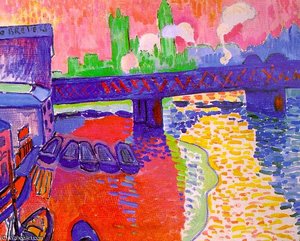
Tower Bridge
 Impressionism
 1946
1946 84.0 x 64.0 cm
 The National Archives
 Skaityti daugiau
Giclée / Meno spausdinimas
Muziejų lygio „giclée“ arba drobos spausdinimas: greita gamyba ir lankstios apdailos parinktys. ( Pirkti rankomis tapytą paveikslą Pirkti vaizdą)




































Pasirinkite iš mūsų nustatytų dydžių, atitinkančių originalaus meno kūrinio proporcijas.

Galite nurodyti savo matmenis, kad vaizdas atitiktų konkretų rėmą ar erdvę. Jei pasirinktas dydis nesutaps su originalaus paveikslėlio proporcijomis, mes arba apkirpsime kūrinį, arba išplėsime vaizdą naudojant veideliu atspindėtą arba vientisą šoną. Skaitmeninis maketas bus išsiųstas jums patvirtinti prieš pradedant gamybą.
Atkreipkite dėmesį, kad ekrane matomas vaizdinys neatspindi tikrojo apkirpimo ar išplėtimo. Tik maketas tiksliai parodytų galutinę kompoziciją.
Nors galima rinktis ir individualius dydžius, rekomenduojame pasirinkti vieną iš išanksti nustatytų matmenų, kad būtų išlaikytos originalios proporcijos.
Pristatymas visame pasaulyje () per 2 weeks, o ne įprastas 4/5 savaičių laikotarpis. (20 rugpjūtis)

Nemokamas greitasis pristatymas visame pasaulyje

Aukštos kokybės lininis drobė

Pilnas siuntimo draudimas

Muitinės mokesčių grąžinimo garantija

Tikro spalvų atitikimo garantija

60 dienų grąžinimo politika (tik esant gamyklinėms defektams)

100% pinigų grąžinimo garantija

Nuolaida už kelias reprodukcijas
 Stiklo variantas prieinamas tik pasirinkus dydį iki 110 cm

Tower Bridge
Giclée / Meno spausdinimas
Reprodukcijos matmenys
-


Galutinė kaina
$ 64
panašūs kūriniai




Autoriaus biografija
Eve Kirk: A Londoner’s Vision of Urban Life
Eve Kirk (1900-1969) wasn't a name that immediately leaps to mind when discussing the titans of British watercolor, yet her quietly powerful depictions of London—its architecture, its people, and its ever-shifting atmosphere—offer a unique and compelling perspective on a pivotal era. Born in the heart of London, Kirk’s artistic journey was shaped by a deep connection to her city, a fascination with its layered history, and an evolving approach to capturing its vibrant energy. Her career spanned several decades, marked by both independent exploration and significant commissions, ultimately establishing her as a respected figure within the British watercolor scene.
Kirk’s early artistic training began at the Slade School of Fine Art in 1919-22, an institution renowned for its rigorous academic standards and emphasis on observation. This foundational period instilled in her a strong understanding of drawing and composition—skills she would later skillfully employ to render the complexities of urban landscapes. Following her studies, she embarked on a period of extensive travel throughout Europe, particularly France and Italy, immersing herself in diverse artistic traditions and absorbing new techniques. These experiences broadened her visual vocabulary and informed her evolving style, moving beyond purely academic representation towards a more expressive and personal approach.
The Rise of an Urban Observer
Returning to London in the 1930s, Kirk began to focus intensely on capturing the city’s essence. Her early works—such as ‘Tower Bridge’ (1946)—demonstrate a remarkable ability to distill complex scenes into evocative watercolors. This piece, depicting the iconic bridge alongside fantastical dirigibles, isn't merely a topographical rendering; it’s infused with a sense of romanticism and imaginative storytelling. Kirk wasn’t simply documenting London; she was reimagining it, imbuing it with her own unique vision. Her use of color—bold washes of blues, reds, and yellows—and loose brushwork create a dynamic and almost dreamlike quality.
The Second World War profoundly impacted Kirk's work. The devastation wrought by the Blitz provided a stark backdrop for many of her paintings, notably ‘St Paul’s Cathedral’ (1946). This powerful image captures the scarred beauty of the cathedral amidst the rubble and smoke—a testament to London’s resilience. The textured impasto technique, with thick layers of paint applied directly to the canvas, conveys a sense of urgency and emotional intensity. It's not just a depiction of destruction; it’s an exploration of hope and endurance in the face of adversity.
Beyond the Blitz: Architectural Studies and Decorative Commissions
Despite the challenges of wartime, Kirk continued to produce significant work, including ‘Demolition near St Paul’s’ (1945), a poignant study of urban decay and reconstruction. This painting showcases her ability to capture the subtle nuances of light and shadow, as well as her keen eye for detail. Beyond her landscape paintings, Kirk also undertook notable decorative commissions, notably decorating the Roman Catholic Church of God The Holy Ghost in Newtown, Wales, during the mid-1940s. This work demonstrates a shift towards more formalized design principles while retaining her distinctive watercolor style.
A Legacy of London’s Soul
In the mid-1950s, Kirk relocated to Italy, marking a significant change in her artistic focus. She largely abandoned painting during this period, dedicating herself to other pursuits. Eve Kirk passed away in Siena in 1969, leaving behind a body of work that offers a remarkably intimate and perceptive portrait of London—a city she loved deeply and rendered with unparalleled sensitivity. Her paintings are not simply representations of buildings and streets; they’re windows into the soul of a city, capturing its beauty, its resilience, and its enduring spirit. Today, her works can be found in public collections across the UK, ensuring that her unique vision continues to resonate with viewers.

eve kirk
1900 - 1969
Trumpa informacija
- Artistic Movement Or Style: Landscape & Decorative
- Artists Who Influenced This Artist: ['Augustus John],\n "Artists or movements influenced by this artist": ["Paul Nash"]\n}']
- Date Of Birth: July 22, 1900
- Date Of Death: 1969
- Full Name: Eve Kirk
- Nationality: British
- Notable Artworks:
- Tower Bridge
- St Paul's Cathedral
- Demolition near St Paul’s
- Place Of Birth: London, England
Susiję straipsniai

Impressionist Landscapes for Large-Scale Hospitality Decor: A Professional Guide to Light, Color, and Texture
A professional guide for hotel designers and procurement managers on selecting Impressionist landscapes. Learn to leverage light, color, and texture through high-quality, hand-painted oil reproductions and large-scale custom solutions for premium hospitality environments.


