

1924. Acrylic On Canvas.

§ 1Katalogo duomenys


§ 2Abstraktus
Kolekcinio objekto aprašas
 Skaityti daugiau
Autoriaus biografija
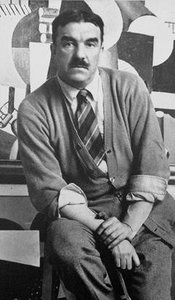
Tubizmo pionierius Fernandas Ležė įamžino mašinų amžiaus. Atraskite jo drąkius, ritminius paveikslus jau šiandien.
§ 3Komentaras
A Symphony of Gears and Emotion: Exploring Fernand Léger’s Machine Element
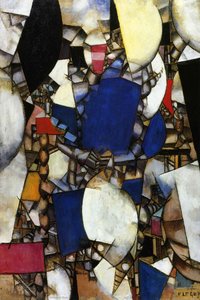
Fernand Léger's "Machine Element," painted in 1924, isn’t merely an image; it’s a declaration—a bold assertion that art could embrace the burgeoning anxieties and exhilarations of the industrial age without abandoning its capacity for profound expression. Created during Léger’s intensely productive Tubist period, this artwork transcends simple depiction, presenting instead a meticulously crafted visual language designed to communicate the pervasive influence of machinery on human experience. It resides within the Musée National d'Art Moderne in Paris, acquired through the generosity of Baronne Eva Gourgaud, and stands as a testament to Léger’s unwavering commitment to pushing artistic boundaries.The Tubist Aesthetic: Geometric Precision Meets Organic Form
Léger’s Tubism—derived from “tube,” referencing the cylindrical shapes dominant in his visual vocabulary—represents a radical departure from traditional Cubism. While Picasso and Braque fractured objects into intersecting planes, Léger sought to distill their essence into simplified geometric forms – cones, cylinders, and disks – arranged in shallow spaces that evoked a sense of flatness and immediacy. This deliberate reduction wasn’t an exercise in nihilistic abstraction; rather, it was a conscious effort to capture the impersonal logic of the machine while simultaneously hinting at underlying organic contours. As Léger himself eloquently stated, “I want to express the idea of the machine.” The resulting compositions possess a striking visual harmony, achieved through careful consideration of color palettes and spatial relationships.A Portrait of Progress: Influences and Context
Léger’s artistic vision was profoundly shaped by his encounter with the Paris Air Show in 1912 – an event that ignited his fascination with aeronautics and propelled him to contemplate the transformative potential of modern technology. This preoccupation mirrored the broader cultural landscape of the time, marked by rapid industrial expansion and a growing awareness of humanity’s relationship with increasingly powerful machines. The painting echoes themes explored in Léger's experimental film “Le Ballet Mécanique,” which similarly investigated the interplay between human movement and mechanical precision. These influences underscore the artwork’s significance as a product of its era, reflecting anxieties about societal change alongside optimism for scientific advancement.Symbolism Beneath the Surface: Red Backdrop and Clock Faces
Beyond its geometric formalism, “Machine Element” is imbued with subtle symbolic resonance. The dominant red backdrop serves not merely as color but as an emotional anchor—representing energy, passion, and perhaps even a hint of danger. It contrasts sharply with the cool tones of the mechanical components, creating visual tension that mirrors the complexities inherent in reconciling human emotion with technological progress. Furthermore, the inclusion of two clocks – one positioned prominently at the top left corner and another nestled near the bottom right—adds layers of meaning. They symbolize time itself, emphasizing the relentless march forward dictated by industrial society and prompting contemplation on the passage of life amidst a rapidly evolving world.Emotional Resonance: A Quiet Triumph of Vision
Ultimately, “Machine Element” succeeds in conveying a powerful emotional response despite its seemingly sterile aesthetic. Léger’s masterful manipulation of form and color communicates not just what *is* seen but what *feels*. The painting invites viewers to consider the human condition within the context of technological advancement—to grapple with questions of identity, purpose, and connection amidst a world increasingly dominated by machines. It remains a captivating masterpiece, demonstrating Léger’s unparalleled ability to transform abstract concepts into emotionally resonant visual narratives.Klausimai ir atsakymai
Kokia yra „Machine element“ tema ir kokią atmosferą ji sukuria?
„Machine element“ vaizduoja mechanical forms, geometric shapes, red backdrop, cylindrical elements, futurism, technological influence, spare parts, machine age, o jo perteikiama nuotaika yra Industrial.
Kokio dydžio „Machine element“ siūloma Living Room?
Rekomenduojamas derinimas kūriniui „Machine element“ – Fernand Léger: Large dydžio spausdinimas, skirtas Living Room.
Koks yra rekomenduojamas „Machine element“ spausdinimo formatas – koks dydis ir orientacija?
Large dydis, Portrait orientacija: tai rekomenduojamas spausdinimo nustatymas kūriniui „Machine element“ – Fernand Léger.




 Perjungti į spausdinamus版作品


 Dėl meno kūrinių ar reprodukcijų, kurių bet kuri pusė yra didesnė nei 105 cm (apie 41 inch), rėmas bus siunčiamas kaip išskaidytas surinkimo rinkinys. Šis metodas užtikrina saugų pristatymą ir apsaugo nuo transportavimo metu galimos žalos.


