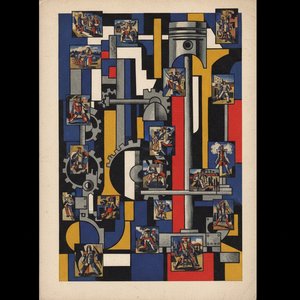
1912. Acrylic, 42.0 x 32.0 cm.

§ 1Catalogue data
 Acrylic
- WallArt
- Geometric Abstraction
 1912
1912 42.0 x 32.0 cm
§ 2Abstract
Kolekcinio objekto aprašas
French modernist Fernand Léger’s watercolor captures a vibrant cityscape teeming with rooftops and movement—a small airplane punctuates the scene against towering buildings, embodying the energy of the early 20th century. Explore this captivating artwork and bring Léger's vision home.
 Skaityti daugiau
Autoriaus biografija
Atraskite Fernand Léger (1881–1955) – kubizmo ir „tubizmo“ pionieriaus kūrybą! Tyrinėkite drąsius paveikslus, apdainuojančius modernų gyvenimą, mašinas ir žmogaus formą – pop art pranašą.
§ 3Commentary
A Symphony of Steel and Stone: Exploring Fernand Léger’s Rooftops
Fernand Léger's "Rooftops," painted in 1912, isn’t merely a depiction of urban architecture; it’s an ambitious declaration of artistic intent—a bold experiment in translating the burgeoning anxieties and exhilarations of the early twentieth century onto canvas. Created during a period marked by rapid industrialization and technological advancement, Léger's watercolor captures a cityscape brimming with energy, reflecting the pervasive influence of machine aesthetics on artistic sensibilities. The painting’s subject matter – rooftops viewed from above – is deceptively simple, yet it serves as a springboard for profound explorations into form, color, and the artist’s relationship to his environment.- Subject Matter: Léger eschews traditional landscapes in favor of an urban panorama, prioritizing geometric abstraction over representational accuracy. The rooftops themselves are rendered with meticulous attention to detail—their varied textures and angles conveying a palpable sense of solidity and permanence against the backdrop of movement.
- Style & Technique: Léger’s distinctive style is characterized by “Constructivism,” an artistic movement that championed geometric abstraction as a means of expressing social ideals. He employs bold, angular brushstrokes—primarily in shades of gray and ochre—to build up layered planes of color, creating a visual rhythm reminiscent of industrial machinery. The watercolor medium lends itself beautifully to capturing the subtle nuances of light and shadow, enhancing the painting’s textural richness.
Klausimai ir atsakymai
Kokia pagrindinė spalva dominuoja kūrynije „Rooftops“ – Fernanas Ležė?
„Rooftops“ linksta į Ochre to Sepia atspalvį.
Koks kontrastas pasižymi kūrinys „Rooftops“ – Fernanas Ležė?
Šviesos ir tamsos kontrastas kūriniame „Rooftops“ yra nurodytas kaip Serene. Kontrastas aprašo, kaip stipriai skiriasi šviesios ir tamsios sritys.
Kokia technika buvo panaudota kūriniui „Rooftops“ ir kada jis buvo sukurtas?
„Rooftops“ sukurtas 1912 m., naudojant Acrylic.


 Perjungti į spausdinamus版作品


 Dėl meno kūrinių ar reprodukcijų, kurių bet kuri pusė yra didesnė nei 105 cm (apie 41 inch), rėmas bus siunčiamas kaip išskaidytas surinkimo rinkinys. Šis metodas užtikrina saugų pristatymą ir apsaugo nuo transportavimo metu galimos žalos.