

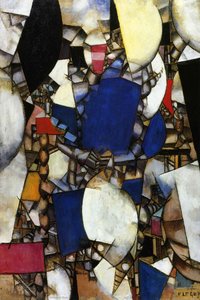
1914. Acrylic On Canvas, 65.0 x 49.0 cm.

§ 1Catalogue data

- 65.0 x 49.0 cm


§ 2Abstract
Kolekcinio objekto aprašas
Study for a Still Life by Fernand Léger – This charcoal drawing captures the energy of the machine age with six bottles and a pipe, showcasing Léger’s innovative approach to abstraction rooted in observation. Explore this 1914 masterpiece!
 Skaityti daugiau
Autoriaus biografija
Atraskite Fernand Léger (1881–1955) – kubizmo ir „tubizmo“ pionieriaus kūrybą! Tyrinėkite drąsius paveikslus, apdainuojančius modernų gyvenimą, mašinas ir žmogaus formą – pop art pranašą.
§ 3Commentary
Fernand Léger: A Study for Still Life – Capturing the Rhythm of Modernity
A profound exploration into the artistic sensibilities of Fernand Léger unfolds before us, commencing with “Study for a Still Life,” an evocative charcoal drawing executed in 1914. This artwork transcends mere representation; it embodies Léger’s pioneering approach to modern art—a fusion of abstraction and observation that sought to distill the essence of industrial progress into a visually arresting composition.- Subject Matter: The piece presents a meticulously rendered still life featuring six bottles, a pipe, and other assorted objects – elements deliberately chosen to convey not just visual form but also tactile sensation and rhythmic movement. Léger wasn’t interested in replicating reality; he aimed to capture its underlying dynamism.
- Style: Léger's distinctive Cubist style is immediately apparent. Unlike the fragmented perspectives of Picasso, Léger employed a simplified geometric vocabulary—primarily cubes and cylinders—to depict his subjects. This stylistic choice reflects the influence of industrial design and the burgeoning fascination with machine aesthetics prevalent during the period.
- Technique: Léger’s masterful use of charcoal demonstrates an unwavering commitment to capturing tonal variations and textural nuances. The artist skillfully layered strokes of charcoal to create depth and contrast, imbuing the drawing with a palpable sense of materiality—a deliberate harkening back to Léger's formative experiences in rural Normandy.
Historical Context: Embracing the Machine Age
“Study for Still Life” emerged during a pivotal moment in artistic history – the dawn of the 20th century and the ascendancy of Cubism. Léger’s work stands alongside Picasso's groundbreaking explorations into fractured space and simultaneous viewpoints, signaling a decisive break from traditional representational conventions. The drawing reflects the broader cultural preoccupation with technological innovation and its transformative impact on human perception.- Symbolism: While Léger eschewed overt symbolism, the geometric forms themselves carry significant connotations—representing stability and order amidst the perceived chaos of industrial society. The repetition of cubes and cylinders underscores Léger’s belief in the universality of mathematical principles as a framework for understanding the natural world.
- Emotional Impact: Despite its austere aesthetic, “Study for Still Life” possesses an undeniable emotional resonance. Léger's drawing conveys a sense of quiet contemplation—a meditative engagement with form and texture that invites viewers to contemplate the beauty inherent in simplicity and geometric abstraction.
A Legacy of Innovation: Léger’s Enduring Influence
Fernand Léger’s “Study for Still Life” remains a cornerstone of modern art, inspiring generations of artists and designers alike. Its bold stylistic choices—the simplification of form, the masterful use of charcoal—continue to resonate with contemporary sensibilities. As an interior designer seeking inspiration or a collector appreciating artistic heritage, this drawing serves as a potent reminder that true beauty resides not in meticulous imitation but in courageous experimentation—a testament to Léger’s unwavering conviction that art could illuminate the complexities of the modern world.Klausimai ir atsakymai
Ar galiu naudoti papildytojąjį realybės technologiją, kad pamatytumėte „Study for a Still Life“ – Fernanas Ležė savo kambaryje?
„Study for a Still Life“ – Fernanas Ležė puslapio Peržiūra papildintajai realybei funkcija naudoja papildytojąjį realybės technologiją, kad suderinamame įrenginyje parodytų kūrinį jūsų erdvėje.
Kokią paletę ir kokią emociją sujungia „Study for a Still Life“?
Darbe „Study for a Still Life“ Earthy spalvos sukuria Reflective nuotaiką.
Kaip kontrastas ir harmonija susilieja kūryboje „Study for a Still Life“?
„Study for a Still Life“ kūryboje Bold kontrastas susilieja su Unified Palette harmonija.




 Perjungti į spausdinamus版作品


 Dėl meno kūrinių ar reprodukcijų, kurių bet kuri pusė yra didesnė nei 105 cm (apie 41 inch), rėmas bus siunčiamas kaip išskaidytas surinkimo rinkinys. Šis metodas užtikrina saugų pristatymą ir apsaugo nuo transportavimo metu galimos žalos.


