

1910. Acrylic On Canvas.

§ 1Catalogue data


§ 2Abstract
Kolekcinio objekto aprašas
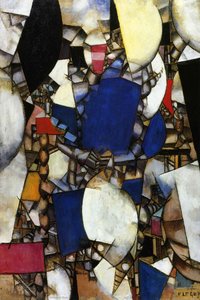
Fernand Léger's "The Sewing Machine" (1910) embodies the spirit of Cubism and Tubism, capturing the dynamism of the machine age through bold forms and a focused gaze. Executed in oil on canvas, this artwork portrays a man diligently working at a sewing machine amidst supportive elements like chairs and a clock—a testament to Léger's innovative approach to representing modernity.
 Skaityti daugiau
Autoriaus biografija
Atraskite Fernand Léger (1881–1955) – kubizmo ir „tubizmo“ pionieriaus kūrybą! Tyrinėkite drąsius paveikslus, apdainuojančius modernų gyvenimą, mašinas ir žmogaus formą – pop art pranašą.
§ 3Commentary
The Sewing Machine: A Portrait of Industry and Precision
Fernand Léger’s “La Couseuse” (The Sewing Machine), painted in 1910, transcends mere depiction; it embodies the burgeoning fascination with industrial progress that defined the early years of the twentieth century. More than just a representation of a domestic task—the meticulous craft of sewing—Léger transforms this commonplace activity into an emblem of mechanized efficiency and geometric abstraction.
- Subject Matter: Léger focuses on a man seated before a sewing machine, capturing the essence of labor within a rapidly changing world. The pose is deliberate, conveying concentration and purpose—a figure absorbed in his work, mirroring the pervasive influence of machines on daily life.
- Style & Technique: Léger’s Tubism style distinguishes itself through its rejection of traditional perspective and shading. Instead, he employs simplified geometric forms – cylinders, spheres, and cubes – to construct the scene. The sewing machine itself is rendered as a stylized cylinder, emphasizing its mechanical structure while simultaneously minimizing detail.
- Historical Context: Painted during the height of the Belle Époque, “La Couseuse” reflects the optimism surrounding technological advancements. Léger’s artistic vision aligns with broader trends in European art at the time—a move away from Impressionism and towards a more conceptual approach to visual representation.
- Symbolism: The sewing machine isn't merely an object; it symbolizes productivity, order, and the transformative power of industrialization. Léger’s deliberate simplification underscores these themes, presenting them as fundamental elements of modern experience.
- Emotional Impact: Despite its abstract style, “La Couseuse” evokes a sense of quiet contemplation and understated grandeur. Léger's masterful use of color—primarily muted reds and yellows—creates an atmosphere of warmth and solidity, conveying both the physicality of labor and the enduring beauty of geometric forms.
The painting’s composition is carefully balanced, anchoring the central figure against a backdrop of supporting elements – two chairs and a clock – that contribute to the overall sense of stability. Léger's meticulous attention to detail—particularly in rendering the sewing machine—demonstrates his commitment to capturing not just what is seen but also how it feels to inhabit this new industrial landscape.
Reproductions of “La Couseuse” offer a captivating glimpse into Léger’s artistic legacy and provide an opportunity to appreciate the enduring power of abstraction to convey profound ideas about humanity's relationship with technology.
Klausimai ir atsakymai
Kokią nuotaiką „The sewing machine“ – Fernanas Ležė išreiškia Cubism kontekste?
„The sewing machine“ pasižymi Reflective emociniu tonu, būdingu Cubism stiliui.
Ar yra galima peržiūrėti „The sewing machine“ – Fernanas Ležė asmenines nuotraukų rodyklę?
Galima peržiūrėti nuotraukų rodyklę: Slaydšou puslapį kūriniam „The sewing machine“ – Fernanas Ležė.
Kokia pagrindinė spalva dominuoja kūrynije „The sewing machine“ – Fernanas Ležė?
„The sewing machine“ linksta į Golden Yellow Range atspalvį.




 Perjungti į spausdinamus版作品


 Dėl meno kūrinių ar reprodukcijų, kurių bet kuri pusė yra didesnė nei 105 cm (apie 41 inch), rėmas bus siunčiamas kaip išskaidytas surinkimo rinkinys. Šis metodas užtikrina saugų pristatymą ir apsaugo nuo transportavimo metu galimos žalos.


