

1918. Oil On Canvas.

§ 1Catalogue data


§ 2Abstract
Kolekcinio objekto aprašas
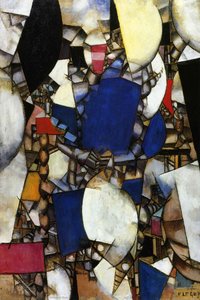
“The Stove” was created in 1918 by Fernand Leger in Tubism style. Find more prominent pieces of abstract at WikiArt.org – best visual art database.
 Skaityti daugiau
Autoriaus biografija
Atraskite Fernand Léger (1881–1955) – kubizmo ir „tubizmo“ pionieriaus kūrybą! Tyrinėkite drąsius paveikslus, apdainuojančius modernų gyvenimą, mašinas ir žmogaus formą – pop art pranašą.
§ 3Commentary
A Symphony of Form and Color: The Industrial Pulse of Fernand Léger
In the wake of the Great War, as the dust of conflict settled over a transforming Europe, Fernand Léger captured a moment of profound transition in his 1918 masterpiece, "The Stove." This work stands as a definitive emblem of Tubism, a revolutionary movement that sought to find beauty within the rhythmic, mechanical pulse of the modern age. Rather than retreating into pure abstraction, Léger utilized the language of geometry to celebrate the burgeoning influence of industrial machinery on human perception. The painting immediately captivates the viewer with its bold, unapologetic palette; dominant yellows and deep blues intertwine with assertive reds, creating a visual dynamism that mirrors the relentless energy of a world being rebuilt by steel and steam.
Léger’s technique in "The Stove" eschews traditional illusionistic representation, opting instead for a fascinatingly flattened spatial compression. Through his signature Tubist style, cylindrical forms—reminance of pipes, chimneys, and pistons—dominate the composition. These geometric shapes do not merely exist on the canvas; they interact with a sense of weight and volume that feels both architectural and organic. By utilizing these tubular structures, Léger mirrors the impact of mechanized life on our understanding of space, inviting the eye to navigate a landscape where the boundaries between domestic objects and industrial components begin to blur.
Symbolism Amidst the Machine Age
At first glance, the subject matter suggests a scene of quiet domesticity, yet beneath the surface lies a complex layer of symbolism. The stove itself serves as a potent anchor for the composition, representing warmth, comfort, and the stability of the home amidst the unsettling uncertainties of the post-war era. However, Léger deliberately disrupts this sense of traditional comfort through his fragmented, geometric approach. By deconstructing familiar objects—a clock, a chair, a bowl, and vases—into sharp, intersecting planes, he prompts the viewer to confront the underlying tension between the nostalgic pull of tradition and the inevitable march of progress.
The emotional resonance of the piece is found in this very friction. There is a palpable sense of disorientation caused by the busy, competing elements within the frame, yet there is also an unwavering conviction in the transformative power of form. The masterful use of color further deepens this emotional journey: the bright yellows embody a sense of optimism and newfound energy, while the cooler blues introduce a touch of melancholy and reflection. For the collector or interior designer, "The Stove" offers more than just a visual centerpiece; it provides a sophisticated dialogue between light and shadow, stability and movement.
An Inspiration for Modern Interiors
For those seeking to infuse a contemporary space with historical depth and intellectual vigor, a high-quality reproduction of "The Stove" serves as an extraordinary focal point. Its vibrant primary colors and structured composition possess a unique ability to anchor a room, providing a sense of curated complexity. Whether placed in a minimalist setting to provide a burst of rhythmic energy or integrated into a more eclectic gallery wall, Léger’s work brings the spirit of the avant-garde into the modern home. It is an invitation to contemplate the beauty of structure and the enduring strength of the human spirit in an ever-changing technological landscape.
Klausimai ir atsakymai
Kiek metų buvo Fernanas Ležė, kai sukūrė „The Stove“ 1918 m.?
Fernanas Ležė buvo 37 metų, kai 1918 m. sukūrė kūrinį „The Stove“. Amžius apskaičiuotas remiantis gimimo metais 1881.
Kas yra „The Stove“?
„The Stove“ – Fernanas Ležė temos apima stove, tubism, industrial age, form, color palette, geometric shapes, domestic scene. Kartu jie apibendrina šio kūrinio tematiką.
Kokia yra „The Stove“ – Fernanas Ležė kūrybos data ir stilius?
„The Stove“ – Fernanas Ležė sukurta 1918 m. ir priklauso Tubism Tubism stiliui.




 Perjungti į spausdinamus版作品


 Dėl meno kūrinių ar reprodukcijų, kurių bet kuri pusė yra didesnė nei 105 cm (apie 41 inch), rėmas bus siunčiamas kaip išskaidytas surinkimo rinkinys. Šis metodas užtikrina saugų pristatymą ir apsaugo nuo transportavimo metu galimos žalos.


