

Oil On Canvas. Museum Folkwang.

§ 1Catalogue data


§ 2Abstract
Kolekcinio objekto aprašas
A vibrant explosion of red, blue, and yellow geometric planes defines this German Expressionist masterpiece by Franz Marc, offering a spiritual journey through abstraction that you can bring into your own collection.
 Skaityti daugiau
Autoriaus biografija
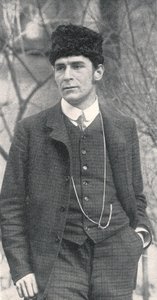
Francas Markas (1880–1916) buvo vokietijos ekspresionistas, kuris įkūrė „Mėlynąjį raitelį“ ir buvo vienas iš ankstymausiųjų šios meno srovės veikėjų. Jo kūriniai žinomi dėl spalvingos kompozicijų, simbolinės spalvos naudojimo ir filosofinių temų.
§ 3Commentary
A Dialogue Between Nature and Abstraction: Exploring Franz Marc’s “Forms at Play”
Franz Marc's "Forms at Play," painted in 1914, stands as a pivotal moment in the evolution of German Expressionism. More than just a visually striking composition—a riot of reds, blues, yellows, greens, and oranges interwoven with black and white—it represents a profound exploration of artistic philosophy and spiritual contemplation. Produced during a period marked by burgeoning anxieties about impending war, Marc sought solace and inspiration within the natural world, mirroring a broader trend toward simplification and emotional resonance that characterized the era. The painting’s genesis lies in Marc's fervent admiration for Robert Delaunay and his groundbreaking Les Fenêtres sur la Ville series. Influenced by Delaunay’s radical embrace of abstraction—specifically, the fragmentation of forms into geometric planes—Marc embarked on a personal journey toward distilling art down to its purest essence. He consciously rejected the ornate stylistic conventions prevalent at the time, opting instead for a technique characterized by bold color harmonies and rhythmic structuring. This deliberate simplification wasn't merely aesthetic; it was driven by Marc’s conviction that art could communicate directly with the soul, bypassing intellectual mediation.- Technique: Marc employed oil paint on canvas, utilizing layering and blending to achieve luminous effects and textural nuances. The artist meticulously crafted each brushstroke, prioritizing expressive gesture over precise representation.
- Color Palette: Dominating the composition is a striking red hue—a deliberate choice that distinguishes “Forms at Play” from Delaunay’s Les Fenêtres sur la Ville, where fragmented planes shimmer with iridescent light. This bold color serves as an anchor, grounding the energetic dynamism of the painting.
- Composition: The artwork unfolds in a spiraling trajectory, beginning with crystalline structures on the left edge and culminating in amorphous forms radiating outward toward the center. This dynamic arrangement reflects Marc’s fascination with natural processes—the growth of crystals and plants—a counterpoint to Delaunay's preoccupation with urban landscapes.
Klausimai ir atsakymai
Kokia „Forms at Play“ – Francas Markas švytėjimo (luminance) intensyvumas?
„Forms at Play“ spalvos pasižymi Soft Shadow šviesos intensyvumu.
Kokia erdvė rekomenduojama kūriniui „Forms at Play“ – Francas Markas?
Kūrinys „„Forms at Play“ – Francas Markas“ rekomenduojamas Living Room. Šis pasiūlymas pagrįstas darbo tema, spalvomis ir nuotaika.
Kokia technika sukurta „Forms at Play“ – Francas Markas?
Francas Markas kūriniui „Forms at Play“ panaudojo Oil On Canvas techniką. Ši technika apibrėžė originalaus kūrinio medžiaginę prigimtį.


 Perjungti į spausdinamus版作品


 Dėl meno kūrinių ar reprodukcijų, kurių bet kuri pusė yra didesnė nei 105 cm (apie 41 inch), rėmas bus siunčiamas kaip išskaidytas surinkimo rinkinys. Šis metodas užtikrina saugų pristatymą ir apsaugo nuo transportavimo metu galimos žalos.


