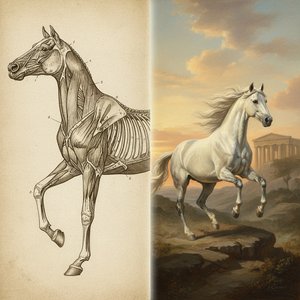
1762. Oil On Canvas, 292.0 x 246.0 cm.

§ 1Katalogo duomenys

- 292.0 x 246.0 cm


§ 2Abstraktus
Kolekcinio objekto aprašas
A powerful portrait of a galloping brown horse captures the dynamic energy of George Stubbs' 1762 masterpiece Whistlejacket, inviting you to bring this iconic piece of English equestrian art into your collection.
 Skaityti daugiau
Autoriaus biografija
George Stubbs (1724–1806): žymus anglų tapytojas, garsėjęs anatominio tikslumo ir puikių arklių vaizdų kūrimu. Romantizmo pradininkas, žinomas pagal paveikslą „Whistlejacket“. Tyrinėkite jo meno palikimą.
§ 3Komentaras
The Spirit of Motion: A Masterpiece of Equine Elegance
In the grand tradition of British sporting art, few works capture the raw vitality and anatomical precision of George Stubbs quite like Whistlejacket. This monumental portrait, dating back to 1762, transcends a mere depiction of an animal; it is a profound study of power, grace, and the untamed spirit of nature. The painting presents a magnificent brown horse, its head tossed upward in a moment of exhilarating movement, as if caught mid-stride during a gallop across an expansive field. The artist’s ability to render the muscular tension of the horse's neck and the fluid motion of its wind-swept mane creates a sense of kinetic energy that feels almost palpable to the viewer. As the subject moves forward, the composition balances the intense focus on the central figure with a vast, atmospheric sky that provides a breathtaking sense of depth and perspective.
The technical brilliance of this piece lies in Stubbs’s unparalleled dedication to anatomical accuracy. Having spent years studying equine anatomy through meticulous dissection, Stubbs possessed an intimate understanding of the skeletal and muscular structures beneath the skin. This scientific rigor is seamlessly blended with an artistic sensitivity that elevates the work from a biological study to a poetic masterpiece. The subtle play of light across the horse's chestnut coat, the delicate textures of the mane, and the soft, ethereal quality of the background sky all demonstrate a mastery of oil painting technique. For the discerning collector or interior designer, this work offers a sophisticated focal point that commands attention through its sheer scale and technical excellence.
Beyond its physical beauty, Whistlejacket carries a profound emotional resonance. There is an inherent nobility in the horse's posture—a sense of freedom and unbridled strength that speaks to the human desire for liberation and natural splendor. The absence of a detailed landscape, replaced by a minimalist, atmospheric backdrop, ensures that the viewer’s gaze remains locked onto the subject, fostering a deep, almost spiritual connection with the animal. This piece serves as an exquisite inspiration for any high-end interior, particularly in spaces where one wishes to evoke themes of heritage, classical elegance, and the enduring majesty of the natural world. To possess a reproduction of such a legendary work is to bring a fragment of art history’s most triumphant equine portrait into one's own sanctuary.
Klausimai ir atsakymai
Kokiam meno stiliui priklauso „Whistlejacket“ – Džordžas Stabsas?
„Whistlejacket“ – Džordžas Stabsas priklauso Realism stiliui. Ši dailės kryptis suteikia kūriniui stilistinį kontekstą.
Kokia spalva labiausiai išsiskiria kūryniame „Whistlejacket“?
Dominuojanti „Whistlejacket“ – Džordžas Stabsas spalva yra Driftwood (#a78956).
Kokia yra „Whistlejacket“ istorinė padėtis?
Istoriškai „Whistlejacket“ yra šio platesnio Early Modern laikotarpio Realism stiliaus kūrinys.


 Perjungti į spausdinamus版作品


 Dėl meno kūrinių ar reprodukcijų, kurių bet kuri pusė yra didesnė nei 105 cm (apie 41 inch), rėmas bus siunčiamas kaip išskaidytas surinkimo rinkinys. Šis metodas užtikrina saugų pristatymą ir apsaugo nuo transportavimo metu galimos žalos.