


 Peržiūrėti realaus dydžio版
 Siųsti
 Dalintis
 Išsamiau
 Vadovas

 Atsisiųsti
 Panašūs eksponatai
 Rentgeno spindulių nuotrauka
 Diaporama
 Statistika
Fan
 Oil
Oil- WallArt
- Art Deco
 1914
1914 22.0 x 40.0 cm
 Metropolitano muziejus
 Rodyti daugiau
Giclée / Meno spausdinimas
Muziejų lygio „giclée“ arba drobos spausdinimas: greita gamyba ir lankstios apdailos parinktys. ( Pirkti rankomis tapytą reprodukciją Perejti prie skaitmeninių vaizdų)




P118B €10

P118H €10

P118W €10

P438Z €10

P508JH €12

P508YH €12

P805H €10

P805Z €10

P919BZ €10

P919G €10

P919XJ €10

P959ZH €10

P968JZ €12

W106C €8

W218G €10

W218JH €8

W218Y €10

W307PJ €10

W316G €10

W316PJ €8

W316Y €10

W398PJ €8

W4111J €10

W500HY €15

W500JH €15

W692G €12

W849H €8

W940BG €15

W953PJ €8




Pasirinkite iš mūsų nustatytų dydžių, atitinkančių originalaus meno kūrinio proporcijas.

Įveskite jums reikiamą plotį ir aukštį, kad atvaizdas derėtų prie jūsų rėmo ar sienos. Spausdiną galima tik sumažinti, bet nepadidinti virš originalaus paveikslėlio dydžio, todėl keičiant proporcijas, dalis vaizdo prarandama. Prieš spausdinimą atsiųsime jums skaitmeninį maketą patvirtinimui. Šioje puslapio nuotraukoje matomas pjūvis nėra tikslus – jį rodo tik maketas.
Pristatymas visame pasaulyje () per 2 weeks, o ne įprastas 4/5 savaičių laikotarpis. (25 spalis)

Nemokamas greitasis pristatymas visame pasaulyje

Aukštos kokybės lininis drobė

Pilnas siuntimo draudimas

Muitinės mokesčių grąžinimo garantija

Tikro spalvų atitikimo garantija

100 dienų grąžinimo politika (tik esant įtaigoms)

100% pinigų grąžinimo garantija

Nuolaida dideliems užsakymams
 Stiklo variantas prieinamas tik pasirinkus dydį iki 110 cm

Fan
Giclée / Meno spausdinimas
Reprodukcijos dydis
-


Visų pasirinktų variantų kaina
€ 56
A Whisper of Elegance: George Barbier’s “Fan” – A Dance of Deco Style
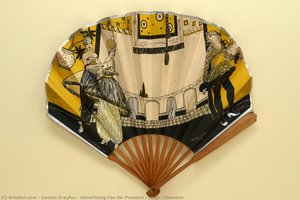
George Barbier's "Fan," painted in 1914, isn’t merely an illustration; it’s a portal into the heart of Art Deco’s opulent androgyny. This exquisite piece, now meticulously reproduced, captures a fleeting moment of sophisticated leisure within a world brimming with theatrical glamour and subtle symbolism. Barbier, a master orchestrator of visual style, didn't simply depict a fan; he constructed an entire atmosphere—a shimmering tableau vivant that speaks volumes about the era’s fascination with beauty, movement, and the blurring lines between masculine and feminine allure.
The artwork immediately draws the eye to its central subject: two figures engaged in a graceful dance within a richly appointed architectural setting. The composition is deliberately fluid, mirroring the delicate curve of the fan itself, creating a sense of perpetual motion. Barbier’s figures are rendered with an almost dreamlike quality—their poses suggest both intimacy and theatricality, hinting at a private performance unfolding before our eyes. Notice how their garments flow and drape, echoing the fan's intricate design, further emphasizing the interconnectedness of form and movement. The inclusion of a partially visible figure on the left adds to this sense of mystery, inviting us to imagine the narrative behind this captivating scene.
The Palette of Luxury: Color, Line, and Texture
Barbier’s masterful use of color is central to the artwork's impact. Deep blues, vibrant reds, shimmering golds, and creamy whites coalesce into a luxurious palette that evokes both opulence and sophistication. The contrast between the figures’ skin tones and the darker background creates a dramatic effect, highlighting their beauty while simultaneously emphasizing the setting’s grandeur. Barbier expertly employs strong, defined lines to delineate the figures' forms and architectural elements, lending the composition a sense of clarity and precision—a hallmark of Art Deco style. Furthermore, the texture is remarkably rendered; you can almost feel the smooth surface of the fan, the delicate folds of the fabric, and the subtle sheen of the gilded details.
The artwork’s lines aren't simply structural; they are imbued with a sense of dynamism. The ribs of the fan itself form a linear framework that reinforces the composition’s semi-circular shape, while geometric patterns subtly permeate the background, adding to the overall visual richness. These elements work in harmony to create an image that is both visually arresting and intellectually stimulating.
A Deco Dialogue: Symbolism and Historical Context
"Fan" is deeply rooted in the artistic currents of its time—specifically, the rise of Art Deco. Emerging in the 1920s, this style rejected the ornate excesses of previous eras, embracing streamlined forms, geometric patterns, and a fascination with exotic materials and cultures. Barbier’s work reflects these trends perfectly, incorporating elements of both classical mythology (evoked by the figures' poses) and modern design sensibilities. The fan itself—a symbol of elegance, refinement, and social status—takes on new significance within this context.
The scene subtly alludes to themes of courtship and performance, reminiscent of the lavish balls and theatrical productions that defined Parisian society during the early 20th century. Barbier’s meticulous attention to detail—from the intricate fan design to the luxurious fabrics—creates a world where beauty is paramount and social rituals are elevated to an art form. The artwork can be seen as a visual manifesto of Art Deco's celebration of glamour, sophistication, and the pursuit of pleasure.
Bringing “Fan” Home: Reproduction and Artistic Legacy
Today, George Barbier’s "Fan" continues to captivate audiences with its timeless beauty and evocative atmosphere. A meticulously crafted reproduction allows you to bring this exquisite artwork into your home or office, adding a touch of Deco elegance to any space. The high-quality print captures the original's rich colors and intricate details, while the canvas provides a durable and visually appealing surface. Whether displayed as a statement piece in a living room or incorporated into an interior design scheme, “Fan” is sure to spark conversation and admiration.
Consider this artwork not just as a decorative object, but as a window into a bygone era—a testament to the artistic vision of George Barbier and the enduring allure of Art Deco style. It’s a reminder that beauty, sophistication, and a touch of mystery can still be found in the most carefully crafted details.
问答 (or more naturally for a website heading): Klausimai ir atsakymai
Atsižvelgiant į spalvų paletę, kur rekomenduojama eksponuoti kūrinį „Fan"]?
„Fan“, autorius – Žoržas Barbier Earthy spalvos dera su rekomenduojama erdvė: tai Living Room.
Kaip buvo sukurta „Fan“ ir kokio yra dydžio?
Originalus kūrinys „Fan“, autorius – Žoržas Barbier – tai Oil darbas, kurio matmenys yra 22 x 40 cm. Technika ir dydis aprašo originalų objektą.
Kiek šviesos, kaip atrodo, atspindi „Fan“ spalvos?
Įrašytas kūrinio „Fan“, autorius – Žoržas Barbier šviesumas yra Dark.
Susiję kūriniai



Autoriaus biografija
George Barbier: Art Deco elegancijos architektas
George Barbier (1882–1932) nebuvo tik vien ilustratorius; jis buvo kruopštus stiliaus architektas, vizualinis istorijos pasakotojas, suformavęs dvidešto amžiaus pradžios estetinį peizažą. Gimęs Prancūzijoje, Nantes, šeimoje, gausiai įsišakinusioje meninėse tradicijose – jo tėvas buvo paintas, o giminė Paul Iribe – garsus dizaineris – Barbier paveldėjo gilų grožio suvokimą ir gebėjimą jį atvaizduoti popieriuje. Jo karjera, nors ir gana trumpa, paliko neištriniamą žाymą mados, teatro ir dekoratinių menų pasaulyje, įtvirtindama jį kaip vieną svarbiausių Art Deco judėjimo figūrų.
Pradiniai Barbierio mokslai Paryžiaus École des Beaux-Arts suteikė tvirtą klasikinio piešimo technikų pagrindą, tačiau būtent susižadėjimas su gyvybingais socialiniais ratais, aplink tokius žurnalus kaip La Gazette du Bon Ton, tikrai uždegė jo kūrybinę dvasią. Jis tapo glaudžios menininkų grupės dalimi – kartu su Paul Iribe, Bernard Boutet de Monvel ir Georges Lepape – vadinamos ніжiai „Brankalės riteriais“, pavadinimu, atspindinčiu jų meilę puikiai aprasytam aprangai ir sofistikuotam dizainui. Toka aplinka skatino eksperimentavimą ir bendradarbiavimą, verčiant Barbierį ieškoti naujų prieigos prie iliustracijos ir dizaino.
Mados ir teatro simfonija
Barbierio kūriniai yra iškart atpažįstami dėl savo prabangaus detalumo, sudėtingų raštų ir meistriško spalvų valdymo. Pradinėje stadijoje jis išgarsėjo savo iliustracijomis mados žurnalams, ypaikaus La Gazette du Bon Ton, kur su kvapaudinčiu eleganciškumu įtrapė Paryžiaus visuomenės dvasią. Moterų vaizdai spinduliuojančiose suknelėse, papuoštose plėvomis, papuošalais ir sudėtingomis galvonėmis, nebuvo tiesiog portretai; tai buvo miniatiūrinės istorijos, perteikiančios glamūro, sofistikuotumo ir net žaismingos sensualybės pojūtį. Jis nedraudė tik suknelių; jis aplink jas sukūrė ištisus pasaulius.
Tačiau Barbierio talentas išsiplėtė kurkast faršų mados ribų. Jis greitai tapo ieškomas teatro spektaklių dizaineris, kūręs nuostabias kostiumus tokiems baleto ansambliams kaip Sergej Diagilevo Ballets Russes, bei bendradarbiavęs kuriant prabangias scenografijas Paryžiaus Folies Bergère. Jo dizainai pasižymėjo egzotiškais įtampimais – įtraukdami motyvus iš senosios Egipto, Persijos ir Tolumojo Rytų – kurie sklandžiai susiliejo su Art Deco geometrinėmis formomis ir prabangiais audiniais. Darbas spektakliuui Casanova (1928), kuriame vaidė Rudolph Valentino, užtvirtino jo reputaciją kaip teatro kostiumų dizaino meistro.
Falbalas ir Fanfreluches: Vizualinė paliktis
Galbūt tvirtiausia Barbierio paliktis yra jo almanachų serija Falbalas et Fanfreluches (1922–1926). Šie gražiai iliustruoti knygos buvo jo išskirtinio stiliaus demonstracija – spindinti mados, fantazijos ir dekoratyvinių motyvų derinys. Kiekviena puslapio dalis buvo miniatiūrinis šedevras, pilnas meistriškai atvaizduotų figūrų, sudėtingų raštų ir pajautiamo joie de vivre – gyvenimo džiaugsmo. Patys pavadinimai – „falbalas“ (rinkinys) ir „fanfreluches“ (žirais) – idealiai atspindėjo jo kūrybos esmę: prabangaus audinio ir žaismingos ornamentikos šventę.
Šie almanachai nebuvo tik dekoratyviniai; jie buvo kruopščiai sukonstruotos vizualinės naratyvės, dažnai vaizduojančios socialinius susibūrimus, egzotiškas keliones ir romantiškos intrigos akimirkas. Barbierio itin dėmesingas detalėms – nuo šilko tekstūros iki briliantų žvilgsnio – kūrė nepanašų grožio ir sofistikuotumo pasaulį. Falbalas et Fanfreluches įtampą galima pajusti ir šiandien modernioje mode bei dizajne, kas įrodo neblėstantį Barbierio vizijos galią.
Įtampimai ir meninės ryšiai
Barbierio meninė plėtra buvo formuojama dėl įvairių įtakų. Klasikinis mokslas École des Beaux-Arts suteikė jam tvirtą piešimo ir kompozicijos pagrindą, o susipažinimas su tokiomis šiuolaikinėmis kryptimis kaip fauvizmas ir kubizmas išplėtė jo estetinę horizontą. Jis taip pat įsipiktino orientalistiniu menu, ypač ryškiomis spalvomis ir sudėtingais Persijos tekstilių raštais. Artumi bendravimas su kitais iškilę menininkais – įskaitant Paul Iribe ir Georges Lepape – skatino bendradarbiavimo ir eksperimentavimo dvasią, kuri maitino jo kūrybinį augimą.
Be to, Barbierio darbai atspindi platesnes 1920-ųjų kultūrines tendencijas – laikotarpį, žymimą ekonominiu klestėjimu, technologiniais inovacijomis ir egzotiškų kultūrų žavėjimu. Masinių komunikacijos kilimas, ypač tokių žurnalų kaip La Gazette du Bon Ton, suteikė jam platformą pasiekti platią auditoriją ir įtvirtinti savo reputaciją kaip vieno savo laikmečio lyderių iliustratoriaus.
Ilgalaikė įtaka
George Barbierio karjera buvo tragiškai nutraukta ligos dėl 1932 metais, būdos 50 metų. Nepaisant jo nugaros mirties, jo kūriniai ir toliau sužavė ir įkvėpė. Jo iliustracijos vertinamos dėl jų grožio, elegancijos ir techninio meistriškumo, jos išlieka apibrėžtinčiu Art Deco stiliaus pavyzdžiu. Barbierio paliktis išsiplėtė už iliustracijos ribų; jis padėjo suformuoti mados, teatro ir dekoratyvinio meno vizualinę kalbą, palikdamas neištriniamą žymą kultūros peizaže.

Žoržas Barbier
1882 - 1932 , Prancūzija
Trumpa informacija apie kūrėją
- Dėl Šio Meno Šviojančio Asmens Paveikti Menininkai Ar Judėjimai:
- Diane Von Furstenberg
- Ken Russell
- Gimimo Data: 1882-10-16
- Gimimo Vieta: Nantes, Prancūzija
- Menininkai, Kurie Paveikė Šį Menininką:
- Paul Iribe
- Bernard Boutet
- Menų Kryptis Ar Stilius: Art Deco
- Mirties Data: 1932-07-19
- Tautybė: Prancūzų
- Vardas, Pavardė: Georges Augustin Barbier
- Žinomos Kūriniai:
- Falbalas et Fanfreluches
- Le Gout De Chales
Susiję straipsniai

Theatrical Elegance: The Art Deco Genius of Erté and the Era of Fashion Illustration
Explore the theatrical elegance of Erté and the Art Deco era. Discover how his mastery of geometric line and fashion illustration can elevate luxury hospitality design through premium, hand-painted reproductions and bespoke architectural art solutions.

