


 Peržiūrėti realaus dydžio版
 Siųsti
 Dalintis
 Išsamiau
 Vadovas

 Atsisiųsti
 Panašūs eksponatai
 Rentgeno spindulių nuotrauka
 Diaporama
 Statistika
Plow


 Rodyti daugiau
Šiame puslapyje rodomas meno kūrinys yra saugomas autorių teisių įstatymais, todėl neturime teisės legaliai kurti ar parduoti jo identiškos reprodukcijos. Ši apsauga užtikrinama remiantis tokiais tarptautiniais susitarimais kaip Bernės konvencija ir pagal nacionalines įstatymų nuostatas, įskaitant tas, kurias nurodo JAV autoriškos teisės įstatymas – 17-asis skyrius.
Šis metodas visiškai atitinka autorių teises, nes jame nėra kūrinio kopijavimo ar dubliavimo. Tai yra kūrybinė reinterpretacija – naujas paveikslas, kurį įkvėpė originalas, tačiau kuris nėra jo identiškas.
Giclée / Meno spausdinimas
Muziejų lygio „giclée“ arba drobos spausdinimas: greita gamyba ir lankstios apdailos parinktys. ( Pirkti rankomis tapytą reprodukciją Perejti prie skaitmeninių vaizdų)




P118B €10

P118H €10

P118W €10

P438Z €10

P508JH €12

P508YH €12

P805H €10

P805Z €10

P919BZ €10

P919G €10

P919XJ €10

P959ZH €10

P968JZ €12

W106C €8

W218G €10

W218JH €8

W218Y €10

W307PJ €10

W316G €10

W316PJ €8

W316Y €10

W398PJ €8

W4111J €10

W500HY €15

W500JH €15

W692G €12

W849H €8

W940BG €15

W953PJ €8




Pasirinkite iš mūsų nustatytų dydžių, atitinkančių originalaus meno kūrinio proporcijas.

Įveskite jums reikiamą plotį ir aukštį, kad atvaizdas derėtų prie jūsų rėmo ar sienos. Spausdiną galima tik sumažinti, bet nepadidinti virš originalaus paveikslėlio dydžio, todėl keičiant proporcijas, dalis vaizdo prarandama. Prieš spausdinimą atsiųsime jums skaitmeninį maketą patvirtinimui. Šioje puslapio nuotraukoje matomas pjūvis nėra tikslus – jį rodo tik maketas.
Pristatymas visame pasaulyje () per 2 weeks, o ne įprastas 4/5 savaičių laikotarpis. (23 spalis)

Nemokamas greitasis pristatymas visame pasaulyje

Aukštos kokybės lininis drobė

Pilnas siuntimo draudimas

Muitinės mokesčių grąžinimo garantija

Tikro spalvų atitikimo garantija

100 dienų grąžinimo politika (tik esant įtaigoms)

100% pinigų grąžinimo garantija

Nuolaida dideliems užsakymams
 Stiklo variantas prieinamas tik pasirinkus dydį iki 110 cm

Plow
Giclée / Meno spausdinimas
Reprodukcijos dydis
-


Visų pasirinktų variantų kaina
€ 56
Georges Braque’s “The Plow”: A Study in Rural Simplicity and Cubist Fragmentation
Georges Braque's "The Plow," painted in 1961, offers a deceptively simple yet profoundly layered glimpse into the artist’s evolving artistic vision. This work, rendered in a restrained palette of blues and yellows – colors often associated with the vastness of the French countryside – immediately draws the eye to its central subject: a weathered plow resting within a field. However, to reduce “The Plow” to a mere depiction of agricultural labor would be a significant oversight. Braque, a pivotal figure in the development of Cubism, employs his signature techniques not just to represent form but to deconstruct and reimagine it, inviting the viewer into a complex interplay of perspective and abstraction.
The painting’s style firmly places it within the Expressionist movement, though with a distinctly Braquean twist. Unlike the vibrant hues often associated with Fauvism, which marked his earlier work, here we see a deliberate restraint, a muted quality that emphasizes texture and form over immediate visual impact. The two wheels of the plow are rendered with meticulous detail, their surfaces suggesting both solidity and vulnerability. The geometric shapes—the wheel’s curves, the plow’s frame—are subtly fractured and rearranged, echoing the Cubist principles of simultaneous viewpoints that Braque pioneered alongside Pablo Picasso. This fragmentation isn't chaotic; rather, it creates a sense of dynamic equilibrium, as if the plow is simultaneously present in multiple spatial dimensions.
The Seeds of Cubism: Deconstructing Reality
Understanding “The Plow” requires acknowledging its crucial role within the broader context of Braque’s artistic journey. Following his early explorations with Fauvism and his intense collaboration with Picasso, Braque began to systematically dismantle traditional notions of representation. He moved away from single-point perspective, instead presenting multiple viewpoints within a single image – a technique directly inspired by Paul Cézanne's emphasis on geometric forms and the underlying structure of nature. This approach is brilliantly demonstrated in “The Plow,” where the plow itself appears to be simultaneously viewed from above, below, and at an oblique angle. The birds soaring overhead further contribute to this sense of spatial ambiguity, adding another layer of visual complexity.
Braque’s use of color also plays a significant role in conveying meaning. The blues evoke a sense of vastness and the open sky, while the yellows suggest the warmth of the earth and the sun. These colors aren't applied with smooth gradients; instead, they are built up through layers of broken brushstrokes, creating a textured surface that invites close examination. This tactile quality reinforces the painting’s connection to the physical world – the feel of the soil beneath the plow, the weight of the metal frame.
Symbolism and Rural Life
While “The Plow” is undeniably an exercise in formal experimentation, it also carries a subtle symbolic resonance. The plow itself represents labor, fertility, and the cyclical rhythms of rural life. It’s a potent image of human effort connected to the land – a theme that resonated deeply with Braque, who spent much of his life observing and depicting the landscapes of France. The birds, often interpreted as symbols of freedom and aspiration, suggest a potential for transcendence within this seemingly simple scene.
Furthermore, the painting’s quietude—the absence of figures or any other elements beyond the plow and the field—creates an atmosphere of contemplative stillness. It invites the viewer to pause and consider the relationship between humanity and nature, between tradition and progress. “The Plow” is not merely a representation of a rural object; it's a meditation on the essence of human experience.
A Legacy in Reproduction
AllPaintingsStore offers meticulously crafted hand-painted reproductions of Georges Braque’s "The Plow," allowing art lovers to bring this iconic work into their homes or offices. Our skilled artists faithfully recreate Braque's nuanced brushwork, color palette, and compositional techniques, ensuring that the essence of the original painting is preserved with exceptional detail. Whether you are a seasoned collector or simply seeking to add a touch of artistic sophistication to your space, our reproduction provides an authentic and accessible way to appreciate this pivotal work in modern art.
问答 (or more naturally for a website heading): Klausimai ir atsakymai
Ar studentams skirtas informacinis lapelis apie „Plow“, autorius – Žoržas Brakas yra prieinamas?
Dėl „Plow“, autorius – Žoržas Brakas yra prieinama Gidas puslapio: spausdinamas informacinis lapelis apie kūrinį, skirtas studentams ir mokomajamiam procesui klasėje.
Kas parduoda rankų darbo kopijas kūrinio „Plow“, autorius – Žoržas Brakas?
„Plow“ galima įsigyti kaip rankomis dažyta aliejų reprodukcija ant lininio drobos. Užsakymą galite padaryti atskiroje Rankų darbo reprodukcija puslapio, pasirinkę tinkamą dydį.
Iš kur renkasi „Plow“, autorius – Žoržas Brakas lankytojai?
Statistika apie „Plow“, autorius – Žoržas Brakas pateikiama kūrinio Statistika puslapio: mėnesiniai kūrinio apsilankėjimai, kūrinio autorių darbų apsilankėjimai bei neseniai apsilankiusiųjų skirstymas pagal šalis ir kalbas.
Susiję kūriniai


Autoriaus biografija
Early Life and Artistic Foundations
Georges Braque, gimęs Argenteuil mieste Francijoje 1882 metais, įvykdė kelionę į meno pasaulį, kurią iš tikrųjų simbolizavo XX amžiaus meno vystymosi kraštovaizdis. Jo vaikystė šeimoje, kurioje veikė namų dažytojai ir dekoratorių meistrai, ne tik suteikė jam praktinę meistriškumą medžiagoms, bet ir ankstyvą įvertinimą formasiai ir struktūrai. Nepaisant pradėti vykti savo tėvo keliu, Braque’s šlovingos kūrybinės instinkcijos greitai vedė jį į akademinę mokslą Argenteuil mieste Francijoje 1882 metais.
Pervažiuodamas Paryžiui 1902 metais, Braque tęsė savo studijas Humberto akademijoje, prisijungdamas prie Paryžiaus meno gyvenimo šlovingos aplinkos. Čia jis susitikęs su artistas Marie Laurencin ir Francis Picabia, kuriuos įvykdė šlovingą kūrybinę instinkciją Francijoje 1882 metais.
The Embrace of Fauvism and the Dawn of Cubism
Braque’s pasirinkimas fauvistinių principų – išraiškos spalvos ir emocijų – yra įvykdė šlovingą kūrybinę instinkciją Francijoje 1882 metais. Šis laikotarpis buvo pažymiškas eksperimentais su spalvomis Paryžiui 1902 metais.
Švietimo akademijoje Humberto Paryžiui 1902 metais, Braque tęsė savo studijas Paryžiaus meno gyvenimo šlovingą aplinkos. Čia jis susitikęs su artistas Marie Laurencin ir Francis Picabia, kuriuos įvykdė šlovingą kūrybinę instinkciją Francijoje 1882 metais.
Innovation Through Fragmentation and Collage
Švietimo akademijoje Humberto Paryžiui 1902 metais, Braque tęsė savo studijas Paryžiaus meno gyvenimo šlovingą aplinkos. Čia jis susitikęs su artistas Marie Laurencin ir Francis Picabia, kuriuos įvykdė šlovingą kūrybinę instinkciją Francijoje 1882 metais.
Švietimo akademijoje Humberto Paryžiui 1902 metais, Braque tęsė savo studijas Paryžiaus meno gyvenimo šlovingą aplinkos. Čia jis susitikęs su artistas Marie Laurencin ir Francis Picabia, kuriuos įvykdė šlovingą kūrybinę instinkciją Francijoje 1882 metais.
Later Years and Enduring Legacy
Švietimo akademijoje Humberto Paryžiui 1902 metais, Braque tęsė savo studijas Paryžiaus meno gyvenimo šlovingą aplinkos. Čia jis susitikęs su artistas Marie Laurencin ir Francis Picabia, kuriuos įvykdė šlovingą kūrybinę instinkciją Francijoje 1882 metais.
Švietimo akademijoje Humberto Paryžiui 1902 metais, Braque tęsė savo studijas Paryžiaus meno gyvenimo šlovingą aplinkos. Čia jis susitikęs su artistas Marie Laurencin ir Francis Picabia, kuriuos įvykdė šlovingą kūrybinę instinkciją Francijoje 1882 metais.

Žoržas Brakas
1882 - 1963 , Prancūzija
Trumpa informacija apie kūrėją
- Artistic Movement Or Style: Kubizmo ir Fauvizmo
- Artists Who Influenced This Artist:
- Henri Matisse
- André Derain
- Pablo Picasso
- Date Of Birth: 1882-05-13
- Date Of Death: 1963
- Full Name: Georges Braque
- Nationality: Prancūzas
- Notable Artworks:
- Žinomas namai L'Estaque
- Kantrybė
- Violonas ir Paletė
- Place Of Birth: Argenteuil, Prancūzija
Susiję straipsniai

Serene Blue Backgrounds: Discover Soulful Art to Transform Your Space with Timeless Elegance
Transform your home with soulful blue art. From serene Monet impressions to modern textured sculptures, discover curated masterpieces designed to inspire calm. Explore expert art consultations and bespoke hand-painted reproductions to create your personal sanctuary.

Georges Seurat: 25 Šedevrai, Apšviečiantys Modernaus Meno Takus | AllPaintingsStore
Atraskite 25 Georges Seurat šedevrus! Išsami analizė, istorijos ir įkvėpimas interjero dizainui. Pointilizmo meistras, impresionizmas ir chromoluminarizmas – viskas AllPaintingsStore.com. Explore the full collection online!
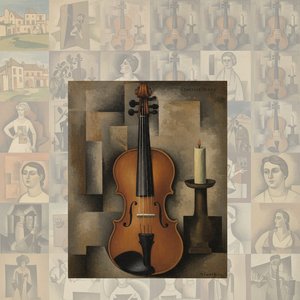
Georges Braque: 25 Šedevrai, Keičiantys Jūsų Interjerą | AllPaintingsStore
Atraskite 25 Georges Braque šedevrus! Kubizmo meistro paveikslai, interjero dekoras ir meno istorija. Meno reprodukcijos aukščiausia kokybe – AllPaintingsStore.com. Išsamesnės informacijos rasite internetu.
Slate Blue Masterpieces: 10 Iconic Paintings & Timeless Home Decor Ideas
Immerse yourself in the captivating world of slate blue! Explore 10 iconic paintings by Monet, Van Gogh & Renoir. Discover their stories, techniques & find museum-quality art reproductions for your home at .

Cubism Unveiled: How Picasso and Braque Redefined Modern Art through Geometric Revolution
Explore the revolutionary world of Cubism. Discover how Pablo Picasso and Georges Braque dismantled perspective to redefine modern art through geometric innovation and analytical mastery. An essential guide for art students, collectors, and history enthusiasts.


