


 Peržiūrėti realybėje
 Pasidalinti
 Dalintis
 Išsamiau

 Atsisiųsti
 Panašūs eksponatai
 Rentgeno nuotrauka
 Automatinė diorama
Expressionistische Landschaft
 Skaityti daugiau
Rankų darbo aliejinės reprodukcijos
Rankiniu būdu tapytas aliejus ant droblio jūsų pageidaujamame dydį ir rėmuose – mūsų menininkų darbas pagal užsakymą. ( Pirkti spaudinį Pirkti vaizdą)




































Pasirinkite iš mūsų nustatytų dydžių, atitinkančių originalaus meno kūrinio proporcijas.

Galite įvesti savo matmenis, kad jie atitiktų konkretų rėmą ar erdvę. Jei pasirinktas dydis neatitinka originalaus paveikslėlio proporcijų, mes arba apkropsime meno kūrinį, arba papildysime tapybą rankomis dažytい elementais. Prieš pradėdami gamybą, jūsų patvirtinimui atsiųsime skaitmeninį maketą.
Atkreipkite dėmesį, kad ekrane rodomas vaizdas neatspindi tikrojo apkarpymo ar papildymo. Tik maketas tiksliai parodys galutinę kompoziciją.
Nors galima rinktis ir individualius dydžius, rekomenduojame pasirinkti matmenis iš nustatytos sąrašo, kad būtų išlaikytos originalios proporcijos.
Gavus užsakymą, AllPaintingsStore.com komanda susisieks su klientu el. paštu dėl instrukcijų ir pateiks maketo pavyzdį.
Pristatymas visame pasaulyje () per 3–4 savaites, o ne įprastai – per 5 savaites. (20 rugpjūtis). Kokybė lieka nepakeičiama.

Nemokamas greitasis pristatymas visame pasaulyje

Aukštos kokybės lininis drobė

Pilnas siuntimo draudimas

Muitinės mokesčių grąžinimo garantija

Tikro spalvų atitikimo garantija

60 dienų grąžinimo politika (tik esant gamyklinėms defektams)

100% pinigų grąžinimo garantija

Nuolaida už kelias reprodukcijas
 Stiklo variantas prieinamas tik pasirinkus dydį iki 110 cm

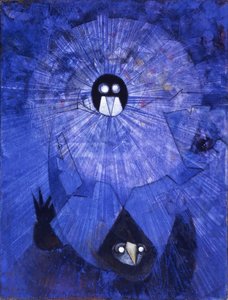
Expressionistische Landschaft
Reprodukcijos technika
Reprodukcijos matmenys
-


Galutinė kaina
$ 258
panašūs kūriniai




Autoriaus biografija
Hermann Scherer: Life and Legacy
Early Life and Training
Hermann Scherer was born in Rümpingen, Baden-Württemberg, Germany, in 1893. He began his artistic journey not with a brush, but with stone. After leaving school in 1907, he undertook an apprenticeship as a stonemason at the Schwab workshop in Lörrach. This foundational training would profoundly influence his later sculptural work and understanding of form.
Sculptural Beginnings & Artistic Development
From 1910 to 1919, Scherer honed his skills working with a series of Basel sculptors – Carl Gutknecht, Otto Roos, and Carl Burckhardt. Working as a laborer and later an assistant for Roos allowed him to establish a small workshop of his own. This period was crucial in developing his technical abilities and artistic vision. In 1919, Scherer underwent a significant shift, rejecting much of his earlier work and embracing a more contemporary approach to art.
Influences & Expressionist Exploration
The early 1920s marked a period of intense artistic exploration for Scherer. He was deeply influenced by the German painters Erich Heckel, Ernst Ludwig Kirchner, and Karl Schmidt-Rottluff. A visit to an exhibition of Edvard Munch’s work in Zurich further ignited his passion for Expressionism. He forged a close relationship with Kirchner, traveling to Davos for extended painting trips from 1922 to 1924.
The Rot-Blau Group & Public Reaction
In late 1924, Scherer co-founded the artist group Rot-Blau (Red-Blue) with Albert Müller and Paul Camenisch, later joined by Werner Neuhaus. Their debut exhibition at the Basler Kunstverein in 1925 provoked a strong public reaction; some works were deemed offensive in both Basel and Zurich. Despite this controversy, Rot-Blau became an important force in Swiss Expressionism.
Later Years & Legacy
Although his friendship with Kirchner cooled in 1925, their shared commitment to Expressionism remained. Kirchner continued to support the Rot-Blau group, showcasing their work at an international art exhibition in Dresden in 1926. Sadly, Scherer’s career was cut short by illness. He became seriously ill in autumn 1926 and died in Basel on May 13, 1927.
Major Achievements & Historical Significance
- A posthumous exhibition at the Kunsthalle Basel in 1927 showcased over 200 of his works.
- The Dreiländermuseum in Lörrach holds a significant collection of Scherer’s art, including woodcuts and the “Portrait of Otto Staiger.”
- Streets and bridges in Rümpingen are named in his honor.
- His sculpture "Das kleine Mädchen" ("The Little Girl") was acquired by the Pfalzgalerie Kaiserslautern for over 140,000 euros in 2004.
Hermann Scherer’s work represents a vital contribution to Swiss Expressionism. His bold use of color, emotive subject matter, and innovative approach to both painting and sculpture continue to resonate with audiences today. He remains a notable figure in the history of 20th-century art.

Hermann Scherer
1893 - 1927 , Germany
Trumpa informacija
- Birth Date: 1893
- Birth Place: Rümpingen, Germany
- Death Date: 1927-05-13
- Influenced:
- Albert Müller
- Paul Camenisch
- Werner Neuhaus
- Influenced By:
- Erich Heckel
- Ernst Ludwig Kirchner
- Karl Schmidt-Rottluff
- Edvard Munch
- Movement: Expressionism
- Name: Hermann Scherer
- Nationality: Swiss
- Notable Works:
- Expressionistische Landschaft
- Tessiner Landschaft
- Das kleine Mädchen


