


 Peržiūrėti realaus dydžio版
 Siųsti
 Dalintis
 Išsamiau
 Gidas
Gidas

 Atsisiųsti
 Panašūs eksponatai
 Rentgeno spindulių nuotrauka
 Diaporama
 Statistika
A Beach with Fishing Boats
 Dutch Golden Age Landscape
 1653
1653 28.0 x 43.0 cm
 Metropolitano muziejus
 Rodyti daugiau
Rankų darbo aliejinės reprodukcijos
Rankiniu būdu tapytas aliejus ant droblio jūsų pageidaujamame dydį ir rėmuose – mūsų menininkų darbas pagal užsakymą. ( Perjungti į spausdinimą Perejti prie skaitmeninių vaizdų)




P118B $10

P118H $10

P118W $10

P438Z $10

P508JH $12

P508YH $12

P805H $10

P805Z $10

P919BZ $10

P919G $10

P919XJ $10

P959ZH $10

P968JZ $12

W106C $8

W218G $10

W218JH $8

W218Y $10

W307PJ $10

W316G $10

W316PJ $8

W316Y $10

W398PJ $8

W4111J $10

W500HY $15

W500JH $15

W692G $12

W849H $8

W940BG $15

W953PJ $8




Pasirinkite iš mūsų nustatytų dydžių, atitinkančių originalaus meno kūrinio proporcijas.

Galite įvesti savo matmenis, kad jie atitiktų konkretų rėmą ar erdvę. Jei pasirinktas dydis neatitinka originalaus paveikslėlio proporcijų, mes arba apkropsime meno kūrinį, arba papildysime tapybą rankomis dažytい elementais. Prieš pradėdami gamybą, jūsų patvirtinimui atsiųsime skaitmeninį maketą.
Atkreipkite dėmesį, kad ekrane rodomas vaizdas neatspindi tikrojo apkarpymo ar papildymo. Tik maketas tiksliai parodys galutinę kompoziciją.
Nors galima rinktis ir individualius dydžius, rekomenduojame pasirinkti matmenis iš nustatytos sąrašo, kad būtų išlaikytos originalios proporcijos.
Gavus užsakymą, AllPaintingsStore.com komanda susisieks su klientu el. paštu dėl instrukcijų ir pateiks maketo pavyzdį
Pristatymas visame pasaulyje () per 3–4 savaites, o ne įprastai – per 5 savaites. (21 rugsėjis). Kokybė lieka nepakeičiama.

Nemokamas greitasis pristatymas visame pasaulyje

Aukštos kokybės lininis drobė

Pilnas siuntimo draudimas

Muitinės mokesčių grąžinimo garantija

Tikro spalvų atitikimo garantija

100 dienų grąžinimo politika (tik esant įtaigoms)

100% pinigų grąžinimo garantija

Nuolaida dideliems užsakymams
 Stiklo variantas prieinamas tik pasirinkus dydį iki 110 cm

A Beach with Fishing Boats
Reprodukcijos technika
Reprodukcijos dydis
-


Visų pasirinktų variantų kaina
$ 258
A Beach Scene – A Moment Frozen in Time
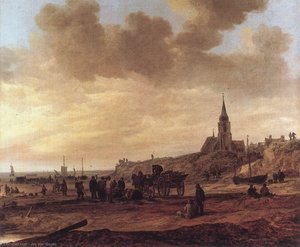
Jan Josephszoon van Goyen’s “A Beach with Fishing Boats” isn't merely a depiction of a coastal scene; it’s a carefully constructed meditation on light, atmosphere, and the quiet rhythms of Dutch life. Painted in 1653, during the height of the Golden Age, this work offers a glimpse into a world where the beauty of the natural landscape was increasingly valued alongside the grandeur of courtly art. Van Goyen, a master of tonal painting, eschewed the vibrant colors and dramatic compositions favored by some of his contemporaries, instead opting for a restrained palette dominated by grays, browns, and subtle greens – hues that perfectly capture the muted light filtering through a hazy sky over the North Sea. The composition itself is deceptively simple: a sandy beach dotted with fishing boats, their hulls reflecting the pale sunlight, and figures engaged in various activities—mending nets, unloading catches, or simply enjoying the day’s leisure. Yet, within this apparent tranquility lies a remarkable depth of observation and technical skill.The Language of Light and Shadow
Van Goyen's genius lay not in rendering photographic realism but in conveying *atmosphere*. He achieved this through an extraordinary manipulation of light and shadow – a technique he honed by studying the works of Esaias van de Velde, his early mentor. Notice how the artist uses thin washes of paint to create a sense of depth and distance, blurring the horizon line and suggesting the vastness of the sea beyond. The boats themselves are rendered with an almost ghostly quality, their forms dissolving into the surrounding haze. This deliberate ambiguity invites the viewer’s imagination to fill in the details, creating a deeply personal connection to the scene. The artist's use of broken brushstrokes – tiny, individual marks that coalesce to form larger shapes – adds to the painting’s textural richness and contributes to its overall sense of movement. The subtle variations in tone suggest the shifting patterns of light on water and sand, capturing not just a single moment but an entire sensory experience.A Window into 17th-Century Dutch Life
“A Beach with Fishing Boats” offers a valuable insight into the daily lives of ordinary people during the Dutch Golden Age. The scene is populated by figures engaged in familiar activities – fishing, mending nets, and preparing their catches – reflecting the importance of maritime trade and coastal communities to the Dutch economy. The presence of the horse on the right side of the painting adds an intriguing element, perhaps suggesting a connection between rural life and the sea. It’s a detail that invites speculation about the broader context of the scene—perhaps a farmer returning from the coast with his livestock, or a local merchant overseeing the unloading of goods. The painting isn't simply a landscape; it’s a snapshot of a vibrant community at work and play.Symbolism and Emotional Resonance
Beyond its documentary value, “A Beach with Fishing Boats” resonates with deeper symbolic meanings. The scene evokes a sense of peace and contentment—a reminder of the simple pleasures of life and the enduring beauty of nature. The muted colors and atmospheric perspective create a feeling of quiet contemplation, inviting the viewer to slow down and appreciate the present moment. Van Goyen’s masterful use of light and shadow also imbues the painting with a subtle sense of melancholy – a recognition of the fleeting nature of time and the inevitability of change. The scene is not celebratory; it's a humble observation of life, capturing a transient beauty that invites reflection.A Timeless Masterpiece
Reproduced faithfully in this format, “A Beach with Fishing Boats” retains its captivating charm and atmospheric depth. Its subtle nuances and evocative imagery make it an ideal addition to any interior space, bringing a touch of serene beauty and historical insight to your home or office. The painting’s enduring appeal lies not only in its technical brilliance but also in its ability to transport the viewer to another time and place—a world where the rhythms of nature and the lives of ordinary people were celebrated with quiet dignity.Susiję kūriniai



Autoriaus biografija
Jan Josephszoon van Goyen: Gyvenimas peisžios
Pradiniai metai ir mokslas
- 1596 m. januario 13 d. Olandijoje, Leiden mieste, gimęs Jan Josephszoon van Goyen, tapo viena iš svarbiausių figūrų olandų Aukso amžiaus paveislininkystėje.
- Pradėjęs mokytis kaip mokinys Leidene, vėliau jis toliau tobulino savo meistriškumą Haarleme, dirbdamas su Esaias van de Velde. Ši pradinė mokslų programa tapo lemiama jo meninei plėtrai.
Meninė stilistika ir evoliucija
- Van Goyen stilius yra iškart atpažįstamas dėl savo paprastumo, subtilių toninių variacijų ir riboto paletės naudojimo – pagrindiai tai yra pilkos, rudos ir žalios spalvos.
- Jis atsisakė tuo metu populiarių ryškių ir detalizuotų peisžios, tapdamas novatorių, siekdamas sukurti realistiškesnį ir atmosferinį vaizdinį.
- Nors jo ankstyvieji darbai rodo įtaką Van de Velde, jis greitai išрабоjo savo išskirtinę stilią, sutelkdamas dėmesį į olandų peisžios esmės įtvirtinimą.
Derlus kūrybinis darbas ir žinomos apeigos
- Van Goyen buvo neįtikėtinai produktyvus menininkas, per savo karjerą sukūręs maždaug 1200 paveislių ir daugiau nei 1000 piešinių.
- Tarp jo žinomų veikalų galima išskirti Upės peisžį su vėtrąlenčia, kuris yra esminis jo toninių peisžrių pavyzdys, bei Žvejų prie ežero kranto, demonstruojantį jo gebėjimą vaizduoti ramią vandens peisžrį.
- Jis dažnai tapė upių, ežerų, smėlio plytelių ir platumų dangaus scenomis, įtrapindamas unikalią olandų kaimo gamtos pratimę.
Įtakos ir palikimas
- Nors jis pats buvo įkvėstas Van de Velde, Van Goyen kūrinys tapo itin įtakingas.
- Jis tiesiogiai paveikė tokius menininkus kaip Jan Steen, kuris buvo vienas jo mokinių.
- Jo pabrėžimas realizmą ir atmosferinius poveikius atvėrė kelią vėlesniems peisžrių paveislininkams.
Finansinės sunkybės ir vėlesnieji metai
- Nepaisant meninės sėkmės, Van Goyen visą gyvenimą susidūrė su didelėmis finansinėmis sunk აmėmis.
- Jis dalyvavo įvairiuose verslo veiklose, įskaitant tulpanų spekuliacijas („Tulipomanija“) ir nekilnojamojo turto investicijas, tačiau dažnai atsidūrėdavo didingo skolinimosi bėdoje.
- Pasak pranešimų, miręs 1656 m. balandžio 27 d. Hago mieste, jis turėjo 18 000 guldų skolos.
Istorinė reikšmė
- Van Goyen kūrinys laikomas olandų Aukso amžiaus paveislininkystės pamatu ir svarbiu indėliu į peisžrių meno vystymą.
- Jis įtrapė 17 amžiaus Holandijos dvasią, atspindėdamas jos augantį klestėjimą ir ryšį su žeme.
- Jo inovatyvūs technikos metodai ir realistiški vaizdiniai šiandien toliau įkvepia menininkus ir žavi žiūrovus.

Janas Josapas Van Gojenas
1596 - 1656 , Nyderlandai
Trumpa informacija apie kūrėją
- Birth Date: 1596 m. जानेवारी 13 d.
- Birth Place: Leidenas, Nyderlandai
- Death Date: 1656 m. balandžio 27 d.
- Influenced: Jan Steen
- Influenced By: Esaias van de Velde
- Movement: Nyderlandų Aukso amžiaus tapybos
- Name: Jan Josephszoon van Goyen
- Nationality: nyderlandietis
- Notable Works:
- Upės landšaftas su vėliavėle
- Žvejai prie ežero kranto
Susiję straipsniai

Golden Light & Dutch Skies: The Timeless Magic of Dutch Golden Age Landscapes
Discover the breathtaking beauty of Dutch Golden Age landscapes. Explore the mastery of light, chiaroscuro, and 17th-century realism through an expert art history lens, celebrating the enduring legacy of the Dutch Masters for discerning collectors and art lovers.

Jan van Goyen: Master of Dutch Landscape & Atmospheric Perspective
Discover Jan van Goyen, the master of Dutch landscape painting. Explore his subtle technique, atmospheric realism & lasting influence on art history. Learn about this 17th-century pioneer at AllPaintingsStore.

Jacob van Ruisdael: Master of Dutch Landscape & the Evocation of National Identity
Explore the life & work of Jacob van Ruisdael, the preeminent Dutch landscape painter. Discover his technical brilliance, symbolic depth, and lasting influence on art history. Learn about collecting Ruisdael's masterpieces.
Rembrandto van Rijn šedevrai: 25 paveikslai, įkvėpę amžius | AllPaintingsStore
Atraskite 25 įspūdingiausius Rembrandto paveikslus! Išsami istorija, meno technikos ir simbolika. Olandų baroko šedevrai jūsų interjerui – aukštos kokybės reprodukcijos AllPaintingsStore.com. Explore the full collection online!

Cornelis van Poelenburch: Bridging Mannerism & the Dutch Baroque Landscape
Discover Cornelis van Poelenburch, a pivotal Dutch Baroque landscape painter bridging Mannerism & Italianate styles. Explore his life, key works, and lasting influence on 17th-century art with AllPaintingsStore.

