


 Peržiūrėti realaus dydžio版
 Pasidalinti
 Dalintis
 Išsamiau
 Vadovas

 Atsisiųsti
 Panašūs eksponatai
 Rentgeno spindulių nuotrauka
 Automatinė diorama
 Q&A
Q&A Statistika
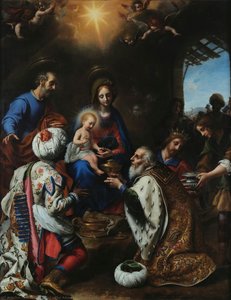
Circumcision
 Aliejus
- Sieninis menas
- Baroque Revival
 1580
1580- Renesansas
 95.0 x 73.0 cm
 Hermitage muziejus
 Skaityti daugiau
Giclée / Meno spausdinimas
Muziejų lygio „giclée“ arba drobos spausdinimas: greita gamyba ir lankstios apdailos parinktys. ( Pirkti rankų darbo tapybą Perejti prie skaitmeninių vaizdų)




P118B €10

P118H €10

P118W €10

P438Z €10

P508JH €12

P508YH €12

P805H €10

P805Z €10

P919BZ €10

P919G €10

P919XJ €10

P959ZH €10

P968JZ €12

W106C €8

W218G €10

W218JH €8

W218Y €10

W307PJ €10

W316G €10

W316PJ €8

W316Y €10

W398PJ €8

W4111J €10

W500HY €15

W500JH €15

W692G €12

W849H €8

W940BG €15

W953PJ €8




Pasirinkite iš mūsų nustatytų dydžių, atitinkančių originalaus meno kūrinio proporcijas.

Įveskite jums reikiamą plotį ir aukštį, kad atvaizdas derėtų prie jūsų rėmo ar sienos. Spausdiną galima tik sumažinti, bet nepadidinti virš originalaus paveikslėlio dydžio, todėl keičiant proporcijas, dalis vaizdo prarandama. Prieš spausdinimą atsiųsime jums skaitmeninį maketą patvirtinimui. Šioje puslapio nuotraukoje matomas pjūvis nėra tikslus – jį rodo tik maketas.
Pristatymas visame pasaulyje () per 2 weeks, o ne įprastas 4/5 savaičių laikotarpis. (30 spalis)

Nemokamas greitasis pristatymas visame pasaulyje

Aukštos kokybės lininis drobė

Pilnas siuntimo draudimas

Muitinės mokesčių grąžinimo garantija

Tikro spalvų atitikimo garantija

100 dienų grąžinimo politika (tik esant įtaigoms)

100% pinigų grąžinimo garantija

Nuolaida dideliems užsakymams
 Stiklo variantas prieinamas tik pasirinkus dydį iki 110 cm

Circumcision
Giclée / Meno spausdinimas
Reprodukcijos matmenys
-


Bendroji kaina
€ 57
Luis de Carbajal: Toledo’s Gothic Soul Transformed
Luis de Carbajal (c. 1531 – after 1618) stands as one of the most prolific and influential painters of the Spanish Renaissance, a figure inextricably linked to Toledo's artistic resurgence—a period where the echoes of medieval grandeur mingled with burgeoning humanist ideals. While overshadowed by contemporaries like El Greco—with whom he shared formative artistic connections—Carvajal’s distinctive style cemented his place in art history as a pivotal interpreter of Gothic sensibilities adapted to the humanist spirit, securing him a prominent position within Toledo's cultural landscape. His output spanned decades, resulting in an impressive body of work that continues to inspire admiration for its meticulous detail and profound emotional resonance. ### The Crucible of Influence: Early Training & El Greco’s Legacy Carvajal’s artistic journey began amidst the vibrant intellectual atmosphere of Toledo, a city deeply rooted in religious tradition—a fact profoundly shaped by the arrival of Juan Bautista El Greco, who established himself as Carbajal's mentor and instilled within him a fascination for dramatic lighting—a technique characteristic of El Greco’s Mannerist style. This formative influence extended beyond mere stylistic imitation; it fostered an unwavering commitment to conveying spiritual depth through meticulously rendered figures, grounding Carbajal’s artistic vision in humanist principles alongside devout faith. Crucially, he studied under Juan de Villoldo, absorbing classical proportions and compositional balance—elements that would inform his approach to portraying biblical narratives with grace and precision. ### Cathedral Altarpieces: Monumental Expressions of Faith & Gothic Revival Carvajal's fame rests primarily on his monumental cathedral altarpieces—a genre that flourished during the Habsburg reign and served as a powerful medium for disseminating theological narratives. Commissioned by Philip II to commemorate the Holy Spirit, these canvases represent Carbajal’s zenith of artistic achievement. Each depiction is imbued with palpable emotion – compassion, humility, courage – reflecting the moral values championed by humanist thinkers. The composition—characterized by pyramidal structures and dramatic diagonals—mirrors the architectural grandeur of the cathedral itself, reinforcing its symbolic significance as a locus of divine presence. He skillfully employed oil paint on canvas with painstaking precision, layering translucent glazes to achieve luminous effects that capture subtle nuances of expression in his figures. This technique harkens back to Gothic traditions – stylized drapery and elongated forms – subtly elevating the artwork beyond mere visual representation into emotionally resonant experience. ### Symbolism & Detail: Echoes of Toledo’s Spiritual Heritage Carvajal's artistic approach wasn't merely about replicating religious iconography; it was about reimagining Gothic sensibilities within the framework of Renaissance humanism. He deliberately incorporated elements reminiscent of medieval art—such as stylized drapery and elongated figures—to evoke a sense of solemn reverence and honor Toledo’s rich ecclesiastical heritage. The meticulous attention to detail—from the folds of robes to the expressions on faces—demonstrates Carbajal's profound understanding of human psychology and elevates his paintings into emotionally evocative works. These canvases stand as testament to Carbajal's skill, creativity, and unwavering devotion to conveying the sublime – a legacy that secures him a place among Spain’s greatest artists and ensures that his masterpieces endure for generations to come. ### Rediscovery & Legacy: A Toledo Treasure Revisited Today, Carbajal’s canvases reside primarily in the Museo del Prado in Madrid, where they continue to captivate audiences with their breathtaking beauty and spiritual depth. Recent scholarship has illuminated the significance of his work within the broader context of Toledo’s artistic revival—a period marked by a renewed interest in classical ideals alongside an enduring devotion to Christian faith. His paintings serve as a poignant reminder of Toledo's artistic past, embodying the spirit of its Gothic soul transformed into the luminous elegance of Mannerism – a testament to Carbajal’s enduring contribution to Spanish art history.Klausimai ir atsakymai
Kaip kūrinys „Circumcision“ dera su Luis De Carbajal temomis ir stiliumi?
„Circumcision“ kartu su kitais Luis De Carbajal kūriniais pasižymi Baroque Revival stiliumi ir tamsiomis temomis: religious symbolism, gothic revival, patron saint imagery, cathedral decoration, baroque tradition.
Kokią emociją perteikia Baroque Revival stiliaus kūrinys „Circumcision“?
„Circumcision“ Melancholiškas emocija akompaniuoja jo Baroque Revival stiliui.
Kaip rasti panašių kūrinių kaip „Circumcision“ – Luis De Carbajal?
Darbai, panašūs į „Circumcision“, pateikiami kūrinio Panašūs kūriniai puslapyje.
panašūs kūriniai



Autoriaus biografija
The Radiant Legacy of Luis de Carbajal
In the heart of Toledo, a city where the echoes of medieval devotion meet the burgeoning light of the Renaissance, the life of Luis de Carbajal unfolded as a profound testament to spiritual and artistic endurance. Born around 1531, Carbajal emerged from the vibrant, intellectually charged atmosphere of Spain’s most storied religious center. While history often casts a long shadow through the ethereal mysticism of El Greco, Carbajal stands as a monumental figure in his own right—a master who bridged the gap between the soaring, structural grandeur of the Gothic tradition and the nuanced, humanistic spirit of the Spanish Renaissance. His journey was one of deep connection to the sacred, moving through the halls of cathedrals and royal monasteries, leaving behind a visual legacy that captured the very soul of an era defined by faith.
The foundations of Carbajal’s artistry were laid within the prestigious workshops of Toledo, under the guidance of masters like Juan de Villoldo. This early training provided him with a rigorous understanding of classical proportions and compositional balance, yet it was his encounter with the transformative energy of El Greco that truly ignited his creative vision. From this connection, Carbajal embraced the dramatic power of chiaroscuro, learning to manipulate light and shadow to evoke deep emotional resonance. Unlike the more otherworldly, elongated figures of his contemporary, Carbajal’s work maintained a grounded, architectural dignity. He drew inspiration from the very bones of Toledo—its ribbed arches, vaulted ceilings, and stained glass—incorporating these Gothic elements into his canvases to create spaces that felt both physically immense and spiritually intimate.
A Master of the Altarpiece and Royal Commission
Carbajal’s career was marked by an extraordinary level of productivity, with estimates suggesting he produced over 300 works during his long life. His talent earned him the prestigious distinction of being named a painter for King Philip II of Spain, a role that placed him at the epicenter of the Spanish Golden Age. His brush traveled through the most sacred corridors of the empire, from the intimate oratories of the Pardo Palace to the imposing halls of the monastery in El Escorial. One of his most significant achievements was the creation of seven large-scale canvases for the church of the Escorial in 1570, where he masterfully paired saints such as Cosme and Damián, and Cecilia and Barbara, weaving complex theological narratives into single, cohesive compositions.
His ability to command large-scale religious subjects allowed him to become a primary architect of visual devotion. His works were not merely decorations but were essential tools for the dissemination of Catholic doctrine during a period of intense religious fervor. Through his meticulous attention to detail and his ability to render the divine within a tangible, earthly framework, he achieved several notable milestones:
- Monumental Altarpieces: He specialized in massive cathedral commissions that served as the focal points for liturgical worship, embodying the grandeur of the Habsburg reign.
- Narrative Depth: His paintings, such as the Circumcision, utilized dramatic lighting to guide the viewer's eye through complex biblical stories.
- Ecclesiastical Influence: By decorating the Archbishop's chapel in Toledo and various convent cloisters, he shaped the visual identity of the Spanish Church.
Historical Significance and Enduring Spirit
The historical importance of Luis de Carbajal lies in his role as a stabilizer of tradition during a time of radical artistic change. While the art world moved toward the more distorted and emotive Mannerism, Carbajal provided a sense of continuity, anchoring the new humanist ideas within the familiar, comforting language of Gothic architecture and classical balance. He was a painter who understood that to move the heart, one must first respect the structure of the faith. His work remains a vital link in the evolution of Spanish art, representing a moment when the medieval past and the Renaissance future existed in perfect, painted harmony.
Today, the traces of his genius can still be found in the great repositories of Spanish heritage, including the Museo del Prado in Madrid. To study Carbajal is to witness the pulse of Toledo itself—a master who took the stone and light of his homeland and transformed them into an eternal dialogue between the human and the divine. His life, stretching well into the 17th century, serves as a bridge across eras, ensuring that the spiritual gravity of the Spanish Renaissance would never be forgotten.

Luis De Carbajal
1531 - 1618 , Spain
Trumpa informacija
- Full Name: Luis de Carbajal y de la Cueva
- Nationality: Spanish
- Date Of Birth: 1531
- Date Of Death: 1618
- Place Of Birth: Toledo, Spain
- Notable Artworks: ['Circumcision']
- Artistic Movement Or Style: Religious Painting; Gothic Art Style
- Artists Who Influenced This Artist: ['Alonso Berruguete']
- Artists Or Movements Influenced By This Artist: ['El Greco']
Susiję straipsniai

Divine Visions: Top 10 Masterpieces of Religious Art Through the Ages
Journey through history with 10 iconic religious masterpieces. From Renaissance legends to Baroque drama, explore the stories behind these sacred works. Find museum-quality art reproductions and curated decor inspiration. Discover all masterpieces on AllPaintingsStore.com.

Masterpieces of Light and Spirit: The Top 25 El Greco Artworks
Journey through the spiritual intensity of El Greco's greatest works. From Mannerist mastery to dramatic light, explore 25 iconic paintings and find museum-quality reproductions for your collection. Discover all masterpieces on AllPaintingsStore.com.

Divine Visions: 10 Masterpieces That Capture the Essence of Saints
Journey through history with 10 iconic paintings of saints. From Renaissance mastery to Baroque drama, explore the stories behind these timeless religious masterpieces. Find museum-quality art reproductions and curated decor inspiration. Discover all masterpieces on AllPaintingsStore.com.

25 Masterpieces by Francisco de Zurbarán: The King of Spanish Baroque
Immerse yourself in the dramatic world of Francisco de Zurbarán. Explore 25 iconic Spanish Baroque masterpieces defined by intense tenebrism and spiritual realism. Find inspiration for museum-quality art reproductions and decor. Discover all masterpieces on AllPaintingsStore.com.


