

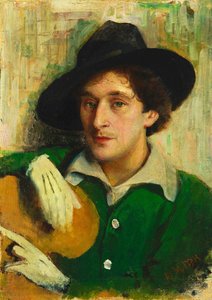
1923. Acrylic On Canvas.

§ 1Catalogue data


Šis kūrinys yra saugomas autorinės teisės
Šiame puslapyje rodomas meno kūrinys yra saugomas autorių teisių įstatymais, todėl neturime teisės legaliai kurti ar parduoti jo identiškos reprodukcijos. Ši apsauga užtikrinama remiantis tokiais tarptautiniais susitarimais kaip Bernės konvencija ir pagal nacionalines įstatymų nuostatas, įskaitant tas, kurias nurodo JAV autoriškos teisės įstatymas – 17-asis skyrius.
Kaip pagarbią ir teisėtą alternatyvą, mes siūlome pagal užsakymą rankomis dažytus paveikslus, įkvėptus originalo. Mūsų įgudę ir profesionalūs menininkai kruopščiai tiria originalo stilių, nuotaiką ir meninę esmę, kad sukurtų naują, unikalią kūrinį, kuris sukelia tą paties jausmą – išlikdamas tuo tarciau originaliu, savarankišku kūrybiniu darbu.
Šis metodas visiškai atitinka autorių teises, nes jame nėra saugomo kūrinio kopijavimo ar dubliavimo. Tai yra kūrybinė reinterpretacija – naujas paveikslas, kurį įkvėpė originalas, tačiau kuris nėra jo identiškas.
 Skaityti daugiau
§ 2Abstract
Kolekcinio objekto aprašas
Autoriaus biografija
Atraskite Markas Šagalą (1887–1985), rusų-prancūzų menininko kūrybą! Jo sapnų paveikslai, žydiško folklorinio palikimo temos ir nuostabūs vitražai garsina pasaulį. Pažinkite jo unikalų stilių ir svarbą!
§ 3Commentary
Asking the Way: A Dreamscape in Black Ink
Marc Chagall’s “Asking the Way,” created around 1923 during his Parisian period, isn't merely an image; it’s a portal into a subconscious realm—a testament to Chagall’s unwavering commitment to capturing the essence of memory and imagination. Executed in black ink on white paper, this etching embodies the spirit of Naïve Art (Primitivism), prioritizing expressive line work over meticulous realism.
- Composition & Perspective: The artwork presents an asymmetrical arrangement dominated by a colossal head—a motif recurrent throughout Chagall’s oeuvre—positioned prominently at the lower half. A man, adorned with a hat, navigates this landscape atop the head, holding reins or a whip, suggesting guidance and control amidst a simplified backdrop of trees and buildings. Notably absent is traditional perspective; instead, spatial relationships are dictated by symbolic significance, fostering a dreamlike atmosphere.
- Technique & Line Work: Chagall’s masterful technique relies on freehand drawing utilizing black ink on paper—a deliberate choice that maximizes tonal variation through hatching and cross-hatching. These lines aren't merely descriptive; they pulsate with emotion, conveying a sense of movement and capturing the fluidity characteristic of Chagall’s artistic vision.
- Symbolism & Emotional Impact: The oversized head likely represents memory or perhaps societal structures—a recurring symbol in Chagall’s work. The man's posture speaks to an active quest for direction, mirroring a broader exploration of identity and navigating complex realities. An undercurrent of melancholy pervades the scene, reflecting Chagall’s profound sensitivity to human experience.
- Historical Context: Produced during the turbulent years following World War I, “Asking the Way” reflects the anxieties and aspirations of its time—a period marked by disillusionment yet brimming with artistic experimentation. Chagall's embrace of Naïve Art aligns with a broader movement rejecting academic conventions in favor of unfiltered emotion and intuitive representation.
This etching’s monochromatic palette amplifies the impact of line work, emphasizing texture and creating depth without resorting to illusionistic techniques. It invites contemplation—a journey into Chagall's inner world where dreams intertwine with reality, leaving an indelible impression on any viewer fortunate enough to experience its evocative beauty.
Recommended Reproduction: A high-quality hand-painted reproduction of “Asking the Way” captures the essence of Chagall’s artistic spirit, bringing his dreamlike vision to life in vibrant color—a stunning addition to any art collection or interior design scheme.Klausimai ir atsakymai
Kokia „Asking the Way“ – Markas Šagalas orientacija?
„Asking the Way“ formatas yra Portrait. Tai padeda planuojant, kur būtų patalpinta reprodukcija.
Kokia yra autorinės teisės situacijos priežastis kūriniam darbui „Asking the Way“ – Markas Šagalas?
„Asking the Way“, kurį sukūrė Markas Šagalas, yra vis dar saugoma autorineje teisėje. Autorinės teisės apsaugos terminai skaičiuojami nuo autoriaus mirties, o Markas Šagalas mirė 1985 m.
Kaip suformuota „Asking the Way“ – Markas Šagalas spalvų kompozicija?
„Asking the Way“ – Markas Šagalas spalvų kompozicijoje Serene kontrastas susilieja su Discordant Palette harmonija.


 Perjungti į spausdinamus版作品


 Dėl meno kūrinių ar reprodukcijų, kurių bet kuri pusė yra didesnė nei 105 cm (apie 41 inch), rėmas bus siunčiamas kaip išskaidytas surinkimo rinkinys. Šis metodas užtikrina saugų pristatymą ir apsaugo nuo transportavimo metu galimos žalos.


