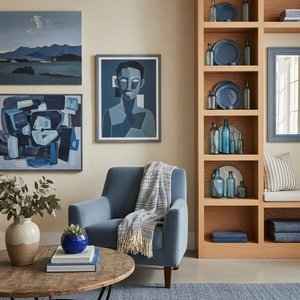
Acrylic On Canvas, 100.0 x 81.0 cm.

§ 1Katalogo duomenys

- 100.0 x 81.0 cm


Šis kūrinys yra saugomas autorinės teisės
Šiame puslapyje rodomas meno kūrinys yra saugomas autorių teisių įstatymais, todėl neturime teisės legaliai kurti ar parduoti jo identiškos reprodukcijos. Ši apsauga užtikrinama remiantis tokiais tarptautiniais susitarimais kaip Bernės konvencija ir pagal nacionalines įstatymų nuostatas, įskaitant tas, kurias nurodo JAV autoriškos teisės įstatymas – 17-asis skyrius.
Kaip pagarbią ir teisėtą alternatyvą, mes siūlome pagal užsakymą rankomis dažytus paveikslus, įkvėptus originalo. Mūsų įgudę ir profesionalūs menininkai kruopščiai tiria originalo stilių, nuotaiką ir meninę esmę, kad sukurtų naują, unikalią kūrinį, kuris sukelia tą paties jausmą – išlikdamas tuo tarciau originaliu, savarankišku kūrybiniu darbu.
Šis metodas visiškai atitinka autorių teises, nes jame nėra saugomo kūrinio kopijavimo ar dubliavimo. Tai yra kūrybinė reinterpretacija – naujas paveikslas, kurį įkvėpė originalas, tačiau kuris nėra jo identiškas.
 Skaityti daugiau
§ 2Abstraktus
Kolekcinio objekto aprašas
Autoriaus biografija
Atraskite Markas Šagalą (1887–1985), rusų-prancūzų menininko kūrybą! Jo sapnų paveikslai, žydiško folklorinio palikimo temos ir nuostabūs vitražai garsina pasaulį. Pažinkite jo unikalų stilių ir svarbą!
§ 3Komentaras
Marc Chagall: A Life in Color and Imagination
Marc Chagall (1887-1985) stands as one of the most distinctive figures in 20th-century art, celebrated for his unparalleled blend of surrealism and folk art—a fusion that captured the spirit of both European intellectual currents and Jewish cultural heritage. His canvases pulsate with vibrant hues, dreamlike imagery, and symbolic representations that continue to fascinate audiences worldwide. One artwork embodying this singular vision is Bride with Blue Face (1932), a painting that transcends mere visual representation to convey profound emotional and spiritual depth.Artistic Style and Influences
Chagall’s artistic journey began in Vitebsk, Belarus—a city steeped in Jewish tradition and profoundly shaped by the confluence of Russian Orthodox Christianity and Yiddish culture. Early training under Léon Bakst instilled in him a disciplined approach to composition and theatrical design, while encounters with Cubism and Fauvism broadened his stylistic horizons. However, it was Surrealism that truly liberated Chagall’s imagination, allowing him to explore subconscious desires and fantastical narratives—a technique he honed throughout his prolific career. Bride with Blue Face exemplifies this stylistic fusion, utilizing bold color palettes and unconventional perspectives to create a scene that defies rational explanation.Composition and Symbolism
The painting’s central figure—a woman adorned in white—holds aloft a bouquet of flowers, establishing a serene focal point against a backdrop teeming with surrealistic elements. Birds soar overhead, representing freedom and aspiration; figures populate the landscape, embodying human connection and vulnerability; a car and a train traverse the scene, symbolizing movement and transformation; and a house anchors the composition, signifying stability and domesticity. Yet it is the woman’s face—painted in an arresting shade of blue—that commands immediate attention. This chromatic choice transcends mere aesthetic consideration; blue has long been associated with spirituality, melancholy, and introspection—qualities that resonate deeply within Chagall's oeuvre. The blue hue serves as a conduit for conveying emotions beyond the visible realm, inviting viewers to contemplate themes of love, loss, and remembrance.Historical Context
Chagall’s artistic development coincided with significant intellectual and social upheavals of the early 20th century—the rise of Dadaism, Expressionism, and Surrealism challenging established conventions and redefining notions of beauty and truth. Influenced by these movements, Chagall nevertheless forged his own distinctive path, prioritizing personal vision over adherence to stylistic dogma. Bride with Blue Face stands as a testament to Chagall’s ability to synthesize disparate influences—creating something wholly original and profoundly evocative. Its enduring appeal speaks to the universal desire for beauty and meaning in an increasingly fragmented world.Relevance in Modern Art
Chagall's influence extends far beyond the confines of his own time, inspiring generations of artists across disciplines—from architecture to fashion to film. His bold use of color and dreamlike imagery continues to resonate with contemporary sensibilities, demonstrating the timeless power of artistic expression. For those seeking inspiration or contemplating a purchase, AllPaintingsStore.com offers exceptional reproductions of Chagall’s masterpieces, including Bride with Blue Face and other notable pieces like Artist at Easel and Prophet Isaiah—allowing collectors to experience the brilliance of Chagall’s vision firsthand.Klausimai ir atsakymai
Kiek harmoningai dera „Bride with Blue Face“ – Markas Šagalas spalvos?
„Bride with Blue Face“ – Markas Šagalas pasižymi Discordant Palette spalvų harmonija.
Kam rekomenduojamas naudojimui „Bride with Blue Face“ – Markas Šagalas?
Rekomenduojamas naudojimo būdas kūriniui „Bride with Blue Face“ – Markas Šagalas yra Accent. Jis taip pat gali būti naudojamas kitoms paskritis.
Kokio Markas Šagalas kūrybos etapo dalis yra „Bride with Blue Face“?
Markas Šagalas kūrybos enceklopedijoje kūrinys „Bride with Blue Face“ priskiriamas Mature Period laikotarpiui. Šis etapas leidžia palyginti jį su kitais šio autoriaus kūriniais.


 Perjungti į spausdinamus版作品


 Dėl meno kūrinių ar reprodukcijų, kurių bet kuri pusė yra didesnė nei 105 cm (apie 41 inch), rėmas bus siunčiamas kaip išskaidytas surinkimo rinkinys. Šis metodas užtikrina saugų pristatymą ir apsaugo nuo transportavimo metu galimos žalos.