

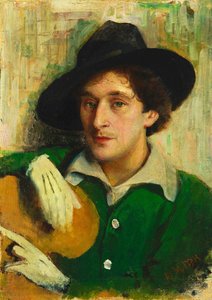
1931. Gouache, 64.0 x 51.0 cm.

§ 1Katalogo duomenys

- 64.0 x 51.0 cm


Šis kūrinys yra saugomas autorinės teisės
Šiame puslapyje rodomas meno kūrinys yra saugomas autorių teisių įstatymais, todėl neturime teisės legaliai kurti ar parduoti jo identiškos reprodukcijos. Ši apsauga užtikrinama remiantis tokiais tarptautiniais susitarimais kaip Bernės konvencija ir pagal nacionalines įstatymų nuostatas, įskaitant tas, kurias nurodo JAV autoriškos teisės įstatymas – 17-asis skyrius.
Kaip pagarbią ir teisėtą alternatyvą, mes siūlome pagal užsakymą rankomis dažytus paveikslus, įkvėptus originalo. Mūsų įgudę ir profesionalūs menininkai kruopščiai tiria originalo stilių, nuotaiką ir meninę esmę, kad sukurtų naują, unikalią kūrinį, kuris sukelia tą paties jausmą – išlikdamas tuo tarciau originaliu, savarankišku kūrybiniu darbu.
Šis metodas visiškai atitinka autorių teises, nes jame nėra saugomo kūrinio kopijavimo ar dubliavimo. Tai yra kūrybinė reinterpretacija – naujas paveikslas, kurį įkvėpė originalas, tačiau kuris nėra jo identiškas.
 Skaityti daugiau
§ 2Abstraktus
Kolekcinio objekto aprašas
Chagall’s fascination with Vitebsk—its cultural blend—influenced his aesthetic sensibility, appearing repeatedly in his paintings. He pursued formal training initially with a local sign painter before embarking on an independent artistic path.
Autoriaus biografija
Atraskite Markas Šagalą (1887–1985), rusų-prancūzų menininko kūrybą! Jo sapnų paveikslai, žydiško folklorinio palikimo temos ir nuostabūs vitražai garsina pasaulį. Pažinkite jo unikalų stilių ir svarbą!
§ 3Komentaras
A Symphony of Color and Dreamlike Narrative
In the vast, evocative landscape of twentieth-century modernism, few works capture the intersection of spiritual fervor and surrealist whimsy as poignantly as Marc Chagall’s “Moses and Aaron.” Completed in 1931, this mesmerizing gouache on canvas serves as a profound window into the artist's soul, blending his deeply personal recollections of Vitebsk, Belarus, with the timeless weight of biblical tradition. To gaze upon this piece is to step into a realm where the boundaries between reality and memory dissolve, replaced by a dreamlike atmosphere that feels both ancient and startlingly immediate. Chagall does not merely depict two figures; he orchestrates a visual poem that speaks to the enduring power of faith and the boundless reaches of human imagination.
The painting presents Moses and Aaron standing side by side, their presence commanding yet ethereal. Their mouths are captured agape, as if caught in the middle of a profound, sacred dialogue or perhaps a shared moment of divine revelation. Chagall’s mastery lies in his ability to use distortion not as a technical flaw, but as a spiritual tool. The elongated proportions and stylized features of the figures evoke a sense of transcendence, lifting them out of the mundane world and into a celestial plane. This deliberate departure from realism allows the viewer to bypass rational thought and connect directly with the raw, emotional essence of the narrative.
The Soul of Naive Art and Surrealist Vision
At its core, “Moses and Aaron” is a masterclass in what is often termed pseudo-naïve art. Chagall intentionally rejected the rigid, academic conventions of his era, opting instead for a style that mirrors the uninhibited spontaneity of folk art. By embracing vibrant, saturated hues—predominantly deep reds, luminous yellows, and soulful blues—he creates a palette that pulses with life. This technique, rooted in the traditions of his Hasidic Jewish upbringing, allows him to tap into primal instincts and ancestral memories. The colors do not merely decorate the canvas; they vibrate with the intensity of the emotions they represent, turning a simple biblical scene into a kaleidoscopic experience.
While the roots of the work are grounded in the simplicity of folk traditions, there is an undeniable layer of Surrealism woven through the composition. The way forms drift and colors bleed into one another suggests a world governed by the logic of dreams rather than the laws of physics. For collectors and enthusiasts of fine art, this duality makes the piece particularly captivating. It offers the comfort of recognizable cultural heritage alongside the intellectual intrigue of the avant-garde. It is a work that invites endless contemplation, as each layer of color reveals a new nuance of Chagall’s complex psychological landscape.
A Timeless Addition to the Discerning Collection
For the interior designer or the dedicated art collector, a high-quality reproduction of “Moses and Aaron” offers more than just aesthetic beauty; it provides a focal point of profound narrative depth. The painting’s ability to command attention through its bold color palette makes it an extraordinary addition to spaces that seek to inspire thought and evoke emotion. Whether placed in a quiet study, a grand gallery, or a contemporary living space, the work acts as a portal, bringing a sense of history, spirituality, and whimsical wonder into the modern home.
Owning a piece that echoes Chagall’s vision is an opportunity to surround oneself with the "poetry of color." This artwork stands as a testament to a period when art was used to bridge the gap between the earthly and the divine. It remains a cornerstone of modernist history, reminding us that even in our most fragmented eras, there is beauty to be found in the reclamation of memory, the celebration of heritage, and the courage to dream in full color.
Klausimai ir atsakymai
Ar „Moses and Aaron“ – Markas Šagalas yra šviesaus ar tamsaus tono kūrinys?
„Moses and Aaron“ bendroji ryškumas yra balanced, o švytėjimas – Gentle Luminance.
Kas sukūrė „Moses and Aaron“ ir kokiu stiliumi tai atlikta?
„Moses and Aaron“ kūrybinį darbu pasižymi Markas Šagalas, taikantis Naive Art / Primitivism stilių. Autorius ir stilius nurodo šio kūrinio tradiciją.
Kokia „Moses and Aaron“ – Markas Šagalas technika ir matmenys?
Darbos „Moses and Aaron“ – Markas Šagalas technika yra Gouache, o nurodyti jo matmenys – 64 x 51 cm.


 Perjungti į spausdinamus版作品


 Dėl meno kūrinių ar reprodukcijų, kurių bet kuri pusė yra didesnė nei 105 cm (apie 41 inch), rėmas bus siunčiamas kaip išskaidytas surinkimo rinkinys. Šis metodas užtikrina saugų pristatymą ir apsaugo nuo transportavimo metu galimos žalos.


