

1933. Oil On Canvas, 90.0 x 70.0 cm.

§ 1Katalogo duomenys

- 90.0 x 70.0 cm


Šis kūrinys yra saugomas autorinės teisės
Šiame puslapyje rodomas meno kūrinys yra saugomas autorių teisių įstatymais, todėl neturime teisės legaliai kurti ar parduoti jo identiškos reprodukcijos. Ši apsauga užtikrinama remiantis tokiais tarptautiniais susitarimais kaip Bernės konvencija ir pagal nacionalines įstatymų nuostatas, įskaitant tas, kurias nurodo JAV autoriškos teisės įstatymas – 17-asis skyrius.
Kaip pagarbią ir teisėtą alternatyvą, mes siūlome pagal užsakymą rankomis dažytus paveikslus, įkvėptus originalo. Mūsų įgudę ir profesionalūs menininkai kruopščiai tiria originalo stilių, nuotaiką ir meninę esmę, kad sukurtų naują, unikalią kūrinį, kuris sukelia tą paties jausmą – išlikdamas tuo tarciau originaliu, savarankišku kūrybiniu darbu.
Šis metodas visiškai atitinka autorių teises, nes jame nėra saugomo kūrinio kopijavimo ar dubliavimo. Tai yra kūrybinė reinterpretacija – naujas paveikslas, kurį įkvėpė originalas, tačiau kuris nėra jo identiškas.
 Skaityti daugiau
§ 2Abstraktus
Kolekcinio objekto aprašas
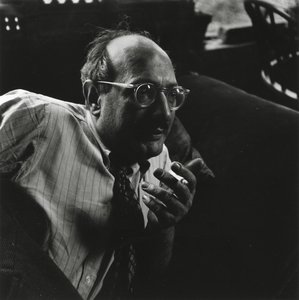
This striking piece by Mark Rothko showcases a woman holding a baby against a backdrop of textured blocks of color—likely inspired by Expressionism—capturing the essence of domestic tranquility with an understated emotional depth. Its title 'Man Smoking' adds intrigue, hinting at deeper artistic exploration beyond its surface appearance.
Autoriaus biografija
Atraskite Mark Rothko (1903–1970) ikoninius spalvų laukų paveikslus ir abstraktaus ekspresionizmo kūriniuose! Patirkite šio reikšmingo modernaus menininko emocinį gilumą bei palikimą, įskaitant Seagram Murals ir Rothko Chapel.
§ 3Komentaras
A Quiet Resonance: The Soul of Mark Rothko’s Early Vision
In the annals of modern art, few names evoke as much profound emotion as Mark Rothko. While many remember him for his towering, luminous color fields that define Abstract Expressionism, his earlier works offer a hauntingly beautiful window into a more figurative, yet equally spiritual, era of his development. His 1933 masterpiece, Man Smoking, serves as a poignant testament to this formative period. This painting is not merely a depiction of figures; it is an exploration of the human condition, captured through a lens of early modernism and deep-seated Expressionist influence. To encounter this work is to step into a space of quiet introspection, where the boundaries between the physical subject and the emotional atmosphere begin to dissolve.
The composition of Man Smoking establishes an immediate sense of stillness. Though the title suggests a singular, perhaps casual action, the visual reality presents a much more intimate and tender scene: a woman cradling a baby. Positioned slightly off-center within a vertical orientation, this central duo creates a subtle dynamic tension that draws the viewer into their private world. In the soft shadows of the background, two other indistinct figures linger, providing a sense of depth and suggesting a larger, perhaps more complex, domestic or social narrative. This arrangement avoids rigid symmetry, opting instead for an organic flow that mirrors the unpredictable nature of memory and emotion.
The Alchemy of Color and Technique
Rothko’s mastery in this period lies in his ability to use color as a direct conduit to the subconscious. Eschewing vibrant or aggressive hues, he employs a restrained, earthy palette dominated by deep reds, somber browns, muted greens, and aged yellows. These colors do not sit atop one another; rather, they bleed and merge through a meticulous technique of layering thin, translucent washes. This method creates an ethereal, almost luminous quality, where the light seems to emanate from within the canvas itself. The brushstrokes are so subtle as to be nearly imperceptible, leaving behind a surface that feels smooth yet textured with the weight of accumulated layers.
This technique is essential to the painting's emotional impact. By softening edges and blurring forms, Rothko moves away from photographic accuracy toward an essence of being. The figures are rendered as masses of color and light rather than sharply defined anatomical studies. This approach allows the viewer to project their own feelings onto the canvas, making the artwork a deeply personal experience. For the collector or interior designer, this quality makes the piece incredibly versatile; it possesses a quiet gravity that can anchor a room, providing a focal point that invites contemplation without demanding attention through sheer loudness.
Symbolism and the Weight of History
To truly appreciate Man Smoking, one must consider the historical and personal context of its creator. Born in Latvia as Markus Rothkowitz, Rothko’s early life was shaped by the anxieties of displacement and the cultural upheavities of a Jewish family navigating the Pale of Settlement. This sense of vulnerability and the search for stability are woven into the very fabric of the painting. The themes of maternal protection and familial connection seen in the central figures act as a counterpoint to the underlying tones of melancholy and solitude that permeate the work.
The intriguing discrepancy between the title and the visual subject—the absence of a visible man smoking—adds a layer of symbolic mystery. It invites the viewer to look beyond the literal, suggesting that the "smoking" might be a metaphor for a fleeting moment of contemplation or a lingering shadow of an absent presence. This ambiguity is where the true power of the piece resides. For those seeking to adorn their spaces with art that possesses intellectual depth and emotional resonance, a high-quality reproduction of this Rothko masterpiece offers more than just decoration; it offers a portal into the enduring human struggle for meaning amidst the shadows of existence.
Klausimai ir atsakymai
Kokia „Man Smoking“ – Markas Rotko švytėjimo (luminance) intensyvumas?
Įrašytas kūrinio „Man Smoking“ – Markas Rotko šviesumas yra Dark.
Kiek harmoningai dera „Man Smoking“ – Markas Rotko spalvos?
„Man Smoking“ – Markas Rotko pasižymi Strong Color Unity spalvų harmonija.
Kokiam stiliui priklauso „Man Smoking“?
„Man Smoking“ – Markas Rotko priklauso Early Modernism stiliui. Ši dailės kryptis suteikia kūriniui stilistinį kontekstą.


 Perjungti į spausdinamus版作品


 Dėl meno kūrinių ar reprodukcijų, kurių bet kuri pusė yra didesnė nei 105 cm (apie 41 inch), rėmas bus siunčiamas kaip išskaidytas surinkimo rinkinys. Šis metodas užtikrina saugų pristatymą ir apsaugo nuo transportavimo metu galimos žalos.


