

1971. Ink On Paper.

§ 1Catalogue data


Šis kūrinys yra saugomas autorinės teisės
Šiame puslapyje rodomas meno kūrinys yra saugomas autorių teisių įstatymais, todėl neturime teisės legaliai kurti ar parduoti jo identiškos reprodukcijos. Ši apsauga užtikrinama remiantis tokiais tarptautiniais susitarimais kaip Bernės konvencija ir pagal nacionalines įstatymų nuostatas, įskaitant tas, kurias nurodo JAV autoriškos teisės įstatymas – 17-asis skyrius.
Kaip pagarbią ir teisėtą alternatyvą, mes siūlome pagal užsakymą rankomis dažytus paveikslus, įkvėptus originalo. Mūsų įgudę ir profesionalūs menininkai kruopščiai tiria originalo stilių, nuotaiką ir meninę esmę, kad sukurtų naują, unikalią kūrinį, kuris sukelia tą paties jausmą – išlikdamas tuo tarciau originaliu, savarankišku kūrybiniu darbu.
Šis metodas visiškai atitinka autorių teises, nes jame nėra saugomo kūrinio kopijavimo ar dubliavimo. Tai yra kūrybinė reinterpretacija – naujas paveikslas, kurį įkvėpė originalas, tačiau kuris nėra jo identiškas.
 Skaityti daugiau
§ 2Abstract
Kolekcinio objekto aprašas
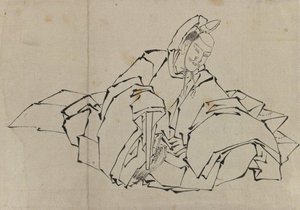
A striking Cubist monochrome drawing by Pablo Picasso from 1971 explores the surreal tension between a regal figure and a nude form through geometric abstraction, inviting you to explore this masterpiece of duality.
Autoriaus biografija
Pablo Picasso (1881–1973) – revoliucinis ispanų dailininkas ir skulptorius, kubizmo pradininkas bei įvairių stilių meistras. Jo ikoniniai darbai, tokie kaip „Guernica“, visciąż įkvepia milijonus žmonių.
§ 3Commentary
A Surreal Dialogue Between Power and Vulnerability
In the vast, revolutionary canon of Pablo Picasso, few works capture the profound tension of the human condition as intimately as "Untitled (63)". Created in 1971, during the twilight of his extraordinary life, this monochrome masterpiece serves as a hauntingly beautiful meditation on duality. The drawing does not merely present figures; it stages a silent, psychological drama between two opposing forces. On one side, we encounter a figure of imposing authority—a queen-like presence seated upon a throne of sharp, geometric precision. Her form is constructed from rigid, angular planes that evoke the unyielding nature of power and tradition. Yet, this structural strength finds its perfect, poignant counterpoint in the nude female figure positioned to the right. Rendered with flowing, organic contours and soft, curvilinear lines, she embodies a sense of raw vulnerability and natural grace. It is a composition that breathes with an unspoken exchange, inviting the viewer to witness a subtle challenge to established norms.
The emotional resonance of this piece lies in its ability to evoke both unease and profound contemplation. As one gazes upon the bifurcated canvas, the eye is drawn into the friction between the architectural stability of the seated figure and the fluid, ephemeral beauty of the nude form. This juxtaposition creates a sense of surrealism that transcends simple figuration, touching upon universal themes of dominance and fragility. For the collector or the interior designer, this artwork offers more than just visual interest; it provides a focal point of intellectual depth. It is a piece that demands presence in a room, acting as a window into the complexities of perception and the eternal dance between the structured world we build and the organic reality we inhabit.
Mastery of Line and the Cubist Legacy
Technically, "Untitled (63)" is a triumph of Picasso’s late-period mastery, showcasing his ability to manipulate the simplest of mediums—pen and ink on paper—to achieve extraordinary depth. The artwork is a testament to the enduring influence of Cubism, yet it moves beyond mere fragmentation into a more lyrical, expressive territory. Picasso utilizes a sophisticated array of hatching and cross-hatching techniques to sculpt light and shadow from the void. These meticulous lines do not merely define edges; they create texture and volume, giving weight to the throne's heavy geometry while lending a soft, tactile quality to the flowing hair and skin of the female figure. The monochromatic palette, stripped of the distractions of color, forces the viewer to focus entirely on the rhythm of the strokes and the interplay of black and white.
The flattened perspective, a hallmark of the Cubist movement, serves a vital symbolic purpose here. By disrupting conventional spatial depth, Picasso prevents the viewer from becoming a passive observer; instead, we are forced to navigate multiple viewpoints simultaneously, much like the multifaceted nature of truth itself. The use of sharp triangles and rectangles in the left portion of the composition reinforces a sense of structural permanence, while the more fluid, organic shapes on the right suggest movement and life. This technical brilliance ensures that every time one views a high-quality reproduction of this work, new details emerge from the shadows—a new layer of texture, a sharper angle, or a softer curve—making it an endlessly captivating addition to any curated collection of modern art.
Klausimai ir atsakymai
Kas yra „Untitled (63)“ autorius ir kokia kūrinio data?
„Untitled (63)“ kūrybinį darbinį sukūrė Pablo Pikaso 1971 metais.
Ar „Untitled (63)“ bendroje apimatyje yra labiau šviesus ar tamsus kūrinys?
„Untitled (63)“ – Pablo Pikaso užfiksuotas kaip brilliant, pasižymintis Luminous šviesos intensyvumu.
Kokiam istoriniam laikotarpiui priklauso „Untitled (63)“ – Pablo Pikaso?
„Untitled (63)“ priklauso Modern laikotarpiui.





 Perjungti į spausdinamus版作品


 Dėl meno kūrinių ar reprodukcijų, kurių bet kuri pusė yra didesnė nei 105 cm (apie 41 inch), rėmas bus siunčiamas kaip išskaidytas surinkimo rinkinys. Šis metodas užtikrina saugų pristatymą ir apsaugo nuo transportavimo metu galimos žalos.


