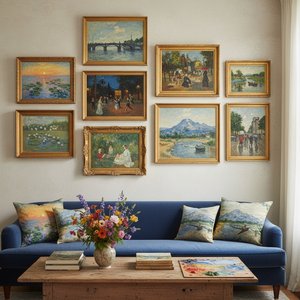
1885. Akrilas ant drobės.

§ 1Catalogue data


§ 2Abstract
 Skaityti daugiau
Autoriaus biografija
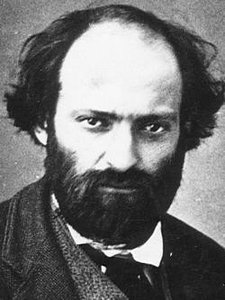
Paul Cézanne (1839–1906) – postimpresionistų pradininkas, jungiantis impresionizmą ir kubizmą. Tyrė geometrines formas, stilizuotus peizažus bei paveikslų kompozicijas, sukeldamas revoliuciją moderniajame mene.
§ 3Commentary
Orchard: A Vision of Tranquility Captured by Cézanne
Paul Cézanne, one of the most influential artists of the late 19th century, stands as a pivotal figure bridging the gap between Impressionism’s fleeting moments and Cubism's fractured perspectives. His artistic journey wasn’t marked by immediate acclaim; rather, it was a gradual unfolding of exploration, punctuated by periods of self-doubt and critical dismissal—a path that ultimately yielded a legacy reshaping modern art. Born in Aix-en-Provence in 1839 to a family enjoying financial security uncommon for aspiring artists, Cézanne benefited from the freedom to dedicate himself wholly to his passion without the pressures of commercial considerations. Though initially steered toward law by his father’s ambitions, the irresistible pull of artistic expression prevailed, leading him to abandon legal pursuits and embrace painting—a decision that would irrevocably alter his trajectory.The Painting's Essence: Cézanne's Post-Impressionist Approach
Painted in 1885 using oil on canvas, “Orchard” exemplifies Cézanne’s distinctive post-impressionist style—a deliberate rejection of Impressionism’s emphasis on optical sensations and a move toward conveying the underlying structure of nature. The medium itself allowed him to express the depth and richness of his subjects with remarkable fidelity. Located at the Honolulu Academy of Arts, this artwork depicts an orchard brimming with life, featuring trees positioned strategically to create a palpable sense of spatial depth and perspective. Lush green foliage dominates the canvas, evoking not merely visual beauty but also a profound feeling of serenity—a testament to Cézanne’s ability to distill nature's essence into powerfully emotive form.Detailed Observation: Composition and Technique
The scene unfolds with several trees rendered at varying distances from the viewer, skillfully manipulating perspective to simulate three-dimensional space. Cézanne’s brushstrokes are bold and deliberate, layering pigment onto the canvas in a manner that captures both texture and tonal variation—a technique characteristic of his oeuvre. Two figures inhabit the orchard landscape, subtly anchoring the composition while simultaneously hinting at human presence within this idealized natural setting. Their placement contributes to the overall harmony and invites contemplation on themes of solitude and connection with the environment.Influence and Legacy: Cézanne's Impact on Modern Art
Cézanne’s groundbreaking approach profoundly influenced subsequent generations of artists, notably Camille Pissarro, who collaborated closely with him and shared a commitment to exploring new artistic possibilities. He bridged the divide between Impressionism and Cubism, paving the way for Picasso and Matisse—artists who would embrace Cézanne's fragmented forms and expressive color palettes as foundational elements of their own stylistic innovations. His unwavering dedication to capturing the fundamental character of visual experience continues to inspire artists today.Exploring Further: Cézanne’s Artistic Universe
For those eager to delve deeper into Cézanne’s artistic vision, “Paul Cézanne: Orchard” is available on AllPaintingsStore—a comprehensive resource offering high-quality reproductions and scholarly insights into his life and work. Additionally, the Honolulu Academy of Arts' collection showcases a selection of Cézanne’s paintings alongside masterpieces from other periods, providing invaluable context for understanding his contribution to art history. Visit AllPaintingsStore to discover more about Cézanne and his enduring legacy.Klausimai ir atsakymai
Koks yra „Apšėla“ formatas?
„Apšėla“ – Polis Sezanas yra Portretinis formatas kompozicija. Prieš renkantis spausdinimo dydį, verta patikrinti proporcijas.
Kaip „Apšėla“ stilius susijęs su kūrėjo laikmečiu?
„Apšėla“ – Polis Sezanas priskiriamas Poįspūdismo tęsėjas stiliui, kūrėjo prekiaujantem į XIX amžius laikotarpį.
Kaip kontrastas ir harmonija susilieja kūryboje „Apšėla“?
„Apšėla“ kūryboje Švelnus kontrastas susilieja su Subalansuota harmonija harmonija.


 Perjungti į spausdinamus版作品


 Dėl meno kūrinių ar reprodukcijų, kurių bet kuri pusė yra didesnė nei 105 cm (apie 41 inch), rėmas bus siunčiamas kaip išskaidytas surinkimo rinkinys. Šis metodas užtikrina saugų pristatymą ir apsaugo nuo transportavimo metu galimos žalos.