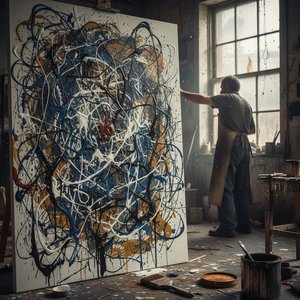
1948. Acrylic On Canvas, 575.0 x 784.0 cm.

§ 1Katalogo duomenys

- 575.0 x 784.0 cm


§ 2Abstraktus
Kolekcinio objekto aprašas
 Skaityti daugiau
Autoriaus biografija
Atraskite revoliucinį Jackson Pollock (1912–1956) meną – abstraktaus ekspresionizmo pradininką ir lašalinio tapybos meistrą. Žymiausi jo paveikslai, emocinis intensyvumas ir didžiulis poveikis šiuolaikinės dailos istorijai. #AbstraktusEkspresionizmas #Pollock
§ 3Komentaras
Number 23: A Symphony of Chance and Texture
Jackson Pollock’s “Number 23,” completed in 1948, stands as an undeniable cornerstone of Abstract Expressionism—a movement that fundamentally challenged artistic conventions and prioritized emotional expression over representational accuracy. More than just pigment on paper; it's a visceral embodiment of the artist’s process and a profound meditation on spontaneity and control within chaos.
- Composition & Technique: Pollock famously employed the “drip” technique, applying paint directly from cans onto a canvas laid horizontally on the floor. Gravity became an active collaborator, guiding the flow of pigment and resulting in a mesmerizing network of interwoven lines, splatters, and drips. This method deliberately eschewed traditional brushstrokes, favoring chance and improvisation—a radical departure from academic painting.
- Color Palette & Texture: The artwork’s restrained color palette – primarily black and white accented by subtle grey tones – serves to amplify the textural richness of the piece. Thick impasto layers create dramatic contrasts between smooth areas and densely textured surfaces, inviting viewers to explore the tactile qualities of the painting.
- Historical Context & Influence: Created during the height of the postwar artistic fervor in New York City, “Number 23” reflects the broader anxieties and aspirations of its time. Pollock’s work directly responded to the influence of Surrealism and Gestalt psychology, pushing boundaries on how artists could convey emotion and explore subconscious impulses.
- Symbolic Resonance: While devoid of recognizable imagery, "Number 23" speaks volumes about the artist's inner state. The seemingly random arrangement of lines can be interpreted as a visual representation of thought processes—a deliberate attempt to capture the fluidity and dynamism of consciousness. It’s a celebration of process over product.
- Emotional Impact: Viewing “Number 23” evokes feelings of energy, excitement, and perhaps even unease. The painting's dynamic composition compels contemplation, prompting viewers to consider the relationship between order and disorder—a theme that resonates deeply within the human experience.
Its current location at Tate Britain underscores its enduring significance as a pivotal work of modern art. A high-quality reproduction captures not only the visual splendor but also the spirit of innovation that defined Pollock’s groundbreaking approach to painting—a legacy that continues to inspire artists and collectors alike.
Klausimai ir atsakymai
Kaip kūrinys „Number 23“ dera su Džeksonas Polokas temomis ir stiliumi?
„Number 23“ priklauso Džeksonas Polokas Abstract Expressionism kūrybai, kurios įrašytoms temoms priskiriamas pollock’s surrealist roots, western expressionism spirit, chance, improvisation mastery, iconic drip painting style, central to pollock legacy.
Kokio atspalvio link tendencija yra „Number 23“?
Dominuojanti „Number 23“ – Džeksonas Polokas spalva yra Green to Violet Spectrum. Šis tonas yra pagrindinė paletės spalva.
Ar Džeksonas Polokas kūrinys „Number 23“ yra viešosios nuoslegos ir kodėl?
Autorinės teisės statusas kūriniui „Number 23“ – yra viešosios erdvės dalis – jo autorinė teisė pasibaigusi – nustatomas remiantis to, kad menininkas mirė 1956 m.


 Perjungti į spausdinamus版作品


 Dėl meno kūrinių ar reprodukcijų, kurių bet kuri pusė yra didesnė nei 105 cm (apie 41 inch), rėmas bus siunčiamas kaip išskaidytas surinkimo rinkinys. Šis metodas užtikrina saugų pristatymą ir apsaugo nuo transportavimo metu galimos žalos.