

1962. Acrylic On Canvas.

§ 1Catalogue data


Šis kūrinys yra saugomas autorinės teisės
Šiame puslapyje rodomas meno kūrinys yra saugomas autorių teisių įstatymais, todėl neturime teisės legaliai kurti ar parduoti jo identiškos reprodukcijos. Ši apsauga užtikrinama remiantis tokiais tarptautiniais susitarimais kaip Bernės konvencija ir pagal nacionalines įstatymų nuostatas, įskaitant tas, kurias nurodo JAV autoriškos teisės įstatymas – 17-asis skyrius.
Kaip pagarbią ir teisėtą alternatyvą, mes siūlome pagal užsakymą rankomis dažytus paveikslus, įkvėptus originalo. Mūsų įgudę ir profesionalūs menininkai kruopščiai tiria originalo stilių, nuotaiką ir meninę esmę, kad sukurtų naują, unikalią kūrinį, kuris sukelia tą paties jausmą – išlikdamas tuo tarciau originaliu, savarankišku kūrybiniu darbu.
Šis metodas visiškai atitinka autorių teises, nes jame nėra saugomo kūrinio kopijavimo ar dubliavimo. Tai yra kūrybinė reinterpretacija – naujas paveikslas, kurį įkvėpė originalas, tačiau kuris nėra jo identiškas.
 Skaityti daugiau
§ 2Abstract
Kolekcinio objekto aprašas
Autoriaus biografija
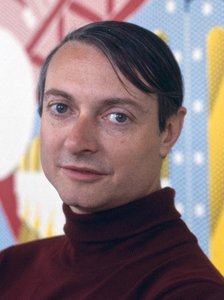
Roy Lichtenstein (1923–1997): Šiuolaikinės meno reikšmė išaugino Pop Art stiliumi garsėjantis amerikietis dailininkas, žinomas dėl Ben-Day dėžių naudojimo, komiksų įkvipavimo ir stiprių linijų estetikos. Eksploruokite „Whaam!“ ir daugiau.
§ 3Commentary
A Quintessential Lichtenstein: Exploring “Refrigerator” (1962)
“Refrigerator,” created in 1962 by Roy Lichtenstein, is a striking example of the artist’s pioneering contribution to the Pop Art movement. This work isn't *of* a refrigerator, but rather a portrait rendered entirely within the visual language of mass production and comic book aesthetics – a deliberate commentary on American consumer culture emerging in the post-war era.Decoding the Style: Ben-Day Dots & Bold Lines
Lichtenstein masterfully appropriates the techniques of commercial printing, specifically the Ben-Day dot process used in comics to create tone and shading. These evenly spaced dots, visible upon close inspection, aren’t intended to be subtle; they *are* the image, a deliberate flattening of pictorial space. Combined with thick, black outlines defining every shape – from facial features to clothing – the work achieves an immediate graphic impact. The limited color palette—a dominant pinkish-peach for skin tones contrasted with deep blues and vibrant reds—further enhances this bold, declarative style. Geometric shapes are paramount; circles, rectangles, and ovals build up the form, rejecting traditional modeling techniques in favor of simplified planes.Historical Context: Pop Art’s Rise
1962 was a pivotal year for Lichtenstein and the burgeoning Pop Art movement. Artists were beginning to challenge the dominance of Abstract Expressionism by turning towards everyday imagery – advertising, comic books, and consumer products. “Refrigerator” embodies this shift, elevating a seemingly mundane subject (implied through the title) into a high art object. It’s a direct response to the increasing influence of mass media on American life and a questioning of traditional artistic hierarchies. Lichtenstein wasn't simply *depicting* popular culture; he was actively engaging with its visual vocabulary, forcing viewers to reconsider what constituted “art.”Subject & Symbolism: A Moment of Contemplation
The artwork centers on a female figure, her gaze directed slightly off-center. This subtle gesture imbues the portrait with a sense of introspection or wistfulness. While seemingly straightforward, the work invites interpretation. Is she contemplating the objects of consumer desire? Is she herself an objectified image within that culture? The lack of narrative detail encourages viewers to project their own meanings onto her expression and pose. The title "Refrigerator" adds another layer of intrigue – is it a commentary on domesticity, or simply a playful juxtaposition with the stylized portrait?Technique & Materials
Lichtenstein primarily employed screen printing for his Pop Art works, allowing for the precise replication of Ben-Day dots and flat color fields. "Refrigerator" likely utilizes this technique, applied to paper or canvas with oil-based inks. The resulting surface is smooth and unmodulated, further emphasizing the artwork’s artificiality and its connection to mechanical reproduction.Emotional Impact & Lasting Legacy
“Refrigerator” isn't about evoking deep emotional resonance in a traditional sense. Instead, it provokes a more intellectual response – a questioning of perception, representation, and the role of art in a consumer society. Its enduring appeal lies in its iconic style, its historical significance, and its ability to spark dialogue about the relationship between art, culture, and commerce. For interior designers, a high-quality reproduction offers a bold statement piece, injecting a dose of mid-century modern vibrancy and intellectual curiosity into any space. For collectors, it represents an investment in one of the most influential artistic movements of the 20th century.- Artist: Roy Lichtenstein
- Date: 1962
- Style: Pop Art
- Technique: Screen Printing (likely)
- Materials: Ink on Paper/Canvas (presumed)
Klausimai ir atsakymai
Kodėl „Refrigerator“ autoriškos teisės statusas yra toks, koks yra?
Autorinės teisės statusas kūriniui „Refrigerator“ – vis dar saugoma autorineje teisėje – nustatomas remiantis to, kad menininkas mirė 1997 m.
Kurių spalvų dominuoja „Refrigerator“ – Royas Lichtenšteinas?
„Refrigerator“ apibūdiną Neutrals paletė, kurioje dominuoja Putty (#dab0af).
Kokia „Refrigerator“ – Royas Lichtenšteinas suvokiamas ryškumas?
Visapusiškai „Refrigerator“ įtvirtinta kaip brilliant. Perceptinis ryškumas apibūdina, koks kūrinys atrodo šviesus ar tamsus.


 Perjungti į spausdinamus版作品


 Dėl meno kūrinių ar reprodukcijų, kurių bet kuri pusė yra didesnė nei 105 cm (apie 41 inch), rėmas bus siunčiamas kaip išskaidytas surinkimo rinkinys. Šis metodas užtikrina saugų pristatymą ir apsaugo nuo transportavimo metu galimos žalos.


