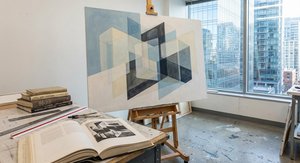
Wood, 500.0 x 500.0 cm. CAMUSAC Cassino Museum of Contemporary Art.

§ 1Catalogue data

- 500.0 x 500.0 cm


Šis kūrinys yra saugomas autorinės teisės
Šiame puslapyje rodomas meno kūrinys yra saugomas autorių teisių įstatymais, todėl neturime teisės legaliai kurti ar parduoti jo identiškos reprodukcijos. Ši apsauga užtikrinama remiantis tokiais tarptautiniais susitarimais kaip Bernės konvencija ir pagal nacionalines įstatymų nuostatas, įskaitant tas, kurias nurodo JAV autoriškos teisės įstatymas – 17-asis skyrius.
Kaip pagarbią ir teisėtą alternatyvą, mes siūlome pagal užsakymą rankomis dažytus paveikslus, įkvėptus originalo. Mūsų įgudę ir profesionalūs menininkai kruopščiai tiria originalo stilių, nuotaiką ir meninę esmę, kad sukurtų naują, unikalią kūrinį, kuris sukelia tą paties jausmą – išlikdamas tuo tarciau originaliu, savarankišku kūrybiniu darbu.
Šis metodas visiškai atitinka autorių teises, nes jame nėra saugomo kūrinio kopijavimo ar dubliavimo. Tai yra kūrybinė reinterpretacija – naujas paveikslas, kurį įkvėpė originalas, tačiau kuris nėra jo identiškas.
 Skaityti daugiau
§ 2Abstract
Kolekcinio objekto aprašas
Explore Sol LeWitt’s ‘Cubo,’ a monumental 1970s wooden sculpture embodying minimalist abstraction. This large-scale, textured piece evokes geometric order & natural forms – a captivating modern artwork.
Autoriaus biografija
Atraskite minimalistinį ir konceptualų Sol LeWitt (1928–2007) meną. Žinomas dėl sienų piešinių, struktūrų ir geometrinės abstrakcijos pradininko, jo kūryba kruopščiai paveikė šiuolaikinį meną.
§ 3Commentary
The Geometry of Being: Exploring Cubo
To stand before Cubo is to encounter a profound meditation on structure itself. This monumental sculpture, rendered in raw wood and grounded by a solid concrete base, does not merely occupy space; it defines it. It presents itself as an aggregation—a dense, overlapping constellation of roughly hewn wooden blocks assembled with meticulous, almost architectural intention. The sheer scale, suggested by its dimensions, imbues the viewer with a sense of being enveloped by pure geometric thought. One cannot look at Cubo and remain detached; it demands an engagement that is both intellectual and visceral.
A Dialogue Between Nature and Abstraction
The material choice speaks volumes about the artist's philosophical leanings. The wood, in its varied tones and visible grain, carries the unmistakable signature of nature—the organic record of growth and time. Yet, these natural elements are subjected to the rigorous discipline of geometry. This tension forms the core narrative of the piece: the struggle, or perhaps the harmonious coexistence, between the wild randomness of the forest and the absolute order imposed by human intellect. It is a visual thesis on how structure can emerge from seemingly disparate parts.
Echoes of Modernist Thought
While its specific provenance remains unknown, Cubo resonates deeply with the currents of early to mid-twentieth-century modernism, particularly those movements that sought to strip art down to its most fundamental components. The work channels the spirit of constructivism and minimalism—art forms that dared to question what a sculpture needed to be beyond mere representation. It echoes the conceptual rigor championed by artists like Solomon Lewitt, who prioritized the idea over ornamentation. Here, the concept of 'assembly' becomes the primary aesthetic event.
Symbolism and Emotional Resonance
What does this towering cube whisper to the contemporary observer? Symbolically, Cubo can be interpreted as a commentary on order in a chaotic world. It suggests that meaning—be it societal structure, personal belief, or artistic form—is built block by painstaking block. For the collector or designer, owning such a piece is not merely acquiring décor; it is curating an intellectual anchor for a space. It introduces a necessary moment of contemplation, forcing the viewer to slow down and consider the underlying framework that supports beauty.
Craftsmanship and Reproduction
The technique employed—the manual assembly of countless individual wooden units—is breathtaking in its apparent simplicity and profound difficulty. Each joint, each overlapping plane, speaks to hours of patient labor. For those seeking to bring this monumental feeling into a different setting, understanding the craftsmanship is key. A high-quality reproduction must honor this tactile quality; it must replicate not just the form, but the palpable weight and texture of the assembled wood, allowing the viewer to feel the conceptual density that Cubo embodies.
Klausimai ir atsakymai
Kokia emocinė nuotaika lydi „Cubo“ kūrinį, priskiriamą Minimalism stiliui?
Minimalism kryptimi Minimalism stiliaus metu „Cubo“ užfiksuotas Reflective tonu.
Kokia bendra „Cubo“ – Sol Lewitt nuotauda?
„Cubo“ dvelkia Minimalist atmosfera.
Kokia spalva dominuoja „Cubo“ – Sol Lewitt kompozicijoje?
Celadon (#c2d2c1) yra pagrindinė kūrinio „Cubo“ – Sol Lewitt spalva.


 Perjungti į spausdinamus版作品


 Dėl meno kūrinių ar reprodukcijų, kurių bet kuri pusė yra didesnė nei 105 cm (apie 41 inch), rėmas bus siunčiamas kaip išskaidytas surinkimo rinkinys. Šis metodas užtikrina saugų pristatymą ir apsaugo nuo transportavimo metu galimos žalos.