

Acrylic On Canvas.

§ 1Katalogo duomenys


Šis kūrinys yra saugomas autorinės teisės
Šiame puslapyje rodomas meno kūrinys yra saugomas autorių teisių įstatymais, todėl neturime teisės legaliai kurti ar parduoti jo identiškos reprodukcijos. Ši apsauga užtikrinama remiantis tokiais tarptautiniais susitarimais kaip Bernės konvencija ir pagal nacionalines įstatymų nuostatas, įskaitant tas, kurias nurodo JAV autoriškos teisės įstatymas – 17-asis skyrius.
Kaip pagarbią ir teisėtą alternatyvą, mes siūlome pagal užsakymą rankomis dažytus paveikslus, įkvėptus originalo. Mūsų įgudę ir profesionalūs menininkai kruopščiai tiria originalo stilių, nuotaiką ir meninę esmę, kad sukurtų naują, unikalią kūrinį, kuris sukelia tą paties jausmą – išlikdamas tuo tarciau originaliu, savarankišku kūrybiniu darbu.
Šis metodas visiškai atitinka autorių teises, nes jame nėra saugomo kūrinio kopijavimo ar dubliavimo. Tai yra kūrybinė reinterpretacija – naujas paveikslas, kurį įkvėpė originalas, tačiau kuris nėra jo identiškas.
 Skaityti daugiau
§ 2Abstraktus
Kolekcinio objekto aprašas
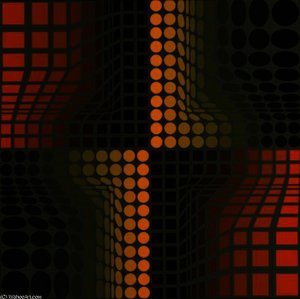
Experience Victor Vasarely’s iconic Monocolor Yellow, a groundbreaking Op Art masterpiece featuring a vibrant yellow square and intricate black dot patterns – a timeless exploration of perception and geometry. Discover this captivating artwork and bring its dynamic energy into your space.
Autoriaus biografija
Pažinkite Viktorą Vasareli (1906–1997), opdailės pradininką! Atraskite jo geometrines abstrakcijas, optines iliuzijas ir ilgalaikį įtaką moderniam menui bei dizainui.
§ 3Komentaras
A Bold Statement in Yellow: Exploring Victor Vasarely’s *Monocolor Yellow*
Victor Vasarely's Monocolor Yellow is more than just a painting; it’s an invitation to reconsider the very nature of perception. This striking work, dominated by a vibrant yellow square punctuated with strategically placed black dots, embodies the core principles of Op Art – Optical Art – and represents a pivotal moment in the development of kinetic art. Created by a visionary artist deeply influenced by geometric abstraction and the Bauhaus movement, this piece offers a glimpse into Vasarely’s relentless pursuit of translating mathematical concepts into visual experiences.
The Genesis of Op Art: Vasarely's Intellectual Foundation
- Early Influences: Born in 1906 in Pécs, Croatia (then part of Austria-Hungary), Vasarely’s artistic trajectory began unexpectedly. Initially drawn to medicine, he ultimately recognized the power of visual expression and embraced painting, a decision profoundly shaped by his studies at the Podolini-Volkmann Academy and, crucially, Sándor Bortnyik's “Műhely” workshop.
- Bauhaus Principles: This workshop provided Vasarely with an invaluable education in functional design and geometric abstraction – concepts central to the Bauhaus movement’s emphasis on form following function. He meticulously analyzed how visual elements could create illusions of movement, depth, and vibration.
- Mathematical Precision: Vasarely's work wasn't simply about aesthetics; it was rooted in a rigorous understanding of mathematics and optics. He employed precise geometric forms – circles, squares, lines – to manipulate the viewer’s perception, creating an almost hypnotic effect.
Decoding *Monocolor Yellow*: Composition and Illusion
The composition of Monocolor Yellow is deceptively simple yet profoundly complex. The large yellow square commands immediate attention, acting as the primary focal point. However, it’s the surrounding black dots that truly elevate the work. Their varying sizes, arrangements, and spatial relationships generate a dynamic visual field, creating an illusion of movement and depth. Vasarely masterfully utilizes negative space to amplify this effect, drawing the eye across the canvas in a seemingly endless loop.
The technique employed is characteristic of Op Art: meticulous layering of paint to create subtle variations in tone and texture that enhance the optical illusion. The precise placement of each dot demonstrates Vasarely’s dedication to achieving maximum visual impact through controlled geometric precision.
Symbolism and Emotional Impact
While ostensibly a study in geometry, *Monocolor Yellow* resonates with deeper symbolic meanings. The yellow square can be interpreted as representing stability, energy, or even the sun – fundamental elements of human experience. The black dots, conversely, might symbolize disruption, chaos, or the inherent complexity within order. Together, they create a tension that mirrors the viewer’s own perceptual processes.
Ultimately, *Monocolor Yellow* is an artwork designed to provoke thought and stimulate the senses. It's a testament to Vasarely's genius – his ability to transform abstract mathematical principles into a captivating visual experience. This hand-painted reproduction captures the essence of this iconic piece, offering a unique opportunity to bring its bold aesthetic into your home or office.
Klausimai ir atsakymai
Kur galiu rasti statistiką apie „Monocolor Yellow“ – Viktoras Vazarelis?
Statistika apie „Monocolor Yellow“ – Viktoras Vazarelis pateikiama kūrinio Statistika puslapio: mėnesiniai kūrinio apsilankėjimai, kito šio autoriaus kūrinių apsilankėjimai bei neseniai apsilankiusiųjų skirstymas pagal šalis ir kalbas.
Kokią vietą meno istorijoje užima „Monocolor Yellow“ – Viktoras Vazarelis?
Dailos istorinė „Monocolor Yellow“ – Viktoras Vazarelis klasifikacija – tai Op Art stilius, Modern laikotarpiu.
Kokio atspalvio link tendencija yra „Monocolor Yellow“?
„Monocolor Yellow“ linksta į Ochre to Sepia atspalvį.




 Perjungti į spausdinamus版作品


 Dėl meno kūrinių ar reprodukcijų, kurių bet kuri pusė yra didesnė nei 105 cm (apie 41 inch), rėmas bus siunčiamas kaip išskaidytas surinkimo rinkinys. Šis metodas užtikrina saugų pristatymą ir apsaugo nuo transportavimo metu galimos žalos.


