Pinigų grąžinimo garantija · 100 dienų Nemokamas pristatymas į visas pasaulio valstybes
449.587kūriniai 30.613menininkai 4.660muziejai 32kalbos
Valiuta
    Kalba
      Ateljė · Įkurta 2015 m. · Paris, Prancūzija
      AllPaintingsStore
      allpaintingsstore.com
      Catalogue entry

      Improvisation 26 (Rowing)

      1912. Acrylic On Canvas, 107.0 x 97.0 cm. Lenbachhaus.

      Fig. 1. Vasilijus Kandinskis, Improvisation 26 (Rowing), 1912. Shown as the reproduction you are specifying: , .

      § 1Catalogue data

      § 2Abstract

      Kolekcinio objekto aprašas

      Experience the vibrant energy of Wassily Kandinsky's 'Improvisation 26 (Rowing)' – a monumental abstract painting exploring color and form with striking yellow circles and dynamic red & blue lines.

      Autoriaus biografija

      Vasilijus Kandinskis – revoliucija dailės pasaulyje! Žiūrėkite į spalvingą abstrakciją „Kompozicija IX“ ir atraskite meno dvasią bei Bauhaus istoriją.

      § 3Commentary

      A Symphony in Color: Exploring Kandinsky’s Improvisation 26

      Wassily Wassilyevich Kandinsky stands as an undeniable titan of modern art, a figure whose audacious embrace of abstraction fundamentally reshaped the artistic landscape and continues to inspire awe centuries later. His journey toward this groundbreaking vision wasn't paved with conventional academic pursuits; initially drawn to law and economics at Moscow University—a path deemed respectable by societal expectations—it was a transformative encounter with Claude Monet’s “Haystacks” that sparked his initial fascination with Impressionism, capturing the fleeting beauty of light and atmosphere. Yet, it was an even more profound experience witnessing Wagner's opera "Lohengrin" – a visceral immersion in music and drama – that truly unlocked Kandinsky’s inner artist, propelling him toward a radical departure from representational art. Around thirty years old, he abandoned his legal aspirations for the fervent pursuit of painting, embarking on a path marked by relentless experimentation and unwavering conviction.
      • Early Influences: Russian Folk Art
      • The Academy of Fine Arts in Munich
      • Franz von Stuck’s Guidance
      Kandinsky's artistic evolution wasn’t simply about stylistic shifts; it represented a profound philosophical reimagining of art itself. He rejected the constraints of depicting observable reality, arguing that painting should strive to express inner spiritual states—a concept deeply rooted in Jungian psychology and reflecting his belief in the interconnectedness of consciousness and creativity. This conviction fueled his relocation to Munich, where he enrolled at the Academy of Fine Arts under Franz von Stuck, though even within the framework of formal training, Kandinsky’s spirit chafed against convention, constantly seeking new avenues for artistic exploration. He meticulously studied the works of Cézanne and Picasso, absorbing their innovative approaches to form and composition—artists who similarly challenged established aesthetic norms.

      Analyzing Improvisation 26: Style and Technique

      “Improvisation 26 (Rowing),” created in 1912, exemplifies Kandinsky’s signature style – Abstract Expressionism – characterized by its deliberate rejection of illusionistic representation. The painting abandons any attempt to mimic the visual world, instead prioritizing color and form as primary expressive elements. Kandinsky employed a technique he termed “Gesture Painting,” applying paint with energetic brushstrokes—often impulsive and spontaneous—to create textured surfaces that convey emotional intensity. He utilized a vibrant palette dominated by yellows, reds, and blues, meticulously layering colors to achieve luminous effects and conveying a sense of dynamism and movement. The concentric circles at the center – two prominent yellow discs surrounded by radiating red and blue lines – serve as focal points, drawing the viewer’s eye inward while simultaneously suggesting an outward expansion of energy.

      Symbolism Within Abstraction

      Beyond its formal qualities, “Improvisation 26” is laden with symbolic significance. The circles represent wholeness and unity—a concept central to Kandinsky's spiritual worldview—while the radiating lines symbolize aspiration and transcendence. The juxtaposition of yellow and red – traditionally associated with optimism and passion – underscores the painting’s emotional core, conveying a feeling of exhilaration and vitality. Kandinsky believed that colors possessed inherent psychological properties, capable of evoking specific moods and sensations; he meticulously selected hues to align with his intention to communicate profound spiritual truths.

      Emotional Impact and Legacy

      “Improvisation 26” transcends mere visual aesthetics, resonating deeply within the viewer’s psyche—a testament to Kandinsky's masterful ability to translate inner experience into tangible form. The painting captures a moment of spontaneous creativity—a celebration of color and gesture—that embodies the spirit of artistic liberation. Its influence extends far beyond its own time, shaping subsequent generations of artists who embraced abstraction as a means of conveying emotion and exploring spiritual dimensions. Today, “Improvisation 26” remains a cornerstone of Abstract Expressionism, serving as an enduring emblem of Kandinsky’s pioneering vision and his unwavering commitment to artistic innovation—a symphony in color that continues to captivate audiences worldwide.

      Klausimai ir atsakymai

      Kokie yra originalaus „Improvisation 26 (Rowing)“ – Vasilijus Kandinskis matmenys?

      Originalaus dydžio kūrinys „Improvisation 26 (Rowing)“ yra 107 x 97 cm. Originalūs matmenys padeda lengviau išsirinkti tinkamą reprodukcijos dydį.

      Kas yra „Improvisation 26 (Rowing)“ autorius ir kokia kūrinio data?

      Vasilijus Kandinskis sukūrė „Improvisation 26 (Rowing)“, nufiksavęs/usi nufiksavęs/usi 1912 m.

      Ar „Improvisation 26 (Rowing)“ – Vasilijus Kandinskis yra paveikslas, piešinys ar grafika?

      „Improvisation 26 (Rowing)“ – Vasilijus Kandinskis klasifikuojamas kaip WallArt. Ši kategorija aprašo originalo kūrinio tipą.
      § 4The artist

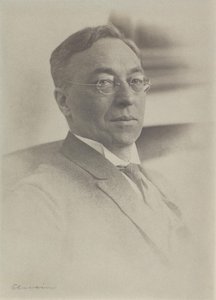
      Vasilijus Kandinskis

      Vasilijus Kandinskis

      1866 - 1944, Rusija

      Quick facts about Vasilijus Kandinskis

      • Artistic Movement Or Style: Abstrakti meno
      • Artists Or Movements Influenced By This Artist: ['Abstrakti ekspresionizmas']
      • Artists Who Influenced This Artist:
        • Claude Monet
        • Richard Wagner
      • Date Of Birth: 1866
      • Full Name: Wassily Wassilyevich Kandinsky
      • Nationality: Rusijoje
      • Notable Artworks: ['Murnau su aromatu']
      • Place Of Birth: Maskova, Rusija

      Autoriaus biografija

      A Life Immersed in Color and Spirit

      Wassily Wassilyevich Kandinsky, born December 4, 1866, in Moscow, Russia, was a revolutionary figure who irrevocably altered the course of modern art. His journey wasn’t one of immediate artistic calling; initially destined for a career in law and economics at the University of Moscow, it was a profound encounter with Impressionist painting – specifically Claude Monet's “Haystacks” – and a deeply moving experience witnessing Wagner’s opera "Lohengrin" that ignited within him an irrepressible desire to pursue art. This pivotal moment, occurring around age thirty, marked not merely a career change but a complete transformation of perspective, setting him on a path toward pioneering abstraction. He soon relocated to Munich, enrolling at the prestigious Academy of Fine Arts and studying under Franz von Stuck, though even within formal training, Kandinsky’s spirit yearned for exploration beyond conventional boundaries. Early influences included Russian folk art, gleaned from an ethnographic expedition to the Vologda region in 1889, which instilled a fascination with vibrant color palettes and symbolic imagery. This foundation would prove crucial as he began to develop his unique artistic language. These early explorations weren’t simply about aesthetic preference; they were rooted in a deep cultural connection and a burgeoning understanding of how art could communicate beyond the literal. He experimented with landscapes and portraits, demonstrating considerable skill but always feeling constrained by representational limitations.

      The Dawn of Abstraction: From Expressionism to Inner Necessity

      Kandinsky’s early works reveal a strong expressionistic bent, characterized by bold colors and emotional intensity – pieces like “Papeln (Poplars)” from 1902 exemplify this period. However, he wasn't content with merely representing the external world; he sought to express inner realities, spiritual truths that transcended mere visual depiction. This quest led him gradually away from representational art and toward a revolutionary exploration of color, form, and their emotional resonance. He believed that colors possessed inherent psychological effects, capable of evoking specific feelings and sensations in the viewer. This conviction was deeply intertwined with his burgeoning interest in Theosophy, a spiritual movement emphasizing esoteric knowledge and universal brotherhood. As he delved deeper into these ideas, Kandinsky’s paintings became increasingly non-objective, shedding recognizable forms in favor of abstract compositions driven by an “inner necessity.” This wasn't simply about abandoning representation; it was about discovering a new visual language capable of expressing the intangible realms of emotion and spirituality. He sought to create a visual equivalent of music, where color and form harmonized to evoke profound emotional responses. He began to experiment with landscapes and portraits, demonstrating considerable skill but always feeling constrained by representational limitations. His conviction that colors possessed inherent psychological effects, capable of evoking specific feelings and sensations in the viewer. This conviction was deeply intertwined with his burgeoning interest in Theosophy, a spiritual movement emphasizing esoteric knowledge and universal brotherhood. As he delved deeper into these ideas, Kandinsky’s paintings became increasingly non-objective, shedding recognizable forms in favor of abstract compositions driven by an “inner necessity.” This wasn't simply about abandoning representation; it was about discovering a new visual language capable of expressing the intangible realms of emotion and spirituality. He sought to create a visual equivalent of music, where color and form harmonized to evoke profound emotional responses.

      Geometric Harmony and Spiritual Resonance

      The period following his involvement with the influential artist group Der Blaue Reiter (The Blue Rider), which he co-founded in Munich in 1911, saw a further evolution in Kandinsky’s style. While earlier works often featured fluid, organic shapes, he began to explore geometric abstraction, focusing on the interplay of circles, triangles, and squares. “Several Circles” (140 x 140 cm) stands as a prime example of this phase – a dynamic composition where color and form interact in a harmonious yet energetic dance. He believed that colors possessed inherent psychological effects, capable of evoking specific feelings and sensations in the viewer. This conviction was deeply intertwined with his burgeoning interest in Theosophy, a spiritual movement emphasizing esoteric knowledge and universal brotherhood. As he delved deeper into these ideas, Kandinsky’s paintings became increasingly non-objective, shedding recognizable forms in favor of abstract compositions driven by an “inner necessity.” This wasn't simply about abandoning representation; it was about discovering a new visual language capable of expressing the intangible realms of emotion and spirituality. He sought to create a visual equivalent of music, where color and form harmonized to evoke profound emotional responses. He experimented with landscapes and portraits, demonstrating considerable skill but always feeling constrained by representational limitations. His conviction that colors possessed inherent psychological effects, capable of evoking specific feelings and sensations in the viewer. This conviction was deeply intertwined with his burgeoning interest in Theosophy, a spiritual movement emphasizing esoteric knowledge and universal brotherhood. As he delved deeper into these ideas, Kandinsky’s paintings became increasingly non-objective, shedding recognizable forms in favor of abstract compositions driven by an “inner necessity.” This wasn't simply about abandoning representation; it was about discovering a new visual language capable of expressing the intangible realms of emotion and spirituality. He sought to create a visual equivalent of music, where color and form harmonized to evoke profound emotional responses.

      Bauhaus Influence and Lasting Legacy

      The outbreak of World War I forced Kandinsky's return to Russia in 1914, but following the Russian Revolution, he found himself increasingly at odds with the prevailing artistic climate. In 1920, he accepted a teaching position at the Bauhaus school in Germany, where he profoundly influenced generations of artists with his theories on color, form, and abstraction. The Bauhaus provided an ideal environment for Kandinsky to further develop his ideas and explore new creative avenues. He experimented with landscapes and portraits, demonstrating considerable skill but always feeling constrained by representational limitations. His conviction that colors possessed inherent psychological effects, capable of evoking specific feelings and sensations in the viewer. This conviction was deeply intertwined with his burgeoning interest in Theosophy, a spiritual movement emphasizing esoteric knowledge and universal brotherhood. As he delved deeper into these ideas, Kandinsky’s paintings became increasingly non-objective, shedding recognizable forms in favor of abstract compositions driven by an “inner necessity.” This wasn't simply about abandoning representation; it was about discovering a new visual language capable of expressing the intangible realms of emotion and spirituality. He sought to create a visual equivalent of music, where color and form harmonized to evoke profound emotional responses. He experimented with landscapes and portraits, demonstrating considerable skill but always feeling constrained by representational limitations. His conviction that colors possessed inherent psychological effects, capable of evoking specific feelings and sensations in the viewer. This conviction was deeply intertwined with his burgeoning interest in Theosophy, a spiritual movement emphasizing esoteric knowledge and universal brotherhood. As he delved deeper into these ideas, Kandinsky’s paintings became increasingly non-objective, shedding recognizable forms in favor of abstract compositions driven by an “inner necessity.” This wasn't simply about abandoning representation; it was about discovering a new visual language capable of expressing the intangible realms of emotion and spirituality. He sought to create a visual equivalent of music, where color and form harmonized to evoke profound emotional responses. Kandinsky’s exploration of color, form, and spirituality continues to inspire artists today, solidifying his place as one of the most important figures in 20th-century art history. He didn't just paint pictures; he painted emotions, ideas, and the very essence of the human spirit.

      § 5Comparanda

      § 6Questions

      Trumpa informacija

      • Location: Private Collection
      • Movement: Abstract Expressionism
      • Influences: Russian Folk Art
      • Subject or theme: Musical Inspiration
      • Artistic style: Color Field Painting
      • Notable elements or techniques: Geometric abstraction; Circular forms

      Karo viktorina

      Kiekviename klausime yra tik vienas teisingas atsakymas.

      Klausimas 1:
      What artistic movement is Wassily Kandinsky's “Improvisation 26 (Rowing)” considered to be?
      Klausimas 2:
      In what year was “Improvisation 26 (Rowing)” painted?
      Klausimas 3:
      The painting prominently features geometric shapes, primarily circles and lines. What is the dominant color scheme employed by Kandinsky?
      Klausimas 4:
      What influential musical composer inspired Kandinsky's artistic vision?
      Klausimas 5:
      “Improvisation 26 (Rowing)” exemplifies Kandinsky’s belief in the expressive power of color and form. How does he utilize these elements to convey emotion?

      § 7Cite this entry

      AllPaintingsStore.com, “Vasilijus Kandinskis, Improvisation 26 (Rowing) (1912)”, https://allpaintingsstore.com/lt/art/wassily-wassilyevich-kandinsky-improvisation-26-rowing-D3VC86-en/ArtistReproduction/ (accessed 1 spalis 2026).

      § 8The reproduction

      Rankų darbo aliejinės reprodukcijos

      Rankiniu būdu tapytas aliejus ant droblio jūsų pageidaujamame dydį ir rėmuose – tai mūsų menininkų pagal užsakymą sukurtas darbas. ( Perjungti į spausdinamus版作品 Perejti prie skaitmeninių vaizdų)

      It is specified on the order sheet in the margin; the present state of that sheet reads as follows.

      Improvisation 26 (Rowing)

      Reprodukcijos technika

      Reprodukcijos matmenys

      -

      Aukščiausios klasės meistras

      Daugiau detalių, meistriškumo ir papildomo gamybos laiko

      -

      Reprodukcijos rėmėjimo parinktys

      -

      -

      Dėl meno kūrinių ar reprodukcijų, kurių bet kuri pusė yra didesnė nei 105 cm (apie 41 inch), rėmas bus siunčiamas kaip išskaidytas surinkimo rinkinys. Šis metodas užtikrina saugų pristatymą ir apsaugo nuo transportavimo metu galimos žalos.

      Reikalingas profesionalus surinkimas – tai nėra „pasidaryk pats“ (DIY) produktas.
      Rinkinys turi būti surinktas, o drobė išplėsta naudojant patyrį profesionalų rėmininką, medžio klijus (nėra įtraukti į rinkinį), drobės plėšimo kleslę bei presas, kad rėmo rėžiai išliktų tiesūs, kol klijai išdžiūvus. Netinkamas surinkimas arba netolydus drobės įtampa gali negrįžtamai sugadinti meno kūrinį, todėl šie atvejai nėra užtraukiami mūsų garantijos.

      • Į komplektą įeina visi vientisos medienos elementai, tiksliai išpjauti pagal dydį.

      • Surmontinama naudojant pridėtus varžtus bei papildomai reikalingą medžio kliją kampų jungtims, kuris nėra pridėtas ir turi būti parinktas rėmininkui.

      • Reikalingi profesionalūs įrankiai, kurie nėra įtraukti į rinkinį: drobės kėlimo plytelės (stiprintuvai) ir klemiai, laikantys rėmo strygius tiesiu kampu, kol džiūsta lipas.

      Svarbu:
      Kampų jungtims reikalingi medžio klijai, barams reikia laikyti naudojant presas, kol klijai visiškai išdžiūvės, o surinktam rėmui įtempiamai privilgti būtinos drobės įtempimo plytযুক্ত. Šios priemonės į rinkinį neįtrauktos. Prieš užsakydami šio dydžio rinkinį, rekomenduojame pasimalkoti patyrusiu rėmų meistru.

      Pavadinimo lentelė

      -

      -

      Apsauginis lakas

      Blizgus lakas (ryškina spalvas, saugo nuo šviesos ir drėgmės)

      -

      Personalizuoti kūrinį

      Ką galima pakeisti (pavyzdžiui): pakeisti veidą klientui skirta nuotrauka; pridėti augintinį (pvz., katę pakeisti šuniu); įtraukti paslėptą žinutę fone; pakeisti fono kraštovaizdį ar elementus.

      -

      Skubiai

      Pristatymas visame pasaulyje () per 3–4 savaites, o ne įprastai – per 5 savaites. (30 spalis). Kokybė lieka nepakeičiama.

      -

      Skubus pristatymas

      Pristatymas visame pasaulyje () per 5 weeks. (6 lapkritis).

      Įskaičiuota

      Bendroji kaina

      € 227

      Included with every order

      • Nemokamas greitasis pristatymas visame pasaulyje
      • Aukštos kokybės lininis drobė
      • Pilnas siuntimo draudimas
      • Muitinės mokesčių grąžinimo garantija
      • Tikro spalvų atitikimo garantija
      • 100 dienų grąžinimo politika (tik esant įtaigoms)
      • 100% pinigų grąžinimo garantija
      • Nuolaida dideliems užsakymams
      Order sheet