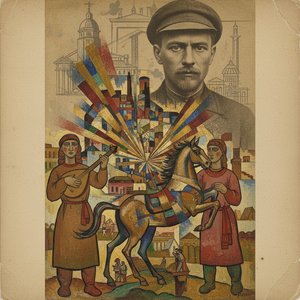
Cristino Gómez González (Cristino Mallo): A Life in Art
- Born: Tuy, Spain, 1905
- Died: 1989
- Known As: Cristino Mallo
- Movement: Generation of 1927 (Spanish Avant-Garde)
Early Life and Artistic Development
- Cristino Gómez González, primarily known as Cristino Mallo, was born in Tuy, Spain. His artistic journey began early, demonstrating a natural talent that would lead him to become a significant figure in Spanish art.
- He became associated with the "Generation of 1927," a pivotal group of artists who sought to revolutionize Spanish art and push creative boundaries. This movement emphasized experimentation and innovation across various artistic disciplines.
- Mallo's early work showed a blend of traditional Spanish techniques with emerging modern styles, establishing his unique aesthetic voice. He studied at the Royal Academy of Fine Arts of San Fernando in Madrid (1923-1927).
Major Works and Artistic Style
- Monument to Eugenio d'Ors: Perhaps Mallo’s most recognized work is the sculptural group within the monument dedicated to Eugenio d'Ors, unveiled in 1963. This piece exemplifies his skill in sculpture and his ability to capture a sense of movement and emotion.
- Paintings at Museo Nacional Centro de Arte Reina Sofía: His paintings are part of the collection at this prominent Madrid museum, showcasing his contributions to Spanish painting.
- Sculptural Style: Mallo’s sculptures often feature dynamic forms and expressive figures. He demonstrated a mastery of materials and an ability to convey complex emotions through his work.
- Artistic Influences: While rooted in traditional Spanish art, Mallo's style was also influenced by the broader European avant-garde movements of the time, including Cubism and Surrealism.
Recognition and Legacy
- Awards and Honors: Throughout his career, Cristino Mallo received several awards recognizing his artistic merit, including the Gold Medal of Merit in the Fine Arts (1983).
- Contribution to Spanish Avant-Garde: Mallo’s work significantly contributed to the development of the Spanish avant-garde movement. He helped shape a new direction for Spanish art, embracing experimentation and challenging traditional norms.
- Influence on Subsequent Artists: His unique style and technical skill have inspired generations of artists in Spain and beyond.
- Continued Presence: His works are displayed in museums and collections worldwide, ensuring his legacy continues to be celebrated and appreciated by art enthusiasts.
Later Years and Final Contributions
- Mallo continued to create and teach throughout his later years. He served as a professor at the Escuela de Arte la Palma (1966–1972).
- He held positions such as EASS (1935) demonstrating his commitment to art education.
- Cristino Gómez González passed away in 1989, leaving behind a rich artistic legacy that continues to resonate with audiences today. His work remains a testament to the power of creativity and innovation in Spanish art.
Klausimai ir atsakymai
Kur galima rasti sugrupuotą pagal spalvų paletę Cristino Gómez González kūrybą?
Cristino Gómez González kūrybą spalvų paletėms sugrupuota galite rasti puslapyje Pagrinti pagal spalvų paletę.
Kur ir kada gimė Cristino Gómez González?
Cristino Gómez González gimė Tuy, 1905 m.
Ar galiu pasimokyti apie Cristino Gómez González spalvų naudojimą visuose darbuose?
Cristino Gómez González darbų spalvų profilis galima rasti puslapyje Paletės genomas.