The Soul of Norwegian Realism: The Life and Legacy of Hans Heyerdahl
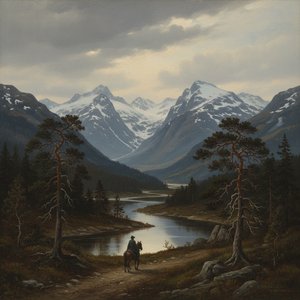
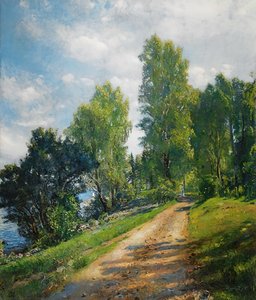
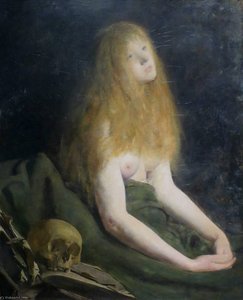
Hans Olaf Halvor Heyerdahl was a master of the quiet, profound moments that define the human condition. Born in 1857 in Smedjebacken, Sweden, his early years were marked by a transition to Drammen, Norway, where the structured world of his father—a prominent engineer and architect—provided a backdrop of discipline and observation. While he initially intended to follow this path of technical precision, the call of the brush proved irresistible. His journey from a student of craft to a celebrated painter of the Realist movement is a testament to an innate talent that sought to capture not just the surface of the world, but its very essence through light, texture, and emotion. His artistic evolution was shaped by the great art capitals of Europe, creating a sophisticated synthesis of styles. After foundational studies in Christiania under Peder Cappelen Thurmann, Heyerdahl ventured to Munich, where the influence of Wilhelm Lindenschmit and Ludwig von Löfftz proved transformative. It was here that his focus shifted from mere landscape study toward the grander narratives of historical painting and the intimate psychological depth of portraiture. This period of academic rigor was later tempered by the vibrant, light-filled atmosphere of Paris. Immersed in Parisian circles between 1878 and 1882, he embraced the nuances of naturalism and the burgeoning influence of Impressionism, learning to observe the world outdoors with a renewed, sensory clarity.Mastery of Form and Narrative
The brilliance of Heyerdahl’s work lies in his ability to marry monumental themes with meticulous realism. One of his most celebrated early triumphs was his participation in the 1878 Exposition Universelle, where he earned a third-place medal for his evocative canvas, Adam og Eva drives ut av paradiset. This piece, depicting the biblical expulsion from Eden, showcased his capacity for dramatic storytelling and expressive brushwork, proving that he could handle large-scale historical subjects with both technical command and profound spiritual weight. Beyond the grand narratives, Heyerdahl found his greatest strength in the intimate study of his subjects. His portraits are far more than mere likenesses; they are windows into the character of his sitters. Whether capturing a distinguished gentleman in muted, academic tones or the serene, haunting beauty of a young girl on a beach, his work is characterized by:- A profound commitment to naturalism, ensuring every fold of fabric and glint of light feels tangibly real.
- An expert use of tonal harmony, often employing subtle, muted palettes to evoke mood and atmosphere.
- A delicate balance between technical precision and the expressive freedom found in his later, more observational works.
A Lasting Impression on Art History
As a pioneer of Norwegian Realism, Heyerdahl’s significance extends far beyond his individual canvases. He acted as a bridge between the traditional academic styles of Munich and the modern, light-driven sensibilities emerging from France. By bringing these international influences back to Norway, he helped enrich the national artistic identity, contributing to a movement that sought to find beauty in the authentic, unadorned reality of daily life and the natural landscape. Though his life ended in 1913, the legacy of Hans Heyerdahl remains etched in the annals of Scandinavian art. His ability to capture the dignity of the human spirit and the quiet majesty of the natural world ensures that his work continues to resonate with contemporary viewers. To look upon a Heyerdahl painting is to experience a moment frozen in time—a moment rendered with such sincerity and skill that the boundaries between the painted world and our own seem to dissolve.Klausimai ir atsakymai
Kur galiu pamatyti Hans Heyerdahl kūrybinę veiklą chronologine tvarka?
Galite peržiūrėti Hans Heyerdahl kūrybos laiko liniją: puslapyje Kūrybos chronologija kūriniai surikiuoti pagal jų sukūrimo datą.
Ar galima pasimatričiuoti 3D virtualiame Hans Heyerdahl kūrybos muzieje?
Hans Heyerdahl kūrybą galite apžiūrėti 3D galerijoje, apsilankę puslapyje 3D galerija.
Ar galiu ieškoti Hans Heyerdahl kūrinių pagal raktažodžius?
Hans Heyerdahl puslapio Raktažodžiais skiltyje kūriniai suskirstyti pagal raktinius žodžius.