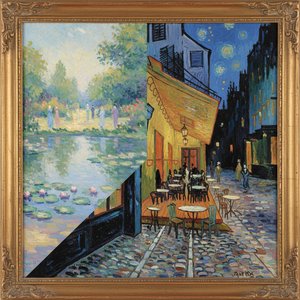
Léon Riesener: A Pioneer of Romantic Color
Léon Riesener (1808 – 1878) stands as a singular figure in the burgeoning landscape of French Romantic painting, recognized not merely for his artistic output but also for his groundbreaking exploration into the science of color and his unwavering dedication to capturing the essence of nature with unprecedented vibrancy. Born into an artistic lineage—his father, Henri-François Riesener, was himself a painter—Léon’s formative years instilled in him a profound appreciation for visual artistry and propelled him toward mastering the craft from a young age. His early training under Antoine-Jean Gros solidified his understanding of studio practice and established a foundation for his future endeavors.- Early Influences: Riesener's artistic journey commenced with a meticulous study of tonal divisions, predating Chevreul’s scientific breakthrough into color theory by several decades. This intellectual curiosity fueled his pursuit of perfection in artistic expression, particularly concerning the depiction of skin texture—a testament to his tactile sensitivity and desire to convey realism.
- Rubensian Reverie: Riesener harbored an ardent admiration for Rubens, whom he considered “the Shakespeare of painting,” recognizing his masterful ability to infuse emotion into visual narratives. This influence profoundly shaped Riesener’s artistic sensibilities, guiding him toward a style characterized by dramatic lighting and expressive modeling.
- Scientific Exploration & Artistic Technique: Driven by scientific rigor, Riesener investigated the principles of color mixing and pigment dispersion—techniques that would later become integral to Impressionist painters like Monet and Renoir. He meticulously analyzed the works of Titian, Veronese, and Correggio, absorbing their compositional strategies and mastering their masterful use of color palettes.
The Pursuit of Authentic Representation
Riesener’s artistic vision centered on conveying “the heat of the day, the melancholy of the evening,” mirroring his fascination with capturing the subtleties of natural phenomena. Unlike many of his contemporaries who adhered to academic conventions—primarily focusing on idealized forms and muted tones—Riesener championed a bold approach characterized by pure colors and contrasting hues. He deliberately eschewed blacks and whites for shading, prioritizing visual impact over strict adherence to traditional methods. This revolutionary technique reflected his belief that art should strive for an honest portrayal of reality, mirroring the spirit of Impressionism.- Breaking Tradition: Riesener’s refusal to employ conventional contours—instead favoring shadows and modeling—represented a decisive departure from artistic dogma. He sought to emulate Rubens's expressive style, prioritizing emotional resonance over precise anatomical accuracy.
- Salon Resistance & Artistic Integrity: Riesener faced considerable opposition from Salon juries and the Institut de France during his lifetime, who deemed his experimental methods unacceptable. Despite these challenges, he remained steadfast in his commitment to artistic integrity, pursuing his vision with unwavering determination.
Notable Works & Legacy
Riesener’s oeuvre encompasses a diverse range of landscapes and genre scenes—particularly portraits imbued with psychological depth—demonstrating his versatility as an artist. Among his most celebrated paintings are “Fountain,” “Venus et Amour,” and “Léda”—each piece exemplifies his masterful blending of color and light, capturing the beauty of nature and exploring profound emotional themes. His work anticipates many developments in Impressionist painting, establishing him as a pivotal precursor to this influential artistic movement. Riesener’s enduring legacy resides not only in his individual artworks but also in his pioneering contribution to the advancement of color theory and his unwavering advocacy for authentic representation—a testament to his singular vision and lasting impact on art history.Further Exploration
You can find more information about Léon Riesener’s artistic achievements at The Art Institute of Chicago. Also, delve into Eugène Delacroix's portrayal of Riesener in “Léon Riesener (1808–1878)” on the Metropolitan Museum of Art’s website: The Metropolitan Museum of Art.Klausimai ir atsakymai
Kaip rasti Léon Riesener darbus konkrečia tema?
Léon Riesener kūrybą galima tyrinėti pagal raktažodžius tame šio autoriaus Raktažodžiais puslapyje. Kiekvienas raktažodis sugrupuoja susijusią kūrybinę veiklą.
Ar galiu peržiūrėti Léon Riesener darbus pagal spalvų paletę?
Norėdami rasti Léon Riesener darbus konkrečia spalvų paleta, apsilankykite paveikslautojo Pagrinti pagal spalvų paletę puslapyje.
Kur galiu pamatyti visus Léon Riesener kūrybos darbus?
Visi ši ši internetinė svetainė esantys Léon Riesener kūriniai galima peržiūrėti puslapyje Visi kūriniai.