

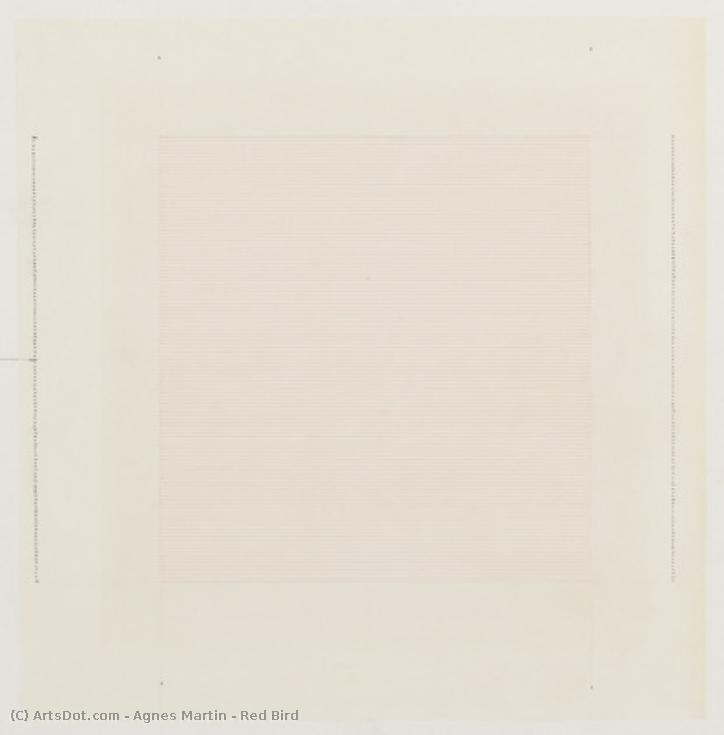
1964. Acrylic On Canvas, 30.0 x 31.0 cm. Museum of Modern Art.
§ 1Catalogue data

- 30.0 x 31.0 cm


Dit kunstwerk is auteursrechtelijk beschermd
De kunstwerken die op deze pagina worden weergegeven, zijn beschermd door de auteursrechtwetgeving, wat betekent dat het ons wettelijk niet is toegestaan om identieke reproducties te maken of te verkopen. Deze bescherming wordt gehandhaafd onder internationale overeenkomsten zoals de Conventie van Bern en door nationale wetgeving, waaronder de bepalingen van de Amerikaanse auteurswet - Titel 17. Alle rechten voorbehouden. Reproduceren of distribueren van afbeeldingen is niet toegestaan zonder uitdrukkelijke schriftelijke toestemming van WahooArt.com en de rechthebbenden.
Als een respectvol en legaal alternatief bieden wij op maat gemaakte, handgeschilderde kunstwerken aan die geïnspireerd zijn op het origineel. Onze bekwame en professionele kunstenaars bestuderen zorgvuldig de stijl, sfeer en artistieke essentie van het origineel om een nieuw, uniek werk te creëren dat dezelfde emotie oproept – terwijl het een op zichzelf staande, originele creatie blijft.
Deze methode voldoet volledig aan de auteursrechtwetgeving, omdat het niet gaat om het kopiëren of dupliceren van het beschermde kunstwerk. In plaats daarvan is er sprake van een creatieve herinterpretatie — een nieuw schilderij dat door het origineel wordt geïnspireerd, maar er niet identiek aan is.
 Lees meer over
§ 2Abstract
Beschrijving verzamelobject
Experience the serene minimalism of Agnes Martin's 1964 grid painting, featuring delicate horizontal lines evoking quiet contemplation; discover this piece of abstract art today.
Biografie kunstenaar
Ontdek Agnes Martin (1912-2004), een Amerikaanse kunstenaar die baanbrekende minimalistische kunst creëerde met subtiele grijze lijnen en kleurenwasjes. Haar werk staat bekend om zijn serene eenvoud en een blijvende inspiratie voor hedendaagse kunstenaars.
§ 3Commentary
The Quiet Architecture of Being
To stand before this piece is to enter a space of profound stillness. It is not an image that demands attention through drama or vibrant color; rather, it invites the viewer into a hushed conversation with structure itself. The canvas unfolds as a field of subtle cream and off-white, dominated by a meticulous yet seemingly effortless grid. These horizontal lines are the very breath of the composition—thin, rhythmic, and repeating across the surface. They suggest an underlying order, a quiet architecture that supports nothing more than contemplation. This work speaks in whispers, using line not as a boundary, but as a meditation.
A Dialogue with Minimalism and Abstraction
This piece belongs to a lineage of reductive art, echoing the profound explorations of Agnes Martin. Her commitment was always to stripping away the superfluous until only the essential remained: the mark, the plane, the breath between things. The style is pure minimalism, yet it resists being merely decorative. It possesses an intellectual rigor that speaks to decades of artistic inquiry into perception. The slight variations in line thickness and spacing—the subtle imperfections that betray the human hand—are crucial. They prevent the grid from becoming cold or mechanical; instead, they imbue the structure with a palpable sense of life lived through careful attention.
Technique and Materiality: The Hand's Signature
The execution is deceptively simple. Using what appears to be fine acrylic paint on canvas, the artist has employed a technique that requires immense patience and unwavering focus. One can almost hear the soft scratch of the brush against the prepared surface as the horizontal passages are laid down one after another. The resulting texture is whisper-light, catching the diffused light without glare. This mastery over restraint—the ability to create such depth and pattern using only near-monochromatic tones—is what elevates this work from mere drawing to profound artistic statement.
Symbolism of Order and Introspection
What does this grid symbolize? For many, it represents the comforting framework of human understanding: routine, structure, or perhaps even the gentle limitations that define our experience. Yet, because these lines are so delicate, they never feel restrictive. Instead, they act as a visual guide toward introspection. They suggest the quiet moments between thoughts, the necessary pauses in a busy life. Owning this piece is not simply decorating a wall; it is curating an atmosphere of serenity, a visual anchor for moments requiring deep thought and calm repose.
Bringing Stillness Home
For the collector or designer seeking to infuse a space with sophisticated tranquility, this reproduction offers unparalleled depth. It pairs beautifully in environments that value understated luxury—a modern library, a quiet sitting room, or an art-focused gallery wall. It is a piece that does not shout for attention but rather deepens the ambiance, allowing the natural light and the conversation within the room to become the true focal points. It is wearable calm, rendered beautifully on canvas.
Veelgestelde vragen
Met welke techniek en welke afmetingen is het originele "Red Bird" door Agnes Martin uitgevoerd?
"Red Bird" door Agnes Martin is uitgevoerd in Acrylic On Canvas en heeft de afmetingen 30 x 31 cm.
Welke kleur valt het meest op in "Red Bird"?
De kleur die het meest opvalt in "Red Bird" is Putty (#e7e3d9). De dominante kleur is handig bij het afstemmen van een kunstwerk op een interieur.
Welke afmeting voor de reproductie wordt aanbevolen voor "Red Bird" door Agnes Martin?
Voor "Red Bird" door Agnes Martin wordt een reproductie van Medium aanbevolen. De afmetingen kunnen worden aangepast met behoud van de verhoudingen.


 Schakel over naar print


 Voor kunstwerken of reproducties die aan één zijde groter zijn dan 105 cm (ongeveer 41 inch), wordt de lijst als een losse set verzonden. Deze methode garandeert een veilige levering en voorkomt schade tijdens het transport.


