


 Bekijk op ware grootte
 Verstuur
 Delen
Delen
 Details bekijken
 Gids
Gids

 Download
 Vergelijkbare items
 Röntgenonderzoek
 Diavoorstelling
 Statistieken
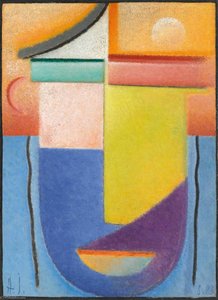
ABSTRAKTER KOPF TRAGIK (ABSTRACT HEAD TRAGIC)


 Lees meer
Handgemaakte olieverfreproductie
Met de hand geschilderd in olieverf op canvas in uw gewenste maat en lijst, op bestelling gemaakt door onze kunstenaars. ( Schakel over naar print Schakel over naar digitale afbeeldingen)




P118B $10

P118H $10

P118W $10

P438Z $10

P508JH $12

P508YH $12

P805H $10

P805Z $10

P919BZ $10

P919G $10

P919XJ $10

P959ZH $10

P968JZ $12

W106C $8

W218G $10

W218JH $8

W218Y $10

W307PJ $10

W316G $10

W316PJ $8

W316Y $10

W398PJ $8

W4111J $10

W500HY $15

W500JH $15

W692G $12

W849H $8

W940BG $15

W953PJ $8




Kies uit onze vooraf ingestelde maten die overeenkomen met de originele verhoudingen van het kunstwerk.

U kunt uw eigen afmetingen invoeren om in een specifieke lijst of ruimte te passen. Als de door u gekozen maat niet overeenkomt met de verhoudingen van het originele beeld, zullen we het kunstwerk bijsnijden of het schilderij uitbreiden met extra handgeschilderde elementen. Een digitale mockup wordt ter goedkeuring naar u verzonden voordat de productie begint.
Houd er rekening mee dat de preview op het scherm niet de werkelijke uitsnede of uitbreiding weergeeft. Alleen de mockup toont de uiteindelijke compositie nauwkeurig.
Hoewel aangepaste afmetingen mogelijk zijn, raden we aan een maat uit de vooraf gedefinieerde lijst te selecteren om de originele verhoudingen te behouden.
Na de bestelling zal het team van AllPaintingsStore.com per e-mail contact opnemen met de klant voor instructies en een mockup-voorbeeld sturen.
Wereldwijde levering () binnen 3 tot 4 weken in plaats van de standaard 5 weken. (21 september). Zonder concessies aan de kwaliteit.

Gratis wereldwijde expressverzending

Hoogwaardig linnen canvas

Volledige verzendverzekering

Garantie op terugbetaling van invoerrechten

Garantie op exacte kleurweergave

Retourbeleid van 100 dagen (alleen bij defecten)

100% Geld-terug-garantie

Korting bij meerdere afnames
 De optie voor glas is alleen beschikbaar bij een formaat kleiner dan 110 cm.

ABSTRAKTER KOPF TRAGIK (ABSTRACT HEAD TRAGIC)
Reproductiemethode
Formaat reproductie
-


Totaalprijs
$ 258
ABSTRAKTER KOPF TRAGIK – A Window into Alexej von Jawlensky’s Soul
Alexej von Jawlensky's "Abstrakter Kopf: Tragik" (Abstract Head: Tragedy) is not merely a painting; it’s an intensely felt expression of the artist’s profound engagement with human emotion and spiritual experience. Painted in 1928, during a period of significant artistic experimentation for Jawlensky, this work exemplifies his core approach – stripping away representational detail to reveal the raw essence of feeling through bold color and simplified form. The image depicts a distorted face, dominated by a large, expressive nose and mouth rendered in vibrant reds and oranges, immediately arresting the viewer with its unsettling power.
The Expressionist Roots & Munich Circle
Jawlensky’s artistic journey was deeply rooted in the burgeoning Expressionist movement of early 20th-century Germany. He was a key member of the New Munich Artist's Association (Neue Künstlervereinigung München), alongside figures like Wassily Kandinsky and Franz Marc, forming a vital hub for avant-garde art. This association exposed him to radical ideas about representing inner experience rather than simply mirroring external reality. The influence of the Blaue Reiter group – known for their exploration of color and spirituality – is clearly visible in “Abstrakter Kopf: Tragik,” particularly in its emphasis on emotional intensity communicated through chromatic values. His time within this circle fostered a relentless pursuit of authentic expression, rejecting academic conventions in favor of a deeply personal visual language.
Technique & Materiality
The painting is executed in oil on board, a medium Jawlensky favored for its ability to capture rich color and textural depth. Notice the deliberate application of paint – thick impasto in areas creates a tactile quality, while thinner washes build atmosphere and emphasize contours. The artist’s brushwork is not smooth or polished; it's deliberately rough and gestural, conveying a sense of urgency and emotional turmoil. The use of intense reds and oranges isn’t simply decorative; they are carefully chosen to evoke feelings of passion, pain, and perhaps even spiritual anguish – reflecting the title’s poignant theme. The background blue sky provides a stark contrast, further isolating the figure and intensifying its dramatic effect.
Symbolism & Emotional Resonance
"Abstrakter Kopf: Tragik" transcends a simple portrait; it's a meditation on suffering and resilience. The distorted features suggest a fractured psyche, perhaps reflecting the anxieties of a rapidly changing world. The large nose and mouth are not rendered realistically but as powerful symbols of expression – conveying both vulnerability and defiance. Jawlensky’s work often explored themes of faith, mortality, and the human condition, inviting viewers to confront uncomfortable truths about themselves and the world around them. The painting's enduring power lies in its ability to tap into universal emotions, making it a profoundly moving and thought-provoking artwork.
Gerelateerde kunstwerken



Biografie van de kunstenaar
A Life Painted in Emotion: The Journey of Alexej von Jawlensky
Alexej von Jawlensky, born Alexej Georgewitsch von Jawlensky on March 13, 1864, in the Russian town of Torzhok, embarked on a path that would firmly establish him as a pivotal figure within early twentieth-century Expressionism. His formative years were characterized by frequent relocations, culminating in a settling within Moscow at the age of ten—an experience that likely instilled a sense of displacement and perhaps, a yearning for deeper connection, themes subtly woven into the emotional core of his later artistic explorations. Initially drawn to a military career, Jawlensky’s encounter with the vibrant world of art during the 1880 Moscow World Exposition proved transformative. This exposure ignited within him a passion that would ultimately supersede any sense of duty, leading him down a path dedicated to visual expression. Securing a posting in St. Petersburg through his social connections allowed Jawlensky to formally study at the Art Academy from 1889 to 1896, balancing artistic pursuits with military obligations. It was during this period that he crossed paths with Ilya Repin, a prominent Russian realist painter, and more importantly, met Marianne von Werefkin. Werefkin, herself an accomplished artist of considerable means, became not only his mentor but also a crucial benefactor, providing him the financial stability to fully dedicate himself to his craft. Their relationship was complex, deeply intertwined with artistic ambition and mutual support, shaping the trajectory of both their careers.Munich and the Seeds of Expressionist Innovation
The move to Munich in 1894 marked a turning point for Jawlensky. He enrolled at Anton Ažbe’s private school, immersing himself in an environment that encouraged experimentation and challenged conventional academic approaches. This period witnessed his growing engagement with avant-garde ideas circulating within the European art world. The influence of artists like Ferdinand Hodler, Jan Verkade, and Paul Sérusier proved particularly significant, exposing him to principles of symbolism and synthetism—movements that prioritized subjective experience and emotional resonance over strict representational accuracy. Jawlensky’s artistic style began to evolve, moving away from the realism he had initially studied. He became increasingly interested in exploring the expressive potential of color and form, simplifying compositions and intensifying hues to convey inner states rather than merely depicting external appearances. This exploration led him towards abstraction, a path that would define much of his later work. His involvement with groups like the Neue Künstlervereinigung München (NKvM) further solidified his commitment to artistic innovation, placing him at the heart of a burgeoning Expressionist movement. The NKvM, though short-lived, was a crucible for radical ideas, and Jawlensky’s participation demonstrated his willingness to challenge established norms and embrace new modes of visual language.The Mystical Heads: A Descent into Spiritual Essence
Around 1909, Jawlensky embarked on what would become his most iconic series—the “Mystical Heads.” These intensely colored portraits, often depicting faces reduced to essential forms, are not merely representations of individuals but rather explorations of spiritual essence and inner life. The heads possess a haunting quality, their simplified features and vibrant palettes conveying a sense of profound emotion and psychological depth. Works like Schokko with Red Hat (1909) and Portrait of Alexander Sakharoff (1909) exemplify this period, showcasing his mastery of color and composition. These weren’t portraits in the traditional sense; they were attempts to capture something beyond physical likeness—the soul, the inner landscape of the sitter. He distilled faces into geometric shapes, emphasizing the power of color to evoke emotion and spiritual resonance. Throughout the 1910s, Jawlensky continued to refine his style, moving towards an even greater degree of abstraction. His compositions became increasingly geometric, with forms distilled to their most fundamental elements. He developed a formulaic approach, often employing a limited range of colors arranged in carefully balanced configurations. Violet Turban (1911) demonstrates this stylistic evolution, showcasing his ability to create powerful visual statements through the interplay of color and shape.Exile, Resilience, and Lasting Legacy
The outbreak of World War I brought upheaval to Jawlensky’s life. Expelled from Germany in 1914 due to his Russian origins, he sought refuge in Switzerland, where he encountered Emmy Scheyer. Scheyer became a devoted champion of his work, tirelessly promoting it in the United States and securing him recognition on an international stage. Despite facing increasing health challenges—including severe arthritis that progressively limited his ability to paint—Jawlensky continued to create until his death in Wiesbaden, Germany, on March 15, 1941. His later works, created under immense physical hardship, are a testament to his unwavering dedication to artistic expression. Today, Alexej von Jawlensky is celebrated as a key figure in the development of Expressionism. His paintings are held in prominent museum collections worldwide, including the Museum Ostwall in Dortmund and the Städtische Galerie im Lenbachhaus in Munich. His exploration of color, form, and spiritual themes continues to resonate with audiences, solidifying his place as one of the most important artists of the early twentieth century. He left behind a body of work that is both visually striking and emotionally profound, offering a glimpse into the inner world of an artist who dared to challenge conventions and embrace the power of subjective expression.Influences and Artistic Associations
Jawlensky’s artistic journey was shaped by a network of influential figures and movements:- Ilya Repin: Early mentor providing foundational training in realist techniques.
- Marianne von Werefkin: Crucial benefactor, mentor, and artistic partner who supported his development.
- Ferdinand Hodler: Influenced Jawlensky’s use of simplified forms and symbolic imagery.
- Jan Verkade & Paul Sérusier: Introduced him to the principles of symbolism and synthetism, shaping his approach to color and composition.
- Wassily Kandinsky & Franz Marc: Collaborators within Der Blaue Reiter, fostering a shared commitment to artistic innovation.

Alexej von Jawlensky
1864 - 1941 , Rusland
Snelle feiten
- Artistic Movement Or Style: Expressionisme
- Artists Or Movements Influenced By This Artist:
- Blaue Reiter
- Der Blaue Vier
- Artists Who Influenced This Artist:
- Repin
- Werefkin
- Hodler
- Date Of Birth: 13 maart 1864
- Date Of Death: 15 maart 1941
- Full Name: Alexej Georgewitsch von Jawlensky
- Nationality: Russisch
- Notable Artworks:
- Schokko met hoed
- Violette sjaal
- Zelfportret
- Place Of Birth: Torzhok, Rusland
Gerelateerde artikelen

Expressionist Abstraction: A Procurement Guide to Bold Colors and Emotional Impact for Modern Hotel Interiors
Elevate hospitality spaces with Expressionist Abstraction. A professional procurement guide for hotel designers on sourcing bold, large-scale abstract oil paintings to create impactful, high-end modern interiors through reliable bulk-order art solutions.


