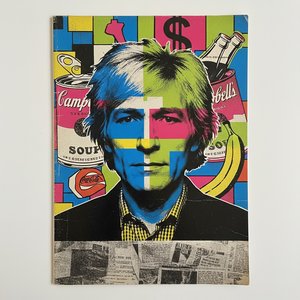
Acrylic On Canvas.

§ 1Catalogue data


Dit kunstwerk is auteursrechtelijk beschermd
De kunstwerken die op deze pagina worden weergegeven, zijn beschermd door de auteursrechtwetgeving, wat betekent dat het ons wettelijk niet is toegestaan om identieke reproducties te maken of te verkopen. Deze bescherming wordt gehandhaafd onder internationale overeenkomsten zoals de Conventie van Bern en door nationale wetgeving, waaronder de bepalingen van de Amerikaanse auteurswet - Titel 17. Alle rechten voorbehouden. Reproduceren of distribueren van afbeeldingen is niet toegestaan zonder uitdrukkelijke schriftelijke toestemming van WahooArt.com en de rechthebbenden.
Als een respectvol en legaal alternatief bieden wij op maat gemaakte, handgeschilderde kunstwerken aan die geïnspireerd zijn op het origineel. Onze bekwame en professionele kunstenaars bestuderen zorgvuldig de stijl, sfeer en artistieke essentie van het origineel om een nieuw, uniek werk te creëren dat dezelfde emotie oproept – terwijl het een op zichzelf staande, originele creatie blijft.
Deze methode voldoet volledig aan de auteursrechtwetgeving, omdat het niet gaat om het kopiëren of dupliceren van het beschermde kunstwerk. In plaats daarvan is er sprake van een creatieve herinterpretatie — een nieuw schilderij dat door het origineel wordt geïnspireerd, maar er niet identiek aan is.
 Lees meer over
§ 2Abstract
Beschrijving verzamelobject
Explore Andy Warhol’s iconic ‘Flowers’ – a vibrant Pop Art silkscreen masterpiece reflecting consumer culture and the beauty of everyday life.
Biografie kunstenaar
Ontdek Andy Warhol's iconische Pop Art (1928-1987) – silkscreens van Marilyn, Campbell’s Soup Cans & celebrity cultuur. Een kunstenaar die de kunstgeschiedenis opnieuw vorm gaf!
§ 3Commentary
A Burst of Pop: Decoding Andy Warhol’s ‘Flowers’
Andy Warhol's ‘Flowers,’ a series born from his fascination with mass production and the ephemeral beauty of everyday life, stands as one of the most recognizable emblems of the Pop Art movement. More than just pretty pictures, these silkscreen prints are a complex meditation on consumer culture, artistic reproduction, and the very nature of perception. Emerging in 1964, at the height of Warhol’s fame following his iconic portraits of Marilyn Monroe and Campbell's Soup Cans, ‘Flowers’ represented a deliberate shift—or perhaps an expansion—of his artistic concerns. While seemingly simpler in subject matter than his previous work, the series possesses a quiet power that continues to resonate with audiences today.
The Silkscreen Process: A Factory Aesthetic
Warhol's technique was integral to the meaning of ‘Flowers.’ He didn’t approach these images as a traditional painter would. Instead, he embraced the mechanical process of silkscreen printing—a method borrowed from commercial illustration—to create multiples that deliberately blurred the lines between high art and mass-produced objects. The original source image, a black and white photograph of hibiscus flowers taken by Patricia Caulfield for Modern Photography magazine, was transformed through Warhol’s signature layering of vibrant, often unexpected colors. This process wasn't about achieving photographic realism; it was about flattening the image, removing any sense of depth or individual brushstroke, and emphasizing the artificiality inherent in reproduction. The slight misalignments and imperfections that sometimes appear in the prints aren’t flaws but rather hallmarks of the ‘Factory’ aesthetic—a testament to Warhol’s embrace of mechanical processes and collaborative production. The legal battle with Caulfield over copyright further underscores this tension between artistic appropriation and originality, a key theme within Warhol's oeuvre.
Symbolism in Bloom: Beyond Surface Beauty
On the surface, ‘Flowers’ appears to celebrate the simple beauty of nature. However, beneath this veneer lies a more nuanced commentary on American society in the 1960s. The flowers themselves can be interpreted as symbols of fleeting youth, fragile beauty, and the commodification of natural forms. Warhol's choice to depict flowers—a traditional subject for still life painting—was itself a subversive act. By stripping away any sense of sentimentality or artistic skill, he challenged conventional notions of what constituted ‘high art.’ The repetitive nature of the imagery also speaks to the pervasive influence of advertising and mass media in postwar America, where images were endlessly reproduced and circulated. The vibrant, almost artificial colors further emphasize this sense of manufactured beauty, suggesting that even our appreciation of nature is mediated through consumer culture.
A Lasting Legacy: ‘Flowers’ in Contemporary Culture
‘Flowers’ continues to captivate viewers not only for its aesthetic appeal but also for its enduring relevance. The series embodies Warhol's prescient understanding of the changing relationship between art, commerce, and celebrity. Its influence can be seen in countless works by subsequent artists who have explored themes of appropriation, reproduction, and consumerism. Today, a high-quality hand-painted reproduction of ‘Flowers’ offers more than just a decorative addition to a space; it's an invitation to engage with a pivotal moment in art history—a vibrant reminder of the power of images to shape our perceptions and reflect our culture. The artwork’s enduring popularity speaks to its ability to transcend time, remaining as fresh and thought-provoking today as it was over half a century ago.
Veelgestelde vragen
Hoeveel mensen bekijken "Flowers"?
Statistieken over "Flowers" door Andy Warhol zijn te vinden op de Statistieken-pagina van het kunstwerk: maandelijkse weergaven van het kunstwerk, weergaven van de werken van de kunstenaar en een uitsplitsing naar land en taal van recente bezoekers.
Met welk medium is "Flowers" door Andy Warhol uitgevoerd?
Andy Warhol gebruikte de Acrylic On Canvas-techniek voor "Flowers". De techniek bepaalt de materiële aard van het originele werk.
Is er een gids beschikbaar voor "Flowers" door Andy Warhol?
Er is een Informatieblad pagina beschikbaar voor "Flowers" door Andy Warhol: een printbaar informatieblad over het kunstwerk, ontworpen voor studenten en gebruik in de klas.


 Schakel over naar print


 Voor kunstwerken of reproducties die aan één zijde groter zijn dan 105 cm (ongeveer 41 inch), wordt de lijst als een losse set verzonden. Deze methode garandeert een veilige levering en voorkomt schade tijdens het transport.