

Acrylic On Canvas.

§ 1Catalogue data

Dit kunstwerk is auteursrechtelijk beschermd
De kunstwerken die op deze pagina worden weergegeven, zijn beschermd door de auteursrechtwetgeving, wat betekent dat het ons wettelijk niet is toegestaan om identieke reproducties te maken of te verkopen. Deze bescherming wordt gehandhaafd onder internationale overeenkomsten zoals de Conventie van Bern en door nationale wetgeving, waaronder de bepalingen van de Amerikaanse auteurswet - Titel 17. Alle rechten voorbehouden. Reproduceren of distribueren van afbeeldingen is niet toegestaan zonder uitdrukkelijke schriftelijke toestemming van WahooArt.com en de rechthebbenden.
Als een respectvol en legaal alternatief bieden wij op maat gemaakte, handgeschilderde kunstwerken aan die geïnspireerd zijn op het origineel. Onze bekwame en professionele kunstenaars bestuderen zorgvuldig de stijl, sfeer en artistieke essentie van het origineel om een nieuw, uniek werk te creëren dat dezelfde emotie oproept – terwijl het een op zichzelf staande, originele creatie blijft.
Deze methode voldoet volledig aan de auteursrechtwetgeving, omdat het niet gaat om het kopiëren of dupliceren van het beschermde kunstwerk. In plaats daarvan is er sprake van een creatieve herinterpretatie — een nieuw schilderij dat door het origineel wordt geïnspireerd, maar er niet identiek aan is.
 Lees meer over
§ 2Abstract
Beschrijving verzamelobject
Biografie kunstenaar
Ontdek Andy Warhol's iconische Pop Art (1928-1987) – silkscreens van Marilyn, Campbell’s Soup Cans & celebrity cultuur. Een kunstenaar die de kunstgeschiedenis opnieuw vorm gaf!
§ 3Commentary
A Fragment of Cinematic Tension: Warhol’s “Untitled (1532)”
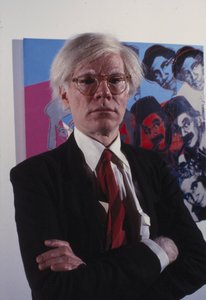
Andy Warhol's "Untitled (1532)" isn’t merely a painting; it’s a distilled moment of unsettling drama captured in silkscreen printmaking—a technique synonymous with Warhol’s groundbreaking exploration of celebrity and mass culture. Executed around 1967, this piece exemplifies the artist’s signature style: bold repetition, vibrant color palettes juxtaposed against stark black and white, and an almost unnerving stillness that belies the palpable tension radiating from its central subject matter. The photograph accompanying this description reveals a meticulously crafted image—a cinematic tableau frozen in time—that speaks volumes about Warhol's fascination with film noir and his desire to dissect the anxieties of American society during the Vietnam War era.- Subject Matter: At first glance, the composition presents two figures positioned before a screen displaying a film scene depicting violence – specifically, a man holding a knife menacingly close to another’s face. The inclusion of additional individuals watching adds to the unsettling atmosphere, suggesting an audience captivated by the unfolding drama.
- Style & Technique: Warhol's masterful use of silkscreen printing is crucial to understanding the artwork’s impact. This method allowed for rapid production and ensured consistent color reproduction across multiple prints—a deliberate choice that underscored Warhol’s belief in the democratization of art and challenged traditional notions of artistic originality.
Historical Context: Echoes of Film Noir and Societal Anxiety
“Untitled (1532)” resides firmly within the context of 1960s American culture, a period marked by profound social upheaval and fueled by anxieties surrounding political conflict and cultural change. Warhol’s artistic sensibilities were deeply influenced by film noir—the genre known for its shadowy visuals, morally ambiguous characters, and exploration of psychological darkness. The painting deliberately borrows stylistic elements from these films, mirroring their preoccupation with themes of violence, paranoia, and the fragility of human relationships. It's a visual commentary on the pervasive fear and uncertainty that gripped the nation during this turbulent time.Symbolism & Emotional Resonance
Beyond its cinematic references, “Untitled (1532)” carries symbolic weight. The screen itself represents mediation—the distance between observer and spectacle—highlighting Warhol’s critique of how media shapes our perceptions of reality. The knife symbolizes aggression and control, while the positioning of the figures underscores the vulnerability inherent in confronting danger. More broadly, the artwork evokes feelings of unease and apprehension, prompting viewers to contemplate questions about power dynamics and the psychological impact of witnessing violence.Interior Design Considerations
For interior designers seeking inspiration, Warhol’s “Untitled (1532)” offers a compelling dialogue between stillness and dynamism. Its bold color contrasts—primarily black and white punctuated by splashes of vibrant hues—can serve as a striking focal point within a space, injecting energy and visual interest. Furthermore, the artwork's exploration of psychological tension aligns with contemporary trends in design that prioritize creating environments conducive to contemplation and emotional resonance. A high-quality reproduction would undoubtedly elevate any interior aesthetic.Veelgestelde vragen
Is "untitled (1532)" door Andy Warhol eerder licht of donker van kleur?
Over het algemeen wordt "untitled (1532)" geregistreerd als bright. De waargenomen helderheid beschrijft hoe licht of donker het werk oogt.
Waarvoor wordt een reproductie van "untitled (1532)" door Andy Warhol aanbevolen?
De aanbevolen toepassing voor "untitled (1532)" door Andy Warhol is Accent. Het kan echter ook voor andere doeleinden worden gebruikt.
Uit welke fase van de carrière van Andy Warhol is "untitled (1532)"?
"untitled (1532)" behoort tot de Mature Period in de carrière van Andy Warhol. Deze classificatie plaatst het werk in de context van de ontwikkeling van de kunstenaar.


 Schakel over naar print


 Voor kunstwerken of reproducties die aan één zijde groter zijn dan 105 cm (ongeveer 41 inch), wordt de lijst als een losse set verzonden. Deze methode garandeert een veilige levering en voorkomt schade tijdens het transport.


