Geld-terug-garantie · 100 dagen Gratis wereldwijde verzending
449.587kunstwerken 30.613kunstenaars 4.660musea 32talen
Valuta
    Taal
      Atelier · Sinds 2015 · Parijs, Frankrijk
      AllPaintingsStore
      allpaintingsstore.com
      Catalogue entry

      Bow Bridge

      1860. Painting. Royal Institute of British Architects.

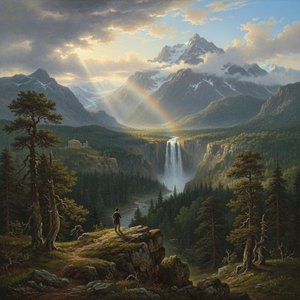
      Fig. 1. Calvert Vaux Faia, Bow Bridge, 1860. Shown as the reproduction you are specifying: , .

      § 1Catalogue data

      § 2Abstract

      Beschrijving verzamelobject

      Admire Calvert Vaux's iconic Bow Bridge masterpiece – a serene landscape painting capturing the beauty of Central Park. Explore this stunning artwork and discover its influence on American design.

      Biografie kunstenaar

      Explore the legacy of Calvert Vaux (1824-1895), a pioneering English-American architect & landscape designer famed for Central Park & Prospect Park. Discover his naturalistic designs & lasting impact on public spaces! #landscapearchitecture #CentralP

      § 3Commentary

      A Symphony of Iron and Nature

      In the heart of Manhattan’s verdant expanse, where the frantic pulse of urban life meets the rhythmic stillness of the landscape, lies a masterpiece of Victorian engineering and Romantic vision: Bow Bridge. Captured in this evocative monochrome study by Calvert Vaux Faia, the scene transcends mere architectural documentation to become a profound meditation on the harmony between man-made grace and organic splendor. The bridge, a delicate arc of cast iron and sandstone, does not simply cross a body of water; it serves as a poetic threshold, inviting the viewer to step away from the industrial chaos of the nineteenth century and into a realm of sublime tranquility.

      The composition breathes with the spirit of the Picturesque movement, a design philosophy championed by Vaux and his collaborator Andrew Jackson Downing. Through the lens of this painting, we witness the deliberate use of curvilinear forms that mimic the natural contours of the surrounding earth. The bridge’s elegant silhouette, reminiscent of Gothic arches found in ancient European cathedrals, provides a structural rhythm that complements the soft, sprawling textures of the trees and the serene expanse of the water below. It is a visual dialogue where the rigidity of iron is softened by the fluidity of the landscape, creating a sense of effortless integration.

      The Artistry of the Industrial Age

      To gaze upon this work is to appreciate the meticulous craftsmanship of the Victorian era. The artist masterfully renders the intricate textures of the bridge’s ornamentation—the delicate floral motifs and stylized foliage carved into its sandstone supports. Even in a monochromatic palette, one can sense the tactile richness of the materials; the cool, smooth strength of the cast iron juxtaposed against the weathered, organic grain of the stone. This interplay of light and shadow lends a sculptural depth to the piece, making the bridge appear as much a living organism as the trees that frame it.

      The presence of figures traversing the span adds a layer of narrative soul to the artwork. These fleeting silhouettes serve as a reminder of the bridge's true purpose: to foster social cohesion and provide a shared sanctuary for the public. They are the heartbeat of the scene, transforming a structural feat into a lived experience. For the collector or interior designer, this piece offers more than just aesthetic beauty; it provides a window into a historical moment where architecture was used as a tool for emotional elevation, designed specifically to evoke awe and a deep connection to the natural world.

      A Timeless Legacy for the Modern Interior

      For those seeking to infuse a contemporary space with a sense of history and contemplative peace, this reproduction of Bow Bridge serves as an exquisite focal point. Its understated elegance makes it a versatile addition to a variety of design schemes, from a classic study filled with leather-bound books to a minimalist gallery setting that prizes structural form. The artwork carries an inherent emotional weight—a quiet strength that commands attention without disrupting the serenity of a room.

      Owning this piece is an invitation to embrace the "urban soul" that Calvert Vaux so brilliantly architected. It is a tribute to the enduring power of beauty to act as a refuge, reminding us that even amidst the most rapid technological progress, our deepest need remains a connection to the graceful, the natural, and the sublime. Whether displayed as a centerpiece in a grand hall or a subtle accent in a private retreat, this work continues to inspire wonder, much like the bridge itself continues to stand as a testament to the enduring magic of the landscape.

      Veelgestelde vragen

      Wat zijn de reproductierechten van "Bow Bridge" in Royal Institute of British Architects?

      "Bow Bridge" door Calvert Vaux Faia, onderdeel van de collectie van Royal Institute of British Architects, is bevindt zich in het publiek domein - de auteursrechten zijn verlopen. Deze status bepaalt of er reproducties van de afbeelding mogen worden gemaakt.

      Wat stelt "Bow Bridge" voor en welke sfeer straalt het uit?

      "Bow Bridge" door Calvert Vaux Faia verbeeldt bridge, landscape, central park, architecture, victorian era, gardens, urban design in een Serene stemming. Het onderwerp en de atmosfeer beschrijven samen het werk.

      Hoe oud was Calvert Vaux Faia bij het creëren van "Bow Bridge" in 1860?

      Calvert Vaux Faia maakte "Bow Bridge" op 36-jarige leeftijd. De kunstenaar werd geboren in 1824 en het werk dateert uit 1860.

      § 4The artist

      Calvert Vaux Faia

      Calvert Vaux Faia

      1824 - 1895, United Kingdom

      Quick facts about Calvert Vaux Faia

      • Full Name: Calvert Vaux FAIA
      • Nationality: British-American
      • Date Of Birth: 1824
      • Date Of Death: 1895
      • Place Of Birth: London, United Kingdom
      • Notable Artworks:
        • Oak Bridge
        • Bow Bridge
        • Descending the steps (central park)
      • Artistic Movement Or Style: Landscape Architecture
      • Artists Who Influenced This Artist: ['Frederick Law Olmsted']
      • Artists Or Movements Influenced By This Artist: ['Romanticism']

      Biografie kunstenaar

      The Architect of the Urban Soul

      Born in London on December 20th, 1824, Calvert Vaux possessed an innate fascination with the delicate confluence of architecture and horticulture—a passion that would eventually reshape the very identity of the American landscape. His early years were defined by a rigorous architectural apprenticeship under the distinguished London architect Lewis N. Cottingham, a master of the Gothic Revival style. It was within this classical training that Vaux honed his skills as a precise draftsman, learning to balance structural integrity with aesthetic grace. This foundational period in England provided him with a deep appreciation for British literature on landscape design and the picturesque scenery of the Continent, elements that would later infuse his American works with a romantic, soulful depth.

      The trajectory of Vaux’s life changed irrevocably in 1850 when he crossed the Atlantic, drawn by the invitation of the visionary horticulturalist Andrew Jackson Downing. This meeting was more than a professional appointment; it was a collision of two brilliant minds that would birth a new era of American landscape design. Working alongside Downing in the Hudson River Valley, Vaux embraced the concept of picturesque gardening, a philosophy that rejected rigid formality in favor of organic, flowing lines and naturalistic beauty. During these formative years, he contributed to the design of significant estates and even helped shape the grounds for the U.S. Capitol and the Smithsonian Institution, proving that his talent could bridge the gap between intimate garden design and monumental public works.

      A Visionary Partnership and the Greensward Plan

      The most enduring chapter of Vaux’s career began in 1857, when he entered into a legendary partnership with Frederick Law Olmsted. Together, they sought to solve one of the greatest urban challenges of the nineteenth century: how to provide a sanctuary for a rapidly expanding, industrializing New York City. Their collaborative masterpiece, known as the Greensward Plan, won first place in a competition to design Central Park. This was not merely a plan for a park, but a sophisticated social engineering project designed to foster tranquility and democratic access. Vaux’s architectural prowess was essential to this vision; while Olmsted focused on the broader landscape, Vaux designed the intricate structural elements that made the park navigable and enchanting.

      Vaux’s genius lay in his ability to manipulate space through stone and water. He envisioned a system of underpasses and scenic bridges that allowed for the seamless separation of pedestrian, carriage, and equestrian traffic, preventing the chaos of the city from intruding upon the serenity of the park. Iconic structures such as Bow Bridge and Oak Bridge stand today as breathtaking testaments to his ability to blend man-made elegance with the undulating terrain. Through these works, he achieved a masterful technique of prioritizing naturalistic aesthetics while simultaneously establishing grand vistas and harmonious spatial relationships that continue to captivate millions of visitors.

      A Lasting Legacy in Stone and Green

      Beyond the borders of Manhattan, Vaux’s influence rippled across the American continent. His collaborative spirit with Olmsted extended to the creation of Prospect Park in Brooklyn, Morningside Park in New York City, and even the development of the residential community of Riverside, Illinois. He was a man who practiced both architecture and landscape architecture with equal devotion, preparing original plans for the Metropolitan Museum of Art and the American Museum of Natural History. His work sought to establish these disciplines on a firm professional basis, moving them from mere ornamentation to essential components of urban civilization.

      Though his life came to a tragic end in 1895 when he drowned in Gravesend Bay, the imprint of Calvert Vaux remains indelible. He did not merely design parks; he sculpted the psychological landscape of the modern city. His ability to weave together the structural permanence of architecture with the ephemeral beauty of nature created an enduring legacy of public spaces that serve as the lungs of our urban environments. To walk through Central Park today is to move through a living gallery of Vaux’s imagination, where every winding path and graceful bridge whispers the story of a man who taught the city how to breathe.

      § 5Comparanda

      § 6Questions

      Snelle feiten

      • Artistic style: Romanticism
      • Year: 1860
      • Notable elements or techniques: Naturalistic design
      • Location: Central Park, New York
      • Title: Bow Bridge

      Kunstquiz

      Er is slechts één goed antwoord op elke vraag.

      Vraag 1:
      What is the primary artistic movement associated with Calvert Vaux’s work on Bow Bridge?
      Vraag 2:
      Bow Bridge was designed as part of which iconic American landscape project?
      Vraag 3:
      What technique did Vaux employ to create the serene and picturesque atmosphere depicted in the painting?
      Vraag 4:
      Who collaborated with Calvert Vaux on the creation of Central Park?
      Vraag 5:
      The image shows a bridge over water, reflecting trees in the background. What is this compositional element known as?

      § 7Cite this entry

      AllPaintingsStore.com, “Calvert Vaux Faia, Bow Bridge (1860)”, https://allpaintingsstore.com/nl/art/calvert-vaux-faia-bow-bridge-D74FEQ-en/ArtistReproduction/ (accessed 2 oktober 2026).

      § 8The reproduction

      Handgemaakte olieverfreproductie

      Met de hand geschilderd in olieverf op canvas in uw gewenste maat en lijst, op bestelling gemaakt door onze kunstenaars. ( Schakel over naar print Schakel over naar digitale afbeeldingen)

      It is specified on the order sheet in the margin; the present state of that sheet reads as follows.

      Bow Bridge

      Druktechniek

      Afmetingen reproductie

      -

      Geselecteerde topkunstenaars

      Meer detail, verfijning en extra productietijd

      -

      Lijst voor reproductie

      -

      -

      Voor kunstwerken of reproducties die aan één zijde groter zijn dan 105 cm (ongeveer 41 inch), wordt de lijst als een losse set verzonden. Deze methode garandeert een veilige levering en voorkomt schade tijdens het transport.

      Professionele montage vereist - dit is geen doe-het-zelfproduct.
      De set moet worden gemonteerd en het canvas moet worden gespannen door een ervaren professionele lijstenmaker, met gebruik van houtlijm (niet inbegrepen), een doekspanter en klemmen om de sponningen recht te houden terwijl de lijm droogt. Onjuiste montage of een ongelijkmatige spanning op het canvas kan het kunstwerk permanent beschadigen en wordt niet gedekt door onze garantie.

      • Alle massief houten onderdelen zijn inbegrepen, nauwkeurig op maat gesneden voor montage.

      • Te monteren met de meegeleverde schroeven, plus houtlijm voor de hoekverbindingen, die niet wordt meegeleverd en door uw lijstenmaker moet worden aangeschaft.

      • Professioneel gereedschap is vereist en niet inbegrepen: een spanner voor canvas en klemmen om de latten recht te houden terwijl de lijm droogt.

      Belangrijk:
      De hoekverbindingen vereisen houtlijm, de latten moeten met lijmklemmen worden vastgehouden tot de lijm volledig is opgedroogd, en het spannen van het canvas op het samengestelde frame vereist een doekspanter. Geen van deze artikelen is inbegrepen in de set. Wij adviseren u om een ervaren professionele lijstenmaker te raadplegen voordat u deze maat bestelt.

      Naamplaatje

      -

      -

      Beschermende vernislaag

      Glanzende vernis (versterkt de kleuren en biedt bescherming tegen licht en vocht)

      -

      Mijn kunstwerk aanpassen

      Voorbeelden van aanpassingen: vervang het gezicht door een eigen foto; voeg een huisdier toe (bijv. vervang de kat door een hond); verwerk een verborgen boodschap in de achtergrond; wijzig het landschap of andere elementen op de achtergrond.

      -

      Spoedlevering

      Wereldwijde levering () binnen 3 tot 4 weken in plaats van de standaard 5 weken. (30 oktober). Geen concessies aan de kwaliteit.

      -

      Spoedlevering

      Wereldwijde levering naar binnen 5 weken. (6 november).

      Inbegrepen

      Eindtotaal

      € 229

      Included with every order

      • Gratis wereldwijde expressverzending
      • Hoogwaardig linnen canvas
      • Volledige verzendverzekering
      • Garantie op terugbetaling van invoerrechten
      • Garantie op exacte kleurweergave
      • Retourbeleid van 100 dagen (alleen bij defecten)
      • 100% Geld-terug-garantie
      • Korting bij meerdere afnames
      Order sheet