


 Voorvertoning
 Verstuur
 Delen
Delen
 Details bekijken
 Gids
Gids

 Download
 Vergelijkbare items
 Röntgenonderzoek
 Diavoorstelling
 Q&A
Q&A Statistieken
san francesco e langelo

 Lees meer
Giclée / Kunstafdrukken
Giclée- of canvasafdruk van museumkwaliteit met een snelle productie en flexibele afwerkingsmogelijkheden. ( Bestel handgeschilderde reproductie Schakel over naar digitale afbeeldingen)




P118B €10

P118H €10

P118W €10

P438Z €10

P508JH €12

P508YH €12

P805H €10

P805Z €10

P919BZ €10

P919G €10

P919XJ €10

P959ZH €10

P968JZ €12

W106C €8

W218G €10

W218JH €8

W218Y €10

W307PJ €10

W316G €10

W316PJ €8

W316Y €10

W398PJ €8

W4111J €10

W500HY €15

W500JH €15

W692G €12

W849H €8

W940BG €15

W953PJ €8




Kies uit onze vooraf ingestelde maten die overeenkomen met de originele verhoudingen van het kunstwerk.

Voer de gewenste breedte en hoogte in, passend bij uw lijst of muur. Een afdruk kan alleen worden ingekort en nooit groter worden gemaakt dan het origineel; een formaat met andere verhoudingen zal daarom een deel van de afbeelding verliezen. Wij sturen u een digitaal mockup ter goedkeuring voordat we tot drukwerk overgaan. De afbeelding op deze pagina toont niet de werkelijke uitsnede — dit is alleen te zien op het mockup.
Wereldwijde levering () binnen 2 weken in plaats van de standaard 4/5 weken. (31 oktober)

Gratis wereldwijde expressverzending

Hoogwaardig linnen canvas

Volledige verzendverzekering

Garantie op terugbetaling van invoerrechten

Garantie op exacte kleurweergave

Retourbeleid van 100 dagen (alleen bij defecten)

100% Geld-terug-garantie

Korting bij meerdere afnames
 De optie voor glas is alleen beschikbaar bij een formaat kleiner dan 110 cm.

san francesco e langelo
Giclée / Kunstafdrukken
Afmetingen reproductie
-


Eindtotaal
€ 58
San Francesco e Angelo: A Baroque Drama of Faith and Mortality
Michelangelo Merisi da Caravaggio’s “San Francesco e Angelo” (Saint Francis and the Angel) is not merely a religious scene; it's a visceral embodiment of faith, suffering, and divine grace. Painted circa 1603-1604, during his Roman period, this work transcends its straightforward depiction of Saint Francis receiving aid from an angel to become a profound meditation on human vulnerability and the transformative power of spiritual devotion. The painting’s raw emotionality, coupled with Caravaggio's signature dramatic use of light and shadow – known as tenebrism – immediately captivates the viewer, drawing them into a world steeped in both earthly pain and celestial comfort.
The composition is strikingly simple yet intensely effective. At its heart lies the prone figure of Saint Francis, his body limp and vulnerable, seemingly on the brink of death. His face, rendered with agonizing realism, conveys a profound sense of exhaustion and despair. He’s not idealized; he's a man ravaged by earthly struggles, embodying the very essence of human frailty. Opposite him stands the angel, a figure of serene authority and compassionate intervention. The angel’s wings are subtly suggested, adding to his ethereal quality, while his gesture – gently lifting Francis – speaks volumes about divine assistance and unwavering support. The two birds in the upper corners—a dove and a falcon—add layers of symbolic complexity, often interpreted as representing hope and vigilance respectively, further enriching the painting's narrative.
Caravaggio’s Revolutionary Technique
Caravaggio’s genius lay not just in his subject matter but in his revolutionary approach to technique. “San Francesco e Angelo” exemplifies this perfectly. He abandoned the polished surfaces and idealized forms favored by many of his contemporaries, opting instead for a brutally honest portrayal of human anatomy and emotion. The figures are painted directly onto the canvas, often without preliminary sketches, resulting in an immediacy and spontaneity rarely seen in art of that era. Crucially, Caravaggio employed *chiaroscuro* – the dramatic contrast between light and dark – to create a theatrical effect. The intense illumination focuses solely on Francis and the angel, plunging the background into deep shadow, amplifying the sense of drama and highlighting the central figures’ plight.
The use of *tenebrism*, where darkness dominates the scene, is particularly evident here. It's not simply a stylistic choice; it serves to heighten the emotional impact, suggesting a world shrouded in mystery and spiritual struggle. The limited palette – primarily browns, ochres, and blacks – further contributes to the painting’s somber mood, reinforcing the theme of mortality and suffering. Caravaggio’s mastery of light and shadow transforms a simple depiction of a religious scene into a powerful exploration of human experience.
Symbolism and Spiritual Depth
Beyond its immediate visual impact, “San Francesco e Angelo” is rich in symbolic meaning. Saint Francis, the patron saint of animals and the poor, represents humility, compassion, and a deep connection to nature. His near-death state underscores his dedication to service and his willingness to endure hardship for the sake of others. The angel’s intervention symbolizes divine mercy and the promise of redemption. The act of lifting Francis is not merely a physical gesture; it's a representation of spiritual elevation, suggesting that faith can overcome even the most profound suffering.
Furthermore, the painting resonates with broader theological themes – the struggle between good and evil, the nature of mortality, and the importance of divine grace. Caravaggio’s ability to infuse these complex ideas into a single, emotionally charged image is what makes “San Francesco e Angelo” such a compelling and enduring work of art. It invites contemplation on the human condition and offers a glimpse into the profound mysteries of faith.
Bringing Caravaggio's Drama Home
AllPaintingsStore.com offers meticulously crafted hand-painted reproductions of “San Francesco e Angelo,” allowing you to experience the full power and beauty of this iconic masterpiece in your own home or office. Our skilled artists replicate Caravaggio’s distinctive style with exceptional accuracy, capturing the dramatic lighting, intense emotion, and symbolic depth that define this extraordinary painting. Whether you're an art enthusiast, a collector, or simply seeking to add a touch of Baroque grandeur to your space, a AllPaintingsStore reproduction of “San Francesco e Angelo” is a stunning investment – a testament to Caravaggio’s genius and a powerful reminder of the enduring themes of faith, suffering, and redemption.
Veelgestelde vragen
Welke nationale herkomst ligt ten grondslag aan de Baroque Painting van "san francesco e langelo"?
"san francesco e langelo" verbindt de Baroque Painting-stroming met Spanje via de geboorteplaats van de maker.
Zijn de kleuren van "san francesco e langelo" door Caravaggio verzadigd of gedempt?
De kleuren van "san francesco e langelo" door Caravaggio hebben een Subtle Color verzadiging. Verzadiging beschrijft hoe levendig of gedempt de kleuren zijn.
Welke emotie straalt het Baroque Painting-werk "san francesco e langelo" uit?
"san francesco e langelo" ademt een Dramatic emotionele toon uit binnen de Baroque Painting-stroming.
Vergelijkbare kunstwerken


Biografie kunstenaar
Een Leven in Schaduw en Licht
Michelangelo Merisi da Caravaggio, een naam die onlosmakelijk verbonden is met de dramatische intensiteit van de barokschilderkunst, werd in 1571 geboren in Milaan, een periode gekenmerkt door zowel artistieke bloei als maatschappelijke omwentelingen. Zijn vroege leven werd getekend door verlies; de pest teisterde zijn geboortestad en eiste het leven van zijn vader en grootvader toen hij slechts zes jaar oud was. Opgegroeid in relatieve armoede, ontwikkelde de jonge Michelangelo een scherp bewustzijn van menselijk lijden en veerkracht – thema’s die later centraal zouden komen te staan in zijn doeken. Hij begon zijn artistieke opleiding in Milaan onder Simone Peterzano, een voormalig leerling van Titiaan, waar hij de basisprincipes van de Renaissance-techniek absorbeerde, maar al vroeg een rebelse geest toonde die weldra conventionele normen zou doorbreken. Deze leertijd legde een solide basis, maar het was in Rome, rond 1592, dat Caravaggio zijn eigen stem vond, hoewel niet zonder aanvankelijke strijd en ontberingen. De stad, een bruisend centrum van artistieke patronage en religieuze ijver, bleek zowel aantrekkelijk als meedogenloos voor de ambitieuze jonge schilder.Een Revolutionaire Visie: Techniek en Stijl
De komst van Caravaggio in Rome luidde een seismische verschuiving in het landschap van de Italiaanse kunst in. Hij verwierp de heersende maniëristische stijl – gekenmerkt door haar artificiële elegantie en verlengde vormen – ten gunste van een compromisloze realisme dat schokte en boeide. Zijn meest bepalende innovatie was zijn meesterlijke gebruik van chiaroscuro, het dramatische contrast tussen licht en donker, dat hij naar een nieuw niveau van expressieve kracht tilde. Deze techniek, vaak aangeduid als tenebrisme, was niet slechts een esthetische keuze; het was een middel om de emotionele impact te versterken, kijkers in het hart van de scène te trekken en zijn figuren een tastbare aanwezigheid te geven. Hij schuwde geïdealiseerde afbeeldingen en bevolkte zijn schilderijen met gewone mensen – vaak afkomstig uit de straten van Rome – als modellen voor religieuze figuren. Deze radicale aanpak daagde traditionele opvattingen over schoonheid en heiligheid uit, waardoor het sacrale toegankelijk en diep menselijk werd. Zijn composities waren vaak sober en direct, gericht op cruciale momenten van intense dramatiek, zoals de brute realisme in “De Vangst van Christus” of de stille contemplatie in "Sint Franciscus van Assisi in Extase".Belangrijke Werken en Blijvende Invloed
Gedurende zijn relatief korte carrière produceerde Caravaggio een oeuvre dat tot op de dag van vandaag resoneren met het publiek. Vroege werken, zoals “De Waarzegster” (1594), tonen zijn ontluikend talent voor het vastleggen van realistisch detail en psychologische nuance. “Het Emmaüsmalte” (1601-1602), bewaard in de National Gallery in Londen, is een voorbeeld van zijn beheersing van chiaroscuro en vermogen om diepe emotionele diepte over te brengen binnen een bijbelse vertelling. “David met het hoofd van Goliath” (ca. 1610) is bijzonder huiveringwekkend, vaak geïnterpreteerd als een zelfportret dat Caravaggio’s eigen turbulente gemoed weerspiegelt. Zijn invloed reikte verder dan Italië en inspireerde een generatie kunstenaars die bekend staan als de Caravaggisti, of “schaduwschilders”, die zijn stijl overnamen in heel Europa. Opmerkelijke volgelingen waren Peter Paul Rubens, Jusepe de Ribera en Gerrit van Honthorst, die elk Caravaggio’s technieken aanpasten aan hun eigen unieke artistieke visies.Een Tumultueus Bestaan en Blijvende Erfenis
Caravaggio's leven was net zo dramatisch en turbulent als zijn kunst. Een vluchtig temperament en een voorliefde voor ruzies leidden tot frequente problemen met de wet, culminerend in een moordbeschuldiging in 1606 die hem dwong Rome te ontvluchten. Hij bracht de volgende vier jaar rondzwervend door in Napels, Malta en Sicilië, waar hij bleef schilderen terwijl hij wanhopig op zoek was naar een pauselijke gratie. Ondanks zijn inspanningen bleef hij een buitenwetscit, achtervolgd door zijn verleden en geplaagd door persoonlijke conflicten. Hij stierf in Porto Ercole, Italië, in 1610 onder mysterieuze omstandigheden – de oorzaak van zijn dood blijft onderwerp van debat, met theorieën variërend van koorts tot vergiftiging. Hoewel zijn leven kort was, getuigt Caravaggio’s artistieke nalatenschap van zijn revolutionaire visie en onwrikbare toewijding aan het realisme. Hij daagde de conventies van zijn tijd uit, baande de weg voor een modernere benadering van schilderen en liet een onuitwisbare stempel achter op de loop van de westerse kunstgeschiedenis. Zijn werk blijft ontzag inboezemen en tot contemplatie aanzetten, en herinnert ons aan de kracht van kunst om de donkerste hoeken van de menselijke ervaring te verlichten.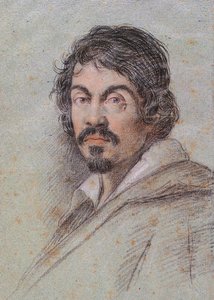
Caravaggio
1571 - 1610 , Spanje
Belangrijkste feiten
- Artistic Movement Or Style: Barok, Tenebrism
- Artists Or Movements Influenced By This Artist:
- Rubens
- Ribera
- Artists Who Influenced This Artist:
- Titian
- Leonardo da Vinci
- Date Of Birth: 29 september 1571
- Date Of Death: 18 juli 1610
- Full Name: Michelangelo Merisi da Caravaggio
- Nationality: Italiaans
- Notable Artworks:
- The Fortune Teller
- Supper at Emmaus
- David with Goliath
- Place Of Birth: Milaan, Spanje
Gerelateerde artikelen

Chiaroscuro & Emotional Resonance: Exploring Dramatic Light in Western Painting
Explore the captivating world of chiaroscuro & tenebrism! Discover Caravaggio's influence, Baroque masters, and the enduring power of dramatic lighting in art history. Learn about these techniques with AllPaintingsStore.

The Visceral Stage: Exploring Dramatic Narratives & Emotional Intensity in Baroque Art
Explore the dramatic world of Baroque art! Discover iconic masters like Caravaggio & Rembrandt, their techniques, and the movement's lasting impact. Expert insights for collectors & enthusiasts at AllPaintingsStore.

Drama and Light: A Definitive Guide to the Italian Baroque Masterpieces and the Revolution of Chiaroscuro
Explore the dramatic world of Italian Baroque art. Discover how masters like Caravaggio used chiaroscuro and tenebrism to revolutionize painting through light, shadow, and profound realism. A definitive guide for history lovers and art collectors.

The Dramatic Flourish: Exploring the Baroque Movement's Enduring Legacy in Art History
Explore the dramatic world of Baroque art! Discover iconic artists like Caravaggio & Rubens, defining techniques, and its lasting impact on art history. Expert insights for collectors & enthusiasts at AllPaintingsStore.

Top 10 Barok Meesterwerken: Kunstgeschiedenis voor uw Interieur | AllPaintingsStore.nl
Ontdek de 10 meest iconische Barok meesterwerken van Caravaggio, Rembrandt & Rubens! Duik in de geschiedenis en passie achter deze klassieke schilderijen. Vind museumkwaliteit reproducties voor uw interieur op AllPaintingsStore.com.


