


 Voorvertoning
 Verstuur
 Delen
Delen
 Details bekijken
 Gids
Gids

 Download
 Vergelijkbare items
 Röntgenonderzoek
 Diavoorstelling
 Vraag & antwoord
 Statistieken
Sleeping Child


 Lees meer
Ontvang een bestand dat klaar is voor drukwerk en de kwaliteit van het online voorbeeld ver overstijgt. Elke digitale afbeelding die wij verkopen, is afkomstig van een high-resolution master uit onze database — meestal tussen de 5.000 en 15.000 pixels breed — zodat u met vertrouwen groot kunt afdrukken, nauwkeurig kunt bijsnijden of fijne details kunt reproduceren.
Geen enkel bestand verlaat ons atelier onbewerkt. Een digitaal expert controleert de kleuren aan de hand van het originele schilderij en corrigeert deze indien nodig, om vervolgens de helderheid en details te verbeteren met professionele retoucheertechnieken — waarbij de penseelstreek en stijl van de kunstenaar altijd strikt worden gerespecteerd. Het resultaat is een afbeelding die oogt als het schilderij zelf, en niet als een gescande foto met een filter.
U keurt de afbeelding goed voordat de bestelling wordt afgerond: onze expert stuurt u binnen 72 uur een e-mail ter beoordeling. Niet tevreden? Vraag om aanpassingen of correcties, of vraag een terugbetaling aan als de kwaliteit niet aan de verwachtingen voldoet.
Dit is de kwaliteit waarop uitgevers, designstudio's, galeries en drukkerijen vertrouwen.
Digitale afbeeldingen
Download een bestand met hoge resolutie voor persoonlijke weergave, afdrukken en creatieve projecten. ( Schakel over naar print Bestel handgeschilderde reproductie)
Inbegrepen bij elke bestelling van een digitale afbeelding
Professionele digitale levering, gegarandeerd
Wanneer u kiest voor AllPaintingsStore.com, ontvangt u niet alleen een afbeelding – u krijgt een professioneel verbeterd digitaal kunstwerk, met precisie vervaardigd en voorzien van een tevredenheidsgarantie. Dit is alles wat automatisch bij uw bestelling is inbegrepen:

Snelle levering per e-mail
Uw hoogwaardige digitale afbeeldingsbestand wordt binnen 72 uur na bestelling naar u gemaild – klaar voor direct gebruik.

AI-verbeterd digitaal bestand
Uw kunstwerk wordt professioneel geoptimaliseerd met behulp van geavanceerde AI-tools en handmatige bewerkingen, waardoor maximale details, helderheid en kleurnauwkeurigheid worden gegarandeerd.

Gratis levenslange herlevering van digitale bestanden
Je bestand per ongeluk verwijderd of kwijtgeraakt? Geen zorgen – we sturen het u op elk gewenst moment gratis opnieuw toe.

Geen invoerkosten – nooit
Geniet direct van uw kunstwerk zonder invoerrechten, belastingen of verzendkosten – digitale downloads zijn altijd belastingvrij.

Garantie op kleurgetrouwheid
Met behulp van professionele hulpmiddelen en kleurbeheer zorgen wij ervoor dat uw digitale afbeelding de originele kleuren zo nauwkeurig mogelijk weergeeft.

100 dagen tevredenheidsgarantie
Mocht u niet tevreden zijn met uw digitale afbeelding, dan passen wij deze aan of storten wij 100% terug binnen 100 dagen – zonder vragen te stellen.

100% Geld-terug-garantie
Niet tevreden? Ontvang een volledige terugbetaling binnen 100 dagen na ontvangst van uw digitale bestand – zonder vragen te stellen.

Korting bij grote bestellingen
Koop 3 afbeeldingen, bespaar 10% - Koop 5, bespaar 15% - Koop 10+, bespaar 20%. Ideaal voor creatieve projecten, galerieën en bureaus.
A Haunting Encounter with Vulnerability
In the quiet, unsettling depths of Egon Schiele’s 1910 masterpiece, “Sleeping Child,” we encounter more than just a portrait; we witness a profound psychological excavation. This exquisite gouache on canvas serves as a haunting testament to the artist's lifelong preoccupation with mortality and the fragile boundaries of the human psyche. The painting depicts a young boy nestled in repose, his small frame curled inward, arms wrapped tightly around himself in a posture that immediately evokes a sense of defenselessness and raw vulnerability. Schiele, a master of the Expressionist movement, eschews the polished idealism of traditional portraiture to instead capture a deeper, more unsettling truth—the quiet ache of existence that lies beneath the surface of even the most innocent subjects.
The technical execution of the piece is as striking as its subject matter. Schiele employs a distinctive Expressionist style characterized by angular, almost jagged lines and a flattened perspective that pushes the figure toward the viewer, demanding an intimate, if uncomfortable, engagement. His palette is deliberately muted, dominated by somber browns, earthy ochres, and shadowy tones that contribute to a heavy, melancholic atmosphere. By layering thin, translucent washes of gouache, Schiele builds a texture that feels palpably alive, creating a surface that seems to vibrate with the artist's own internal anxieties. This meticulous approach ensures that every stroke contributes to the painting's overall sense of tension and psychological weight.
Symbolism and the Shadows of Vienna
To look upon “Sleeping Child” is to navigate a labyrinth of symbolic meaning. The boy’s fetal position is laden with significance, representing an innocence that feels perpetually threatened by an encroaching darkness—a recurring motif throughout Schiele's turbulent oeuvre. There is a deliberate concealment within the work; the child's face is partially obscured by his own limbs, creating a mask-like effect that hints at hidden emotions and the deliberate shielding of identity from a harsh world. This interplay between presence and absence, between what is revealed and what remains shrouded, invites the viewer to contemplate the complexities of the human condition.
The historical context of the piece further enriches its emotional resonance. Created during Schiele’s formative years in Vienna, the painting reflects the broader intellectual ferment and societal upheaval of the early twentieth century. It was an era marked by a profound shift in how humanity perceived itself, as the certainties of the past gave way to the psychological explorations of modernism. For collectors and lovers of fine art, this piece offers a window into that transformative period, capturing the very essence of Expressionism—the desire to convey inner turmoil through distorted imagery and intense emotionality. Whether displayed in a curated gallery or as a focal point in a sophisticated interior, “Sleeping Child” remains an evocative powerhouse, offering a timeless meditation on the beauty found within fragility.
Veelgestelde vragen
Hoe verhoudt "Sleeping Child" zich tot het oeuvre van Egon Schiele?
Binnen het oeuvre van Egon Schiele past "Sleeping Child" binnen de Expressionism-stijl, samen met de thema's van psychological exploration, expressionist style, mortality concerns, train motif, inner turmoil.
Waarvoor wordt een afdruk van "Sleeping Child" aanbevolen?
Een reproductie van "Sleeping Child" door Egon Schiele wordt aanbevolen voor Mood. Dit advies is gebaseerd op het onderwerp, de sfeer en de kleuren van het werk.
Wat is de dominante kleur in "Sleeping Child" door Egon Schiele?
De dominante kleur van "Sleeping Child" door Egon Schiele is Amber to Saffron. Deze kleur vormt de onderliggende toon van het palet.
Vergelijkbare kunstwerken


Kunstenaarsbiografie
A Life Forged in Expression
Egon Schiele’s life, a turbulent and intensely personal journey, unfolded from 1890 to 1918 within the vibrant yet often unsettling landscape of Vienna. Born in Tulln an der Donau, Austria, his early years were shadowed by profound loss – the death of his father due to syphilis at just fourteen, followed tragically by the demise of his sister Elvira. Raised initially by his mother and later under the watchful eye of his uncle Leopold Czihaczek, Schiele’s childhood lacked the stability common to many, fostering within him a remarkable independence and an acute sensitivity. From a young age, he displayed a deep fascination with trains – a motif that would subtly reappear throughout his work, symbolizing both movement and perhaps, the relentless passage of time. Though initially discouraged by his father for pursuing drawing as a distraction from more “practical” endeavors, Schiele’s innate talent blossomed, laying the foundation for his future artistic expression. These formative experiences—illness, loss, and an unconventional upbringing—instilled within him a profound awareness of mortality and the fragility of human existence, themes that would become central to his art.The Crucible of Vienna: Artistic Development
Schiele’s formal artistic training began at the Kunstgewerbeschule in Vienna, but he quickly found himself stifled by its conservative approach. Seeking a more expressive outlet, he transferred to the Akademie der bildenden Künste, only to discover that even this institution's academic traditions felt restrictive. Dissatisfied with the rigid constraints of traditional art education, Schiele deliberately chose to forge his own path, rejecting formal training altogether – a bold decision reflecting his unwavering artistic conviction. Crucially, he found inspiration in the work of Gustav Klimt, deeply admiring Klimt’s decorative style and exploration of symbolism. Klimt's influence was significant, yet Schiele ultimately diverged from his mentor’s aesthetic, developing a distinctly individual voice characterized by stark honesty and psychological intensity. He became a founding member of the Neues Wiener Kunstgruppe (New Viennese Art Group) in 1909, alongside other progressive artists who challenged the prevailing artistic norms of the time. His early works—often unsettling portraits and self-portraits—began to emerge as powerful statements of emotional turmoil, featuring distorted figures and a palpable sense of vulnerability. These paintings weren’t merely representations of physical form; they were explorations of the inner landscape – the anxieties, desires, and fears that haunted the human psyche. He sought to depict not what he *saw*, but what he *felt*.Raw Emotion and Unflinching Truth
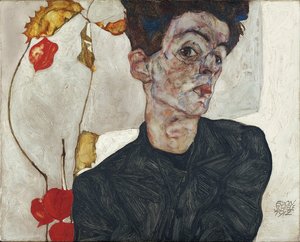
Egon Schiele's art is immediately recognizable for its raw honesty and psychological depth. He fearlessly confronted themes often considered taboo – sexuality, death, anxiety, isolation – with an unflinching gaze. His distinctive style features elongated figures, contorted poses, and expressive lines that convey a sense of unease and emotional intensity. The human form, particularly the nude, became his primary subject, not as an object of idealized beauty but as a vessel for exploring the complexities of human experience. Self-portraits constitute a significant portion of his oeuvre, offering intimate glimpses into his inner world—a world often marked by loneliness and self-doubt. He didn’t shy away from depicting himself in unflattering or vulnerable poses, revealing a profound level of self-awareness and introspection. Beyond self-portraiture, Schiele created numerous portraits of others, capturing their likenesses with an unsettling realism that seemed to penetrate beneath the surface. Recurring motifs like the *Physalis* plant – symbolizing death and transience with its delicate, papery husk – further underscore this preoccupation with mortality. His use of line is particularly striking; it’s not merely a tool for defining shape but an expressive force that conveys emotion and psychological tension.A Legacy Cut Short: Achievements & Significance
Despite facing censorship and legal challenges—including a brief imprisonment for allegedly corrupting minors with his art—Schiele gained recognition within Vienna’s avant-garde circles. His work challenged the conventions of the time, provoking both admiration and outrage. By the time of his untimely death during the Spanish flu pandemic in 1918 at the age of twenty-eight, he had established himself as a leading figure in Austrian Expressionism. Significant works such as *Self-Portrait with Physalis*, *Couple Embracing*, and *Field Landscape (Kreuzberg near Krumau)* stand as testaments to his artistic genius. His influence on subsequent generations of artists is undeniable, particularly those interested in exploring psychological themes and challenging conventional artistic norms. Schiele’s bold approach to form and subject matter continues to resonate with audiences today, making him one of the most important and influential figures in early 20th-century art. His paintings are now held in major museum collections worldwide, including the Leopold Museum in Vienna and the Egon Schiele Art Centrum in Český Krumlov, ensuring his artistic legacy endures. He left behind a body of work that is not merely aesthetically compelling but profoundly human—a testament to the power of art to confront the complexities of existence with honesty, courage, and unwavering vision.- Key Themes: Mortality, sexuality, isolation, psychological turmoil.
- Influences: Gustav Klimt, Viennese Secession, personal trauma.
- Style Characteristics: Elongated figures, contorted poses, expressive lines, raw emotion.
Egon Schiele
1890 - 1918 , Oostenrijk
Belangrijkste feiten
- Artistic Movement Or Style: Expressionisme
- Artists Or Movements Influenced By This Artist: ['Expressionisme']
- Artists Who Influenced This Artist: ['Gustav Klimt']
- Date Of Birth: 12 juni 1890
- Date Of Death: 31 oktober 1918
- Full Name: Egon Schiele
- Nationality: Oostenrijks
- Notable Artworks:
- Self-Portrait
- Kouppel omhelzing
- Veldschilderij
- Place Of Birth: Tulln an der Donau, Oostenrijk