- Home

- Reproductie van olieverfschilderij
- Egon Schiele
- Stein aan de Donau met terrassenwijngaarden

 Print kopen Koop afbeelding in hoge resolutie
 Verstuur
 Delen
Delen
 Details bekijken
 Toevoegen aan favorieten

 Download
 Vergelijkbare werken
 Röntgenonderzoek
 Diavoorstelling
Stein aan de Donau met terrassenwijngaarden


 Lees meer
Handgemaakte olieverfreproductie
Met de hand geschilderd in olieverf op canvas in uw gewenste maat en lijst, op bestelling gemaakt door onze kunstenaars.




P118B $10

P118H $10

P118W $10

P438Z $10

P508JH $12

P508YH $12

P805H $10

P805Z $10

P919BZ $10

P919G $10

P919XJ $10

P959ZH $10

P968JZ $12

W106C $8

W218G $10

W218JH $8

W218Y $10

W307PJ $10

W316G $10

W316PJ $8

W316Y $10

W398PJ $8

W4111J $10

W500HY $15

W500JH $15

W692G $12

W849H $8

W940BG $15

W953PJ $8




Kies uit onze vooraf ingestelde maten die overeenkomen met de originele verhoudingen van het kunstwerk.

U kunt uw eigen afmetingen invoeren om in een specifieke lijst of ruimte te passen. Als de door u gekozen maat niet overeenkomt met de verhoudingen van het originele beeld, zullen we het kunstwerk bijsnijden of het schilderij uitbreiden met extra handgeschilderde elementen. Een digitale mockup wordt ter goedkeuring naar u verzonden voordat de productie begint.
Houd er rekening mee dat de preview op het scherm niet de werkelijke uitsnede of uitbreiding weergeeft. Alleen de mockup toont de uiteindelijke compositie nauwkeurig.
Hoewel aangepaste afmetingen mogelijk zijn, raden we aan een maat uit de vooraf gedefinieerde lijst te selecteren om de originele verhoudingen te behouden.
Na de bestelling zal het team van AllPaintingsStore.com per e-mail contact opnemen voor instructies en een mockup-voorbeeld sturen.
Wereldwijde levering () binnen 3/4 weken in plaats van de standaard 5 weken. (16 juli). Geen concessies aan de kwaliteit.

Gratis wereldwijde expressverzending

Hoogwaardig linnen canvas

Volledige verzendverzekering

Garantie op terugbetaling van invoerrechten

Garantie op exacte kleurweergave

60 dagen retourbeleid (alleen bij defecten)

100% Geld-terug-garantie

Korting bij meerdere afnames
 De optie voor glas is alleen beschikbaar bij een formaat kleiner dan 110 cm.

Stein aan de Donau met terrassenwijngaarden
Techniek reproductie
Afmetingen reproductie
-


Eindtotaal
-
Beschrijving kunstwerk
Een Gezicht van Rust en Spanning: Egon Schiele's ‘Stein aan de Donau’
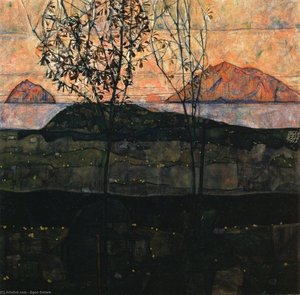
Egon Schiele's schilderij uit 1913, ‘Stein on the Danube with Terraced Vineyards’, biedt meer dan slechts een pittoresk uitzicht; het is een zorgvuldig geconstrueerd emotioneel landschap geschilderd in olieverf. De scène toont de Oostenrijkse stad Stein an der Donau, genest langs de rivieroevers, gedomineerd door zijn kerkspits en met hints naar een middeleeuws verleden. Maar dit slechts een ‘stadssgezicht’ noemen zou een belediging zijn. Schiele registreert niet zomaar wat hij ziet; hij filtert het door zijn intens persoonlijke visie, waardoor een werk ontstaat dat trilt van zowel sereniteit als een onderliggende stroom van onbehagen. De compositie is doelbewust gestructureerd – horizontale kleurbanden definiëren de rivier, het land en de stad zelf – wat de scène een gevoel van orde geeft. Toch creëren Schiele's karakteristieke expressieve lijnen en beperkte kleurenpalet van bruinen, groenen, en af en toe opvallende uitbarstingen van helderdere tinten binnen deze structuur een dynamische spanning. Het is een schilderij dat uitnodigt tot langdurige contemplatie, waarbij het bij elk bekijken nieuwe nuances onthult.
De Donau als Spiegel voor de Ziel
Schiele was gefascineerd door Stein an der Donau en keerde er in 1913 meerdere keren naar terug als onderwerp. Het ging hier niet simpelweg om het vastleggen van een mooi uitzicht; de stad bezat een symbolische resonantie voor de kunstenaar. De Donau zelf, vaak afgebeeld als troebel en reflecterend, kan worden geïnterpreteerd als een spiegel die niet alleen het fysieke landschap weerspiegelt, maar ook de innerlijke onrust van Schiele's eigen psyche. Hij bereidde zich nauwgezet voor dit specifieke doek door kleinere paneelstukken te creëren, waarbij hij de compositie en kleurschema uitwerkte voordat hij het grotere formaat aanging. Dit bewuste proces spreekt tot zijn verlangen om een specifiek emotioneel effect te bereiken. De terrassenwijngaarden in de verte verwijzen naar het agrarische leven van de regio, maar ze introduceren ook een gevoel van menselijke ingreep in de natuur – een thema dat Schiele vaak verkende. De plaatsing van de gebouwen is niet geheel trouw aan de werkelijkheid; hij herarrangeerde elementen om de compositorische kracht en het symbolische gewicht van de scène te versterken, waardoor een geïdealiseerd doch subtiel onheilspellend beeld ontstond.
Een Jonge Kunstenaar op het Hoogtepunt van het Expressionisme
Om ‘Stein aan de Donau’ volledig te begrijpen, is het essentieel om het te plaatsen binnen de context van Schiele's korte maar intens productieve carrière. Geboren in 1890 en tragisch overleden tijdens de Spaanse Griep-pandemie van 1918, leefde Schiele een leven gekenmerkt door zowel artistiek genie als persoonlijke ontbering. Hij was een leerling van Gustav Klimt, maar smidde snel zijn eigen unieke pad en werd een vooraanstaand figuur in het Oostenrijkse Expressionisme. Zijn werk wordt gekenmerkt door zijn rauwe emotionele eerlijkheid, waarbij hij vaak thema's als seksualiteit, dood en isolatie verkent. Hoewel hij vooral bekend staat om zijn portretten – vaak ongemakkelijk direct en psychologisch doordringend – toonde Schiele een opmerkelijke veelzijdigheid, zoals te zien is aan dit landschap. ‘Stein aan de Donau’ illustreert zijn vermogen om zijn innerlijke wereld op canvas over te brengen, waardoor zelfs een ogenschijnlijk serene scène wordt geïnfecteerd met een tastbaar gevoel van emotionele diepte. Het schilderij werd voltooid in een keerpunt in zijn carrière, waarmee hij zijn meesterschap over kleur en compositie tentoonspreidde en tegelijkertijd de stilistische innovaties voorzag die zijn latere werk zouden definiëren.
Een Nalatenschap van Emotionele Resonantie
Schiele zelf hield dit schilderij zeer hoog, en geloofde dat het waardig was voor een verfijnde verzamelaar. Zijn uiteindelijke verkoop aan Franz Hauer kwam voort uit financiële noodzaak, maar getuigt van de kunstenaar's eigen erkenning van de kwaliteit ervan. Vandaag de dag blijft ‘Stein aan de Donau’ kijkers betoveren met zijn unieke mengeling van schoonheid en melancholie. Het is een werk dat verder gaat dan louter representatie; het biedt in plaats daarvan een blik in de ziel van een kunstenaar die worstelt met diepzinnige vragen over leven, dood en de menselijke conditie. Voor hen die op zoek zijn naar een stuk dat zowel sereniteit als introspectie oproept, biedt een reproductie van ‘Stein aan de Donau’ een krachtige aanvulling voor elke collectie of interieur – een constante herinnering aan de blijvende kracht van Expressionisme en het artistieke genie van Egon Schiele.


Biografie van de kunstenaar
A Life Forged in Expression
Egon Schiele’s life, a turbulent and intensely personal journey, unfolded from 1890 to 1918 within the vibrant yet often unsettling landscape of Vienna. Born in Tulln an der Donau, Austria, his early years were shadowed by profound loss – the death of his father due to syphilis at just fourteen, followed tragically by the demise of his sister Elvira. Raised initially by his mother and later under the watchful eye of his uncle Leopold Czihaczek, Schiele’s childhood lacked the stability common to many, fostering within him a remarkable independence and an acute sensitivity. From a young age, he displayed a deep fascination with trains – a motif that would subtly reappear throughout his work, symbolizing both movement and perhaps, the relentless passage of time. Though initially discouraged by his father for pursuing drawing as a distraction from more “practical” endeavors, Schiele’s innate talent blossomed, laying the foundation for his future artistic expression. These formative experiences—illness, loss, and an unconventional upbringing—instilled within him a profound awareness of mortality and the fragility of human existence, themes that would become central to his art.The Crucible of Vienna: Artistic Development
Schiele’s formal artistic training began at the Kunstgewerbeschule in Vienna, but he quickly found himself stifled by its conservative approach. Seeking a more expressive outlet, he transferred to the Akademie der bildenden Künste, only to discover that even this institution's academic traditions felt restrictive. Dissatisfied with the rigid constraints of traditional art education, Schiele deliberately chose to forge his own path, rejecting formal training altogether – a bold decision reflecting his unwavering artistic conviction. Crucially, he found inspiration in the work of Gustav Klimt, deeply admiring Klimt’s decorative style and exploration of symbolism. Klimt's influence was significant, yet Schiele ultimately diverged from his mentor’s aesthetic, developing a distinctly individual voice characterized by stark honesty and psychological intensity. He became a founding member of the Neues Wiener Kunstgruppe (New Viennese Art Group) in 1909, alongside other progressive artists who challenged the prevailing artistic norms of the time. His early works—often unsettling portraits and self-portraits—began to emerge as powerful statements of emotional turmoil, featuring distorted figures and a palpable sense of vulnerability. These paintings weren’t merely representations of physical form; they were explorations of the inner landscape – the anxieties, desires, and fears that haunted the human psyche. He sought to depict not what he *saw*, but what he *felt*.Raw Emotion and Unflinching Truth
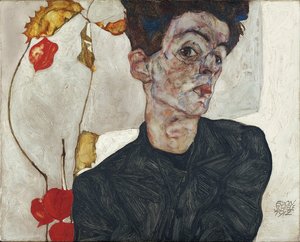
Egon Schiele's art is immediately recognizable for its raw honesty and psychological depth. He fearlessly confronted themes often considered taboo – sexuality, death, anxiety, isolation – with an unflinching gaze. His distinctive style features elongated figures, contorted poses, and expressive lines that convey a sense of unease and emotional intensity. The human form, particularly the nude, became his primary subject, not as an object of idealized beauty but as a vessel for exploring the complexities of human experience. Self-portraits constitute a significant portion of his oeuvre, offering intimate glimpses into his inner world—a world often marked by loneliness and self-doubt. He didn’t shy away from depicting himself in unflattering or vulnerable poses, revealing a profound level of self-awareness and introspection. Beyond self-portraiture, Schiele created numerous portraits of others, capturing their likenesses with an unsettling realism that seemed to penetrate beneath the surface. Recurring motifs like the *Physalis* plant – symbolizing death and transience with its delicate, papery husk – further underscore this preoccupation with mortality. His use of line is particularly striking; it’s not merely a tool for defining shape but an expressive force that conveys emotion and psychological tension.A Legacy Cut Short: Achievements & Significance
Despite facing censorship and legal challenges—including a brief imprisonment for allegedly corrupting minors with his art—Schiele gained recognition within Vienna’s avant-garde circles. His work challenged the conventions of the time, provoking both admiration and outrage. By the time of his untimely death during the Spanish flu pandemic in 1918 at the age of twenty-eight, he had established himself as a leading figure in Austrian Expressionism. Significant works such as *Self-Portrait with Physalis*, *Couple Embracing*, and *Field Landscape (Kreuzberg near Krumau)* stand as testaments to his artistic genius. His influence on subsequent generations of artists is undeniable, particularly those interested in exploring psychological themes and challenging conventional artistic norms. Schiele’s bold approach to form and subject matter continues to resonate with audiences today, making him one of the most important and influential figures in early 20th-century art. His paintings are now held in major museum collections worldwide, including the Leopold Museum in Vienna and the Egon Schiele Art Centrum in Český Krumlov, ensuring his artistic legacy endures. He left behind a body of work that is not merely aesthetically compelling but profoundly human—a testament to the power of art to confront the complexities of existence with honesty, courage, and unwavering vision.- Key Themes: Mortality, sexuality, isolation, psychological turmoil.
- Influences: Gustav Klimt, Viennese Secession, personal trauma.
- Style Characteristics: Elongated figures, contorted poses, expressive lines, raw emotion.
Egon Schiele
1890 - 1918 , Oostenrijk
Belangrijkste feiten
- Artistic Movement Or Style: Expressionisme
- Artists Or Movements Influenced By This Artist: ['Expressionisme']
- Artists Who Influenced This Artist: ['Gustav Klimt']
- Date Of Birth: 12 juni 1890
- Date Of Death: 31 oktober 1918
- Full Name: Egon Schiele
- Nationality: Oostenrijks
- Notable Artworks:
- Self-Portrait
- Kouppel omhelzing
- Veldschilderij
- Place Of Birth: Tulln an der Donau, Oostenrijk
Gerelateerde artikelen
Beyond Representation: Exploring the Emotional Landscape of Abstract Expressionism
Explore the profound emotional world of Abstract Expressionism with AllPaintingsStore. Discover key artists like Pollock & Rothko, learn about collecting, and find museum-quality reproductions to inspire your space.

The Sublimity of Color: Exploring the Emotional Landscapes of Mark Rothko's Abstract Expressionism
Explore the profound emotional depth of Mark Rothko's abstract expressionism. Discover the history, techniques & lasting impact of this pivotal Color Field painter. Expert insights for collectors and art enthusiasts.
Alfred Worthington: Bridging Victorian Realism & Early Modern Landscape Painting
Explore the captivating landscapes of Alfred Worthington (1834-1927), a pivotal figure bridging Victorian realism & early Impressionism. Discover his Welsh hunting scenes, artistic evolution, and collecting guide.

Concrete Visions: Exploring the Urban Landscape in Painting – From Realism to Contemporary Art
Explore the evolution of cityscape painting from Realism to contemporary art with AllPaintingsStore. Discover key artists & invest in timeless urban visions. Expert guidance, museum-quality reproductions.

Reginald Grenville Eves: Bridging Portraiture & Modern British Landscape Painting
Explore the life & work of Reginald Grenville Eves, a leading British portraitist who transitioned to captivating landscape painting. Discover his legacy and prominent works at AllPaintingsStore.