


 Bekijk op ware grootte
 Verstuur
 Delen
Delen
 Details bekijken
 Gids voor studentenkunstwerken

 Download
 Vergelijkbare items
 Röntgenonderzoek
 Diavoorstelling
 Statistieken
Pietà
 Oil On Canvas
- WallArt
- Baroque Revival
 1575
1575- Renaissance
 66.0 x 48.0 cm
 Hispanic Society Museum - Library
 Lees meer
Koop een digitale afbeelding in hoge resolutie met verbeterde kwaliteit, die veel superieur is aan de online voorvertoning.
Elk bestand wordt met uiterste precisie voorbereid door onze interne specialisten, met behulp van geavanceerde tools en deskundige handmatige retouche. Wij garanderen dat elke afbeelding een uitzonderlijke helderheid, nauwkeurige kleurweergave en verfijnde details bezit.
Het uiteindelijke bestand wordt binnen 72 uur per e-mail geleverd, geoptimaliseerd voor direct gebruik in professionele, redactionele en printomgevingen. Dit is dezelfde kwaliteit waarop vooraanstaande designstudio's, uitgevers en galerieën vertrouwen.
Digitale afbeeldingen
Download een bestand met hoge resolutie voor persoonlijke weergave, afdrukken en creatieve projecten. ( Schakel over naar print Koop handgeschilderd kunstwerk)
Inbegrepen bij elke bestelling van een digitale afbeelding
Professionele digitale levering, gegarandeerd
Wanneer u kiest voor AllPaintingsStore.com, ontvangt u niet alleen een afbeelding – u krijgt een professioneel verbeterd digitaal kunstwerk, met precisie vervaardigd en voorzien van een tevredenheidsgarantie. Dit is alles wat automatisch bij uw bestelling is inbegrepen:

Directe levering per e-mail
Uw hoogwaardige digitale afbeeldingsbestand wordt binnen 72 uur na bestelling naar u gemaild – klaar voor direct gebruik.

AI-geoptimaliseerd digitaal bestand
Uw kunstwerk wordt professioneel geoptimaliseerd met behulp van geavanceerde AI-tools en handmatige bewerkingen, waardoor maximale details, helderheid en kleurnauwkeurigheid worden gegarandeerd.

Gratis levenslange herlevering
Je bestand per ongeluk verwijderd of kwijtgeraakt? Geen zorgen – we sturen het u op elk gewenst moment gratis opnieuw toe.

Geen invoerkosten – nooit
Geniet direct van uw kunstwerk zonder invoerrechten, belastingen of verzendkosten – digitale downloads zijn altijd belastingvrij.

Garantie op kleurgetrouwheid
Met behulp van professionele hulpmiddelen en kleurbeheer zorgen wij ervoor dat uw digitale afbeelding de originele kleuren zo nauwkeurig mogelijk weergeeft.

100 dagen tevredenheidsgarantie
Als u niet tevreden bent met uw digitale afbeelding, passen wij deze aan of storten wij 100% terug binnen 100 dagen - zonder vragen te stellen.

100% Geld-terug-garantie
Niet tevreden? Ontvang een volledige terugbetaling binnen 100 dagen na ontvangst van uw digitale bestand – zonder vragen te stellen.

Korting bij grote bestellingen
Koop 3 afbeeldingen, bespaar 10% - Koop 5, bespaar 15% - Koop 10+, bespaar 20%. Ideaal voor creatieve projecten, galerieën en bureaus.
A Vision of Sorrow and Grace: The Ethereal World of El Greco’s Pietà
In the quiet intensity of 1575, Domenikos Theotokópoulos, known to history as El Greco, captured a moment that transcends the boundaries of mere religious iconography. His Pietà is not simply a depiction of biblical grief; it is a profound psychological landscape where the earthly and the divine collide. As we gaze upon the Virgin Mary cradling the lifeless body of Jesus, we are invited into a space where sorrow is transformed into something luminous and transcendent. This masterpiece stands as a monumental testament to Renaissance spirituality, filtered through the intensely personal and visionary lens of a Cretan master who would eventually redefine the trajectory of European art.
The painting serves as a hauntingly beautiful meditation on compassion and sacrifice. Unlike more literal interpretations of the Lamentation, El Greco’s vision focuses on the emotional resonance of the figures. The weight of Christ's body is felt not just through physical gravity, but through the spiritual heaviness that permeates the composition. For collectors and lovers of fine art, this piece offers a rare opportunity to possess a fragment of the Mannerist revolution—a period where the artist’s internal truth took precedence over the rigid anatomical accuracy of the High Renaissance.
The Mastery of Mannerist Distortion and Light
To understand the impact of this work, one must look closely at El Greco’s deliberate departure from reality. Embracing the Mannerist style, the artist employs expressive distortions to communicate a heightened emotional state. Observe how the figures are subtly elongated, creating an ethereal presence that seems to float above the earthly realm. The drapery does not merely hang; it swirls with a dramatic, turbulent movement that mirrors the internal agony of the mourners. This is not a mistake of proportion, but a sophisticated stylistic choice designed to serve as a conduit for spiritual truth.
The technique behind this luminous surface is nothing short of miraculous. El Greco utilized painstaking layers of translucent glazes over an underpainting, a method that allows light to appear as if it is emanating from within the canvas itself. His palette, dominated by somber blues and deep reds, evokes the traditional colors of mourning and penitence. These pigments are applied with strategic precision, concentrating brilliance on key areas to guide the viewer's eye through the drama of the scene. For an interior designer, such a piece provides a sophisticated focal point, bringing a sense of historical depth and a quiet, contemplative energy to any curated space.
A Legacy of Spiritual Intensity
The historical context of the Pietà is deeply intertwined with El Greco’s own journey from the Byzantine traditions of Crete to the vibrant artistic hubs of Venice and Rome, finally settling in the spiritual heart of Toledo, Spain. This synthesis of influences—the meticulous detail of his Greek roots combined with the dramatic chiaroscuro of Italy—results in a work that feels both ancient and startlingly modern. The painting’s ability to evoke such profound empathy is why it remains a cornerstone of Christian iconography and a highly sought-after subject for high-quality reproductions.
When integrating a reproduction of this magnitude into a home or gallery, one is not merely adding decoration; one is introducing a narrative of resilience and grace. The Pietà invites the viewer to reflect on themes of maternal devotion and the enduring power of faith. It is a piece that demands attention through its subtle complexities, rewarding the observant eye with new layers of meaning upon every viewing. Whether placed in a sunlit study or a more formal setting, El Greco’s vision continues to captivate, offering an eternal window into the human soul.
Vragen & Antwoorden
Hoe is "Pietà" gemaakt en wat zijn de afmetingen?
"Pietà" is vervaardigd in Oil On Canvas en heeft in zijn originele vorm de afmetingen 66 x 48 cm.
In welk jaar werd "Pietà" gemaakt?
De creatie van "Pietà" door El Greco dateert uit 1575.
Hoe verhoudt de stijl van "Pietà" zich tot het tijdperk van de maker?
"Pietà" door El Greco wordt geplaatst binnen de Baroque Revival-stroming, uit de Renaissance-periode van de maker.
Gerelateerde kunstwerken


Biografie van de kunstenaar
Doménikos Theotokópoulos, called El Greco
Doménikos Theotokópoulos, known to the world as El Greco – “the Greek” – was a painter whose life and work defied easy categorization. Born in Crete, Greece (1541), his artistic journey took him through Venice and Rome before finding its ultimate expression in the spiritual heartland of Spain: Toledo. El Greco wasn’t merely a product of these places; he synthesized their influences into something wholly unique, a style that anticipated the emotional intensity of Expressionism and the fragmented forms of Cubism centuries later. His early training within the Byzantine tradition instilled in him a meticulous attention to detail and a profound understanding of religious iconography. This foundation, however, wouldn’t confine him. He signed his works in Greek, often appending “Krḗs” – Cretan – as a proud declaration of his origins, even as he ventured into new artistic territories. The seeds of his distinctive style were sown not just in technique but also in the fervent religious climate of his homeland and the rich tapestry of Venetian art.Early Life and Artistic Training
Doménikos Theotokópoulos was born in Fodele (modern Candia), Crete, which at that time belonged to the Republic of Venice. His father, Nikolaos Zacharias Kantakopoulos, was a wealthy merchant and administrator, providing him with a privileged upbringing. From a young age, Doménikos demonstrated an exceptional talent for drawing and painting, mastering the techniques of Byzantine icon painting – a tradition deeply rooted in Orthodox Christianity – under the tutelage of Eustathios Symonds, a renowned Cretan iconographer. This formative experience instilled in him a reverence for detail, a mastery of color palettes derived from Byzantine iconography, and a profound understanding of religious symbolism. The influence of Byzantium is palpable throughout his early oeuvre, particularly in works depicting saints and biblical figures rendered with serene dignity and luminous colors.Venetian Influence: Embracing Innovation
Around 1567, Doménikos moved to Venice, the epicenter of Renaissance artistic innovation. He immersed himself in the vibrant Venetian art scene, studying the masterpieces of Titian, Tintoretto, and Veronese – artists who had revolutionized painting with their mastery of color, composition, and dramatic lighting. Recognizing the limitations of Byzantine tradition alone, El Greco eagerly embraced the Venetian approach, loosening his brushwork and experimenting with oil paint—a medium previously unfamiliar to Cretan painters. This Venetian influence is vividly evident in *St. Sebastian* (1600), where anatomical detail blends seamlessly with an almost theatrical use of light and shadow. He absorbed the dynamism and expressive fervor characteristic of Venetian painting, preparing himself for a transformative encounter with Mannerism in Rome.Roman Years: Seeking Recognition Amidst Competition
In 1570, Doménikos traveled to Rome, hoping to gain recognition within the competitive artistic milieu of the papal court. However, he struggled to secure commissions and faced considerable challenges navigating the complex social dynamics of Roman art life. Despite his talent, El Greco’s style—characterized by elongated figures, distorted perspectives, and stylized draperies—didn't align with the prevailing aesthetic sensibilities of Mannerism, which favored elegance and refinement. Nevertheless, he continued to hone his craft, absorbing influences from artists like Giulio Romano and Andrea Palladio, broadening his artistic horizons and experimenting with new techniques. His Roman years were marked by a period of artistic introspection and stylistic evolution—a quest for personal expression amidst the pressures of patronage and artistic convention.Toledo: A Synthesis of Tradition and Vision
By 1577, Doménikos settled in Toledo, Spain – a city steeped in religious fervor during the Counter-Reformation and home to numerous churches eager for monumental artworks. This relocation proved decisive for El Greco’s artistic development. He received prestigious commissions from influential patrons—including Cardinal Juan Ruiz Zafra—and produced his most celebrated paintings: *The Burial of the Count of Orgaz*, *View of Toledo*, *The Opening of the Fifth Seal*, and *Christ Cleansing the Temple*. In Toledo, El Greco achieved a remarkable synthesis of Byzantine tradition and Venetian innovation, forging a style that was both deeply rooted in religious faith and strikingly original. His paintings are imbued with an emotional intensity unparalleled in Western art history—a testament to his profound spiritual vision and his unwavering commitment to artistic excellence. He became a symbol of Spanish Renaissance art, and his legacy continues to inspire artists today.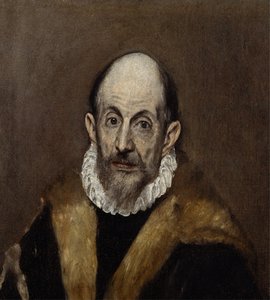
El Greco
1541 - 1614 , Griekenland
Kerngegevens
- Artistic Movement Or Style: Renaissance en Barok
- Artists Who Influenced This Artist:
- Titian
- Tintoretto
- Date Of Birth: 1541
- Full Name: Doménikos Theotokópoulos
- Nationality: Grieks
- Notable Artworks:
- De Begrafenis van Graaf Orgaz
- Een uitzicht op Toledo
- Het Openen van de Vijfde Sleutel
- Place Of Birth: Crete, Greece

