


 Bekijk op ware grootte
 Verstuur
 Delen
Delen
 Details bekijken
 Gids voor studentenkunstwerken

 Download
 Vergelijkbare items
 Röntgenonderzoek
 Diavoorstelling
 Statistieken
Sint-Jacobus
 Acryl op canvas
- Wanddecoratie
- Laatrenaissance-maniërisme
 1600
1600 72.0 x 55.0 cm
 Museo Nacional del Prado
 Lees meer
Giclée / Kunstafdrukken
Giclée- of canvasafdruk van museumkwaliteit met een snelle productie en flexibele afwerkingsmogelijkheden. ( Koop handgeschilderd kunstwerk Schakel over naar digitale afbeeldingen)




P118B €10

P118H €10

P118W €10

P438Z €10

P508JH €12

P508YH €12

P805H €10

P805Z €10

P919BZ €10

P919G €10

P919XJ €10

P959ZH €10

P968JZ €12

W106C €8

W218G €10

W218JH €8

W218Y €10

W307PJ €10

W316G €10

W316PJ €8

W316Y €10

W398PJ €8

W4111J €10

W500HY €15

W500JH €15

W692G €12

W849H €8

W940BG €15

W953PJ €8




Kies uit onze vooraf ingestelde maten die overeenkomen met de originele verhoudingen van het kunstwerk.

Voer de breedte en de hoogte in die u nodig heeft, passend bij uw lijst of uw muur. Een afdruk kan alleen worden ingekort, nooit groter worden gemaakt dan het origineel, waardoor een formaat met een andere verhouding een deel van de afbeelding verliest. Wij sturen u een digitaal mockup ter goedkeuring voordat we iets drukken. De afbeelding op deze pagina toont niet de werkelijke uitsnede — dit is alleen te zien op het mockup.
Wereldwijde levering () binnen 2 weken in plaats van de standaard 4/5 weken. (24 oktober)

Gratis wereldwijde expressverzending

Hoogwaardig linnen canvas

Volledige verzendverzekering

Garantie op terugbetaling van invoerrechten

Garantie op exacte kleurweergave

Retourbeleid van 100 dagen (alleen bij defecten)

100% Geld-terug-garantie

Korting bij meerdere afnames
 De optie voor glas is alleen beschikbaar bij een formaat kleiner dan 110 cm.

Sint-Jacobus
Giclée / Kunstafdrukken
Formaat reproductie
-


Totaalprijs
€ 57
Sint-Jacobus: Een Visioen van Geloof in Vlees en Kleur
Doménikos Theotokópoulos, universeel bekend als El Greco – “de Griek” – onderscheidt zich van zijn tijdgenoten niet slechts als schilder, maar als een kunstenaar die worstelde met de essentie van spiritualiteit en deze vertaalde naar een visuele vorm. Geboren in Kreta in 1541, onder Venetiaans bewind, leidde zijn artistieke reis hem via Venetië en Rome voordat hij zich definitief vestigde in Toledo, Spanje—een stad doordrenkt van religieuze vurigheid die zijn oeuvre diepgaand zou vormen. Het genie van El Greco lag niet enkel in het beheersen van de techniek; hij herverbeeldde de representatie zelf fundamenteel, waarbij hij de expressieve vervormingen van het expressionisme en de gefragmenteerde perspectieven van het kubisme eeuwen voor zijn tijd anticipeerde. Zijn vormende jaren, waarin hij Byzantijnse iconografie bestudeerde, gaven hem een minutieuze aandacht voor detail en een onwankelbare toewijding aan het overbrengen van religieuze verhalen met tastbare emotie. Toch weigerde El Greco zich door traditie te laten beperken; hij omarmde gedurfd stilistische vernieuwingen die hem onderscheidden van zijn tijdgenoten, en ondertekende zijn werken in het Grieks – “Krḗs” – als een trotse bevestiging van zijn Kretische identiteit te midden van de opkomende artistieke stromingen in Europa.- Onderwerp: Het schilderij toont Sint-Jacobus, een prominente figuur binnen de christelijke iconografie, afgebeeld met serene waardigheid en een contemplatieve houding.
- Stijl: El Greco’s kenmerkende maniëristische stijl wordt gekenmerkt door verlengde figuren—een handelsmerk van zijn artistieke visie—die een buitenaardse atmosfeer creëren die het realisme overstijgt.
- Techniek: Door gebruik te maken van olieverf op canvas, paste El Greco een glacis-techniek toe—laag op laag van transparante pigmenten—om lumineuze kleuren en texturale diepte te bereiken, waardoor de subtiele nuances van licht en schaduw werden gevangen.
Historische Context & Artistieke Invloeden
Het artistieke oeuvre van El Greco bloeide tijdens de Contrareformatie, een periode die werd gekenmerkt door intense religieuze vroomheid en pauselijke decreten die gericht waren op het herbevestigen van het katholieke dogma na de Protestantse Reformatie. Deze context voedde zijn preoccupatie met spirituele thema's—met name de afbeeldingen van heiligen—en vormde zijn stilistische keuzes. De invloed van El Greco reikte echter verder dan louter religieuze aangelegenheden. Hij putte inspiratie uit de Byzantijnse kunst, in het bijzonder uit de gestileerde figuren en het symbolische kleurgebruik, en paste deze elementen aan om een uniek expressieve beeldtaal te creëren. Bovendien absorbeerde hij invloeden van Italiaanse renaissancekunstenaars zoals Michelangelo en Rafaël, hoewel hij deze transformeerde tot iets radicaal anders—een bewijs van zijn artistieke onafhankelijkheid.Symboliek & Emotionele Resonantie
De gedempte aardetinten van het schilderij – voornamelijk oker en omber – dragen bij aan de contemplatieve stemming en weerspiegelen de innerlijke staat van gebed van de heilige. De kunstenaar maakt meesterlijk gebruik van chiaroscuro—het dramatische samenspel tussen licht en donker—om de emotionele impact te vergroten, waarbij het gezicht en de handen van Jacobus als brandpunten van de aandacht dienen. Deze gebaren stralen nederigheid en devotie uit, waardoor de kijker wordt uitgenodigd in een rijk van spirituele overpeinzing. De verlengde figuren van El Greco zijn niet louter stilistische middelen; ze symboliseren transcendentie—een streven naar goddelijke genade voorbij de grenzen van het aardse bestaan. Het schilderij spreekt tot thema's van geloof, sereniteit en innerlijke vrede—kwaliteiten die zelfs vandaag de dag nog krachtig resoneren bij het publiek.Een Erfenis Voorbij de Imitatie
De artistieke innovaties van El Greco blijven kunstenaars en verzamelaars inspireren. Zijn verwerping van het conventionele realisme plaveide de weg voor expressionistische verkenningen van emotie en psychologische diepgang, wat zijn blijvende relevantie in de kunstgeschiedenis bewijst. Reproducties van ‘Sint-Jacobus’, beschikbaar bij AllPaintingsStore.com, bieden liefhebbers de mogelijkheid om de lumineuze schoonheid en de diepgaande spirituele boodschap van dit meesterwerk te ervaren—een tijdloos eerbetoon aan de unieke visie van El Greco.Vragen & Antwoorden
Behoort "Sint-Jacobus" door El Greco tot het publiek domein?
De auteursrechtelijke status van "Sint-Jacobus" door El Greco: het werk is bevindt zich in het publiek domein - de auteursrechten zijn verlopen. Dit bepaalt of reproducties van de afbeelding vrijelijk mogen worden gemaakt.
Wat is de algemene sfeer van "Sint-Jacobus" door El Greco?
De algehele stemming van "Sint-Jacobus" door El Greco is Dramatisch. De stemming beschrijft de algemene atmosfeer van het werk.
Welke verzadiging en intensiteit vertoont "Sint-Jacobus" door El Greco?
"Sint-Jacobus" door El Greco is vastgelegd met een Gedempt verzadiging en een Monochroom intensiteit.
Gerelateerde kunstwerken


Biografie van de kunstenaar
Doménikos Theotokópoulos, called El Greco
Doménikos Theotokópoulos, known to the world as El Greco – “the Greek” – was a painter whose life and work defied easy categorization. Born in Crete, Greece (1541), his artistic journey took him through Venice and Rome before finding its ultimate expression in the spiritual heartland of Spain: Toledo. El Greco wasn’t merely a product of these places; he synthesized their influences into something wholly unique, a style that anticipated the emotional intensity of Expressionism and the fragmented forms of Cubism centuries later. His early training within the Byzantine tradition instilled in him a meticulous attention to detail and a profound understanding of religious iconography. This foundation, however, wouldn’t confine him. He signed his works in Greek, often appending “Krḗs” – Cretan – as a proud declaration of his origins, even as he ventured into new artistic territories. The seeds of his distinctive style were sown not just in technique but also in the fervent religious climate of his homeland and the rich tapestry of Venetian art.Early Life and Artistic Training
Doménikos Theotokópoulos was born in Fodele (modern Candia), Crete, which at that time belonged to the Republic of Venice. His father, Nikolaos Zacharias Kantakopoulos, was a wealthy merchant and administrator, providing him with a privileged upbringing. From a young age, Doménikos demonstrated an exceptional talent for drawing and painting, mastering the techniques of Byzantine icon painting – a tradition deeply rooted in Orthodox Christianity – under the tutelage of Eustathios Symonds, a renowned Cretan iconographer. This formative experience instilled in him a reverence for detail, a mastery of color palettes derived from Byzantine iconography, and a profound understanding of religious symbolism. The influence of Byzantium is palpable throughout his early oeuvre, particularly in works depicting saints and biblical figures rendered with serene dignity and luminous colors.Venetian Influence: Embracing Innovation
Around 1567, Doménikos moved to Venice, the epicenter of Renaissance artistic innovation. He immersed himself in the vibrant Venetian art scene, studying the masterpieces of Titian, Tintoretto, and Veronese – artists who had revolutionized painting with their mastery of color, composition, and dramatic lighting. Recognizing the limitations of Byzantine tradition alone, El Greco eagerly embraced the Venetian approach, loosening his brushwork and experimenting with oil paint—a medium previously unfamiliar to Cretan painters. This Venetian influence is vividly evident in *St. Sebastian* (1600), where anatomical detail blends seamlessly with an almost theatrical use of light and shadow. He absorbed the dynamism and expressive fervor characteristic of Venetian painting, preparing himself for a transformative encounter with Mannerism in Rome.Roman Years: Seeking Recognition Amidst Competition
In 1570, Doménikos traveled to Rome, hoping to gain recognition within the competitive artistic milieu of the papal court. However, he struggled to secure commissions and faced considerable challenges navigating the complex social dynamics of Roman art life. Despite his talent, El Greco’s style—characterized by elongated figures, distorted perspectives, and stylized draperies—didn't align with the prevailing aesthetic sensibilities of Mannerism, which favored elegance and refinement. Nevertheless, he continued to hone his craft, absorbing influences from artists like Giulio Romano and Andrea Palladio, broadening his artistic horizons and experimenting with new techniques. His Roman years were marked by a period of artistic introspection and stylistic evolution—a quest for personal expression amidst the pressures of patronage and artistic convention.Toledo: A Synthesis of Tradition and Vision
By 1577, Doménikos settled in Toledo, Spain – a city steeped in religious fervor during the Counter-Reformation and home to numerous churches eager for monumental artworks. This relocation proved decisive for El Greco’s artistic development. He received prestigious commissions from influential patrons—including Cardinal Juan Ruiz Zafra—and produced his most celebrated paintings: *The Burial of the Count of Orgaz*, *View of Toledo*, *The Opening of the Fifth Seal*, and *Christ Cleansing the Temple*. In Toledo, El Greco achieved a remarkable synthesis of Byzantine tradition and Venetian innovation, forging a style that was both deeply rooted in religious faith and strikingly original. His paintings are imbued with an emotional intensity unparalleled in Western art history—a testament to his profound spiritual vision and his unwavering commitment to artistic excellence. He became a symbol of Spanish Renaissance art, and his legacy continues to inspire artists today.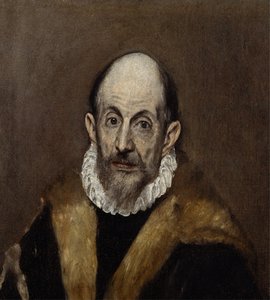
El Greco
1541 - 1614 , Griekenland
Snelle feiten
- Artistic Movement Or Style: Renaissance en Barok
- Artists Who Influenced This Artist:
- Titian
- Tintoretto
- Date Of Birth: 1541
- Full Name: Doménikos Theotokópoulos
- Nationality: Grieks
- Notable Artworks:
- De Begrafenis van Graaf Orgaz
- Een uitzicht op Toledo
- Het Openen van de Vijfde Sleutel
- Place Of Birth: Crete, Greece
Gerelateerde artikelen
El Greco's Top 25 Meesterwerken: Kunst, Geschiedenis & Decoratie voor Uw Huis
Ontdek de top 25 meesterwerken van El Greco! Duik in het leven en werk van deze renaissance schilder, zijn spirituele kunst & dramatische stijl. Vind museumkwaliteit reproducties voor uw interieur op AllPaintingsStore.com.

The Golden Age Reforged: Dramatic Realism & Religious Zeal in Spanish Baroque Art
Explore the dramatic world of Spanish Baroque art! Discover masters like Zurbarán & the powerful influence of religious zeal on painting techniques – a guide for collectors and enthusiasts.
Top 25 Meesterwerken Hermitage: Kunstgeschiedenis voor aan de Muur | AllPaintingsStore
Ontdek de top 25 meesterwerken van het Hermitage Museum in Sint Petersburg! Van Rembrandt tot Da Vinci – verhalen achter iconische schilderijen, kunststijlen & technieken. Vind museumkwaliteit reproducties voor uw interieur op AllPaintingsStore.com.

El Greco: Spirituality, Style & Innovation – A Renaissance Master's Legacy
Explore the captivating world of El Greco! Discover his unique style, spiritual intensity, and lasting impact on art history. Learn about this Renaissance master's life, iconic paintings & legacy.
Top 25 Prado Meesterwerken: Kunstgeschiedenis voor uw Interieur | AllPaintingsStore
Ontdek de 25 meest iconische meesterwerken van het Museo del Prado! Van Velázquez tot Goya, leer over Spaanse kunstgeschiedenis en bewonder barokke pracht. Vind uw perfecte wanddecoratie & museumkwaliteit reproducties op AllPaintingsStore.com.


