Geld-terug-garantie · 100 dagen Gratis wereldwijde verzending
449.587kunstwerken 30.613kunstenaars 4.660musea 32talen
Valuta
    Taal
      Atelier · Sinds 2015 · Parijs, Frankrijk
      AllPaintingsStore
      allpaintingsstore.com
      Catalogue entry

      The Risen Christ (frontal view)

      1595. Oil On Canvas. Hospital Tavera.

      Fig. 1. El Greco, The Risen Christ (frontal view), 1595. Shown as the reproduction you are specifying: , .

      § 1Catalogue data

      § 2Abstract

      Beschrijving verzamelobject

      Biografie kunstenaar

      Verken El Greco's dramatische kunst! Ontdek Manneristische meesterwerken, religieuze scènes & verlengde figuren. Een pionier van Expressionisme & Cubisme – bekijk zijn iconische schilderijen!

      § 3Commentary

      The Risen Christ (frontal view) – A Monumental Vision of Faith

      Doménikos Theotokópoulos, universally known as El Greco—“the Greek”—stands apart from his contemporaries not merely as a painter but as an artist who forged his identity in the crucible of faith and fire. Born in Crete in 1541, under Venetian rule, his artistic journey traversed Venice and Rome before finding its ultimate expression in the spiritual heartland of Spain: Toledo. El Greco wasn’t simply responding to prevailing trends; he synthesized influences from Byzantium and Mannerism into a style that foreshadowed Expressionism and Cubism centuries ahead of their time.

      • Subject Matter & Symbolism: The artwork depicts Jesus Christ resurrected, embodying themes of divinity, ascension, and divine revelation. His nudity symbolizes purity and vulnerability—a deliberate choice reflecting the theological significance of repentance and spiritual rebirth. The upward gesture of his arms signifies blessing or offering, conveying a profound sense of hope and transcendence.
      • Style & Technique: El Greco’s oeuvre exemplifies Mannerist style, characterized by elongated figures, dramatic lighting, dynamic lines, and distorted perspective—techniques that deliberately challenged Renaissance conventions. Employing oil paint on canvas or panel, he achieved remarkable realism through meticulous layering and blending, capturing the subtleties of skin tones and light diffusion.
      • Composition & Perspective: The painting’s central compositional structure emphasizes Christ as its focal point, filling most of the frame with a monumental presence. The stark black background isolates him, intensifying his impact and creating an illusion of infinite depth—a deliberate distortion designed to convey spiritual grandeur beyond earthly limitations.
      • Color Palette & Lighting: Earthy hues dominate the color palette, punctuated by warm undertones that illuminate Christ’s flesh with ethereal light. This directional lighting casts dramatic shadows, enhancing the figure's three-dimensionality and creating a palpable atmosphere of solemn contemplation.
      • Lines & Shapes: Dynamic, swirling lines permeate the drapery and musculature, contributing to the painting’s sense of movement and energy—a stylistic hallmark of El Greco that distinguishes him from his peers. The elongated human form is stylized yet recognizable, reflecting the artist's preoccupation with conveying spiritual essence through visual representation.

      Further research into “The Risen Christ” reveals its place within El Greco’s broader artistic output and its enduring influence on subsequent artists. Notably, a single sculpture by El Greco’s own hand resides in Toledo Cathedral—a testament to his unwavering devotion. Alongside this masterpiece, consider reproductions of other celebrated works like “Saint Peter” and “Saint Ildefonso,” showcasing El Greco's masterful manipulation of perspective and color to evoke profound spiritual emotion.

      “The Resurrection” exemplifies El Greco’s stylistic innovations—a bold departure from traditional artistic norms that anticipated the expressive fervor of Expressionism. Its meticulous execution, utilizing oil paint on canvas, underscores El Greco’s commitment to capturing both visual realism and symbolic depth.

      Veelgestelde vragen

      Waar kan ik een gids vinden voor "The Risen Christ (frontal view)"?

      Er is een Informatieblad pagina beschikbaar voor "The Risen Christ (frontal view)" door El Greco: een printbaar informatieblad over het kunstwerk, ontworpen voor studenten en gebruik in de klas.

      Is er een diavoorstelling beschikbaar voor "The Risen Christ (frontal view)" door El Greco?

      De diaporama van "The Risen Christ (frontal view)" is te bekijken op de Diavoorstelling-pagina van het kunstwerk.

      Hoe licht is "The Risen Christ (frontal view)" in zijn geheel?

      Wat betreft de waargenomen helderheid is "The Risen Christ (frontal view)" door El Greco deep_shadow.
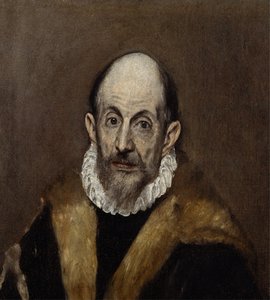
      § 4The artist

      El Greco

      El Greco

      1541 - 1614, Griekenland

      Quick facts about El Greco

      • Artistic Movement Or Style: Renaissance en Barok
      • Artists Who Influenced This Artist:
        • Titian
        • Tintoretto
      • Date Of Birth: 1541
      • Full Name: Doménikos Theotokópoulos
      • Nationality: Grieks
      • Notable Artworks:
        • De Begrafenis van Graaf Orgaz
        • Een uitzicht op Toledo
        • Het Openen van de Vijfde Sleutel
      • Place Of Birth: Crete, Greece

      Biografie kunstenaar

      Doménikos Theotokópoulos, called El Greco

      Doménikos Theotokópoulos, known to the world as El Greco – “the Greek” – was a painter whose life and work defied easy categorization. Born in Crete, Greece (1541), his artistic journey took him through Venice and Rome before finding its ultimate expression in the spiritual heartland of Spain: Toledo. El Greco wasn’t merely a product of these places; he synthesized their influences into something wholly unique, a style that anticipated the emotional intensity of Expressionism and the fragmented forms of Cubism centuries later. His early training within the Byzantine tradition instilled in him a meticulous attention to detail and a profound understanding of religious iconography. This foundation, however, wouldn’t confine him. He signed his works in Greek, often appending “Krḗs” – Cretan – as a proud declaration of his origins, even as he ventured into new artistic territories. The seeds of his distinctive style were sown not just in technique but also in the fervent religious climate of his homeland and the rich tapestry of Venetian art.

      Early Life and Artistic Training

      Doménikos Theotokópoulos was born in Fodele (modern Candia), Crete, which at that time belonged to the Republic of Venice. His father, Nikolaos Zacharias Kantakopoulos, was a wealthy merchant and administrator, providing him with a privileged upbringing. From a young age, Doménikos demonstrated an exceptional talent for drawing and painting, mastering the techniques of Byzantine icon painting – a tradition deeply rooted in Orthodox Christianity – under the tutelage of Eustathios Symonds, a renowned Cretan iconographer. This formative experience instilled in him a reverence for detail, a mastery of color palettes derived from Byzantine iconography, and a profound understanding of religious symbolism. The influence of Byzantium is palpable throughout his early oeuvre, particularly in works depicting saints and biblical figures rendered with serene dignity and luminous colors.

      Venetian Influence: Embracing Innovation

      Around 1567, Doménikos moved to Venice, the epicenter of Renaissance artistic innovation. He immersed himself in the vibrant Venetian art scene, studying the masterpieces of Titian, Tintoretto, and Veronese – artists who had revolutionized painting with their mastery of color, composition, and dramatic lighting. Recognizing the limitations of Byzantine tradition alone, El Greco eagerly embraced the Venetian approach, loosening his brushwork and experimenting with oil paint—a medium previously unfamiliar to Cretan painters. This Venetian influence is vividly evident in *St. Sebastian* (1600), where anatomical detail blends seamlessly with an almost theatrical use of light and shadow. He absorbed the dynamism and expressive fervor characteristic of Venetian painting, preparing himself for a transformative encounter with Mannerism in Rome.

      Roman Years: Seeking Recognition Amidst Competition

      In 1570, Doménikos traveled to Rome, hoping to gain recognition within the competitive artistic milieu of the papal court. However, he struggled to secure commissions and faced considerable challenges navigating the complex social dynamics of Roman art life. Despite his talent, El Greco’s style—characterized by elongated figures, distorted perspectives, and stylized draperies—didn't align with the prevailing aesthetic sensibilities of Mannerism, which favored elegance and refinement. Nevertheless, he continued to hone his craft, absorbing influences from artists like Giulio Romano and Andrea Palladio, broadening his artistic horizons and experimenting with new techniques. His Roman years were marked by a period of artistic introspection and stylistic evolution—a quest for personal expression amidst the pressures of patronage and artistic convention.

      Toledo: A Synthesis of Tradition and Vision

      By 1577, Doménikos settled in Toledo, Spain – a city steeped in religious fervor during the Counter-Reformation and home to numerous churches eager for monumental artworks. This relocation proved decisive for El Greco’s artistic development. He received prestigious commissions from influential patrons—including Cardinal Juan Ruiz Zafra—and produced his most celebrated paintings: *The Burial of the Count of Orgaz*, *View of Toledo*, *The Opening of the Fifth Seal*, and *Christ Cleansing the Temple*. In Toledo, El Greco achieved a remarkable synthesis of Byzantine tradition and Venetian innovation, forging a style that was both deeply rooted in religious faith and strikingly original. His paintings are imbued with an emotional intensity unparalleled in Western art history—a testament to his profound spiritual vision and his unwavering commitment to artistic excellence. He became a symbol of Spanish Renaissance art, and his legacy continues to inspire artists today.

      § 5Comparanda

      § 6Questions

      Snelle feiten

      • Subject or theme: Religious iconography; Resurrection
      • Artist: El Greco
      • Artistic style: Stylized; Monumental
      • Notable elements or techniques: Dynamic lines; Dramatic lighting; Elongated figures
      • Medium: Oil on canvas

      Kunstquiz

      Er is slechts één goed antwoord op elke vraag.

      Vraag 1:
      What artistic style is El Greco primarily associated with?
      Vraag 2:
      The painting utilizes a central compositional structure where Jesus Christ occupies most of the frame. What contributes to this sense of monumentality?
      Vraag 3:
      What is the dominant color palette used in ‘The Risen Christ’?
      Vraag 4:
      How does El Greco employ lines within the painting?
      Vraag 5:
      What symbolic element is represented by the nudity of Jesus Christ?

      § 7Cite this entry

      AllPaintingsStore.com, “El Greco, The Risen Christ (frontal view) (1595)”, https://allpaintingsstore.com/nl/art/el-greco-the-risen-christ-frontal-view-8XZGKP-en/ArtistReproduction/ (accessed 2 oktober 2026).

      § 8The reproduction

      Handgemaakte olieverfreproductie

      Met de hand geschilderd in olieverf op canvas in uw gewenste maat en lijst, op bestelling gemaakt door onze kunstenaars. ( Schakel over naar print Schakel over naar digitale afbeeldingen)

      It is specified on the order sheet in the margin; the present state of that sheet reads as follows.

      The Risen Christ (frontal view)

      Druktechniek

      Afmetingen reproductie

      -

      Geselecteerde topkunstenaars

      Meer detail, verfijning en extra productietijd

      -

      Lijst voor reproductie

      -

      -

      Voor kunstwerken of reproducties die aan één zijde groter zijn dan 105 cm (ongeveer 41 inch), wordt de lijst als een losse set verzonden. Deze methode garandeert een veilige levering en voorkomt schade tijdens het transport.

      Professionele montage vereist - dit is geen doe-het-zelfproduct.
      De set moet worden gemonteerd en het canvas moet worden gespannen door een ervaren professionele lijstenmaker, met gebruik van houtlijm (niet inbegrepen), een doekspanter en klemmen om de sponningen recht te houden terwijl de lijm droogt. Onjuiste montage of een ongelijkmatige spanning op het canvas kan het kunstwerk permanent beschadigen en wordt niet gedekt door onze garantie.

      • Alle massief houten onderdelen zijn inbegrepen, nauwkeurig op maat gesneden voor montage.

      • Te monteren met de meegeleverde schroeven, plus houtlijm voor de hoekverbindingen, die niet wordt meegeleverd en door uw lijstenmaker moet worden aangeschaft.

      • Professioneel gereedschap is vereist en niet inbegrepen: een spanner voor canvas en klemmen om de latten recht te houden terwijl de lijm droogt.

      Belangrijk:
      De hoekverbindingen vereisen houtlijm, de latten moeten met lijmklemmen worden vastgehouden tot de lijm volledig is opgedroogd, en het spannen van het canvas op het samengestelde frame vereist een doekspanter. Geen van deze artikelen is inbegrepen in de set. Wij adviseren u om een ervaren professionele lijstenmaker te raadplegen voordat u deze maat bestelt.

      Naamplaatje

      -

      -

      Beschermende vernislaag

      Glanzende vernis (versterkt de kleuren en biedt bescherming tegen licht en vocht)

      -

      Mijn kunstwerk aanpassen

      Voorbeelden van aanpassingen: vervang het gezicht door een eigen foto; voeg een huisdier toe (bijv. vervang de kat door een hond); verwerk een verborgen boodschap in de achtergrond; wijzig het landschap of andere elementen op de achtergrond.

      -

      Spoedlevering

      Wereldwijde levering () binnen 3 tot 4 weken in plaats van de standaard 5 weken. (31 oktober). Geen concessies aan de kwaliteit.

      -

      Spoedlevering

      Wereldwijde levering naar binnen 5 weken. (7 november).

      Inbegrepen

      Eindtotaal

      € 229

      Included with every order

      • Gratis wereldwijde expressverzending
      • Hoogwaardig linnen canvas
      • Volledige verzendverzekering
      • Garantie op terugbetaling van invoerrechten
      • Garantie op exacte kleurweergave
      • Retourbeleid van 100 dagen (alleen bij defecten)
      • 100% Geld-terug-garantie
      • Korting bij meerdere afnames
      Order sheet