Geld-terug-garantie · 100 dagen Gratis wereldwijde verzending
449.564kunstwerken 30.613kunstenaars 4.660musea 32talen
Catalogusvermelding

Study

1663. Acrylic On Paper, 210.0 x 162.0 cm. Walker Art Gallery.

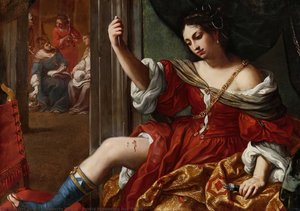
Afb. 1. Elisabetta Sirani, Study, 1663. Weergegeven als de reproductie die u specificeert: , .

§ 1Catalogusgegevens

Afmetingen
210.0 x 162.0 cm

§ 2Abstract

Beschrijving verzamelobject

Discover "Study" by Elisabetta Sirani – a captivating 17th-century chalk drawing of two figures, showcasing Baroque artistry and the artist's remarkable skill. Explore its history & beauty!

Biografie kunstenaar

Ontdek Elisabetta Sirani (1638-1665), een Barok meester uit Bologna! Deze baanbrekende schilderes runde een succesvolle werkplaats & stichtte een academie voor vrouwelijke kunstenaressen, gefascineerd door portretten en religieuze scènes.

§ 3Toelichting

A Moment Frozen in Charcoal: Elisabetta Sirani’s “Study”

Within the hallowed halls of the Walker Art Gallery in Liverpool resides a deceptively simple yet profoundly moving work – Elisabetta Sirani's "Study," executed in 1663. More than just a preparatory sketch, it is a miniature world brimming with tenderness, quiet observation, and an exquisite understanding of human connection. The drawing, rendered primarily in delicate shades of brown and beige using charcoal on paper, immediately draws the eye with its intimate scale – measuring a modest 210 x 162 centimeters – inviting viewers to step into a private, almost sacred space.

Sirani’s genius lies not in grand gestures or dramatic displays, but rather in her ability to capture fleeting moments of genuine emotion. The composition centers on a young woman, presumably the artist's sister, gently lifting the sleeve of a child – likely her own son, Giovanni Andrea – revealing his small hand. This simple act, frozen in charcoal, speaks volumes about familial love and the quiet intimacy of domestic life. The pose is remarkably naturalistic; Sirani eschews overly stylized figures, opting instead for a directness that feels utterly honest and unpretentious.

Baroque Simplicity: Technique and Style

“Study” exemplifies the hallmarks of Baroque art while simultaneously forging its own distinctive path. Sirani’s technique is characterized by an economy of line – she employs minimal outlining, relying instead on subtle tonal variations to define form and create a sense of volume. The use of *grisaille*, a monochrome drawing technique using shades of gray, allows her to focus entirely on capturing the essence of the subject without distraction from color. The paper itself is laid down, adding texture and visual interest to the composition.

Noticeably absent are any elaborate details or decorative flourishes typical of some Baroque works. Instead, Sirani’s strength lies in her masterful control of light and shadow – a technique known as *chiaroscuro* – which imbues the scene with a palpable sense of depth and atmosphere. The soft, diffused lighting suggests an interior setting, perhaps a room bathed in natural light, further enhancing the feeling of intimacy.

A Window into 17th-Century Bologna

To fully appreciate “Study,” it’s crucial to understand its historical context. Elisabetta Sirani emerged as one of the first women artists to achieve significant recognition in early modern Bologna – a city renowned for its vibrant artistic community and patronage system. Despite facing considerable societal obstacles, she established herself as a respected painter, producing both commissioned works and independent studies. “Study” offers a rare glimpse into her working methods and artistic philosophy.

The drawing’s creation coincided with a period of intense artistic innovation in Bologna, influenced by the legacy of Guido Reni and the prevailing trends of the Baroque style. However, Sirani's approach was distinctly her own – characterized by a refined sensibility and an unwavering commitment to capturing the emotional truth of her subjects. It is believed that this drawing served as a study for a larger allegorical composition, likely commissioned by Prince Leopoldo de’ Medici in Florence, highlighting the virtues associated with his family’s rule.

The Enduring Power of Observation

“Study” transcends its technical merits to become a poignant meditation on human connection. The simple act of a mother tending to her child is rendered with such sensitivity and grace that it resonates deeply with viewers across centuries. Sirani's ability to distill complex emotions into a single, carefully observed drawing speaks to the enduring power of art to illuminate the beauty and fragility of everyday life.

Today, reproductions of “Study” are readily available through platforms like AllPaintingsStore.com, offering art enthusiasts the opportunity to bring this exquisite work into their homes and offices. It’s a testament to Sirani's skill that her drawing continues to captivate audiences with its quiet dignity and profound emotional resonance – a timeless reminder of the simple joys of family and the enduring power of observation.

Veelgestelde vragen

Uit welke materialen bestaat "Study" en in welke stijl is het uitgevoerd?

In "Study" komen de Acrylic On Paper-techniek en de Baroque Art-stroming samen.

Is "Study" een beroemd kunstwerk uit de Baroque Art-stroming?

"Study" staat geregistreerd als Recognized onder de werken uit de Baroque Art in de catalogus.

Kan ik een röntgenopname van "Study" door Elisabetta Sirani bekijken?

"Study" kan laag voor laag worden onderzocht op de Röntgenanalyse pagina van het kunstwerk, een interactieve viewer geïnspireerd op de lichttafel van een restaurator met elf optische lagen van de afbeelding.

§ 4De kunstenaar

Elisabetta Sirani

Elisabetta Sirani

1638 - 1665, Italië

Snelle feiten over Elisabetta Sirani

  • Artistic Movement Or Style: Barokschilderkunst
  • Artists Who Influenced This Artist: ['Guido Reni']
  • Date Of Birth: 8 januari 1638
  • Date Of Death: 28 augustus 1665
  • Full Name: Elisabetta Sirani
  • Nationality: Italiaans
  • Notable Artworks:
    • Judith met Holofernes
    • Zelfportret
    • Baptism van Christus
    • Portia wondt haar dij
    • Het Kind der Maagd Maria gekroond door Christus
  • Place Of Birth: Bologna, Italië

Biografie kunstenaar

Elisabetta Sirani (1638-1665): A Life in Baroque Bologna

Elisabetta Sirani was a luminous figure in the 17th-century art world, a testament to talent and determination flourishing amidst the societal constraints of her time. Born in Bologna in January 1638, she rose to prominence as one of the most celebrated painters of the Italian Baroque period—a remarkable feat for any artist, but particularly extraordinary for a woman navigating a profession overwhelmingly dominated by men. Her story is not merely that of an artistic prodigy; it’s a narrative interwoven with entrepreneurial spirit, familial dedication, and a progressive vision that extended to establishing opportunities for other women in the arts.

Artistic Roots and Early Development

Elisabetta's artistic journey began within the vibrant atmosphere of her family home. Her father, Giovanni Andrea Sirani, was himself a respected painter and art merchant, deeply connected to the Bolognese school—a tradition profoundly influenced by the legacy of Guido Reni. While some accounts suggest initial hesitation on his part regarding fully embracing Elisabetta as a pupil, fearing she might surpass his own skill, it quickly became evident that her talent was exceptional. She absorbed and mastered his techniques with astonishing speed, developing a distinctive style that blended the grace and idealism of Reni with an emerging dynamism all her own. Giovanni Andrea had been a student and close collaborator of Guido Reni, ensuring that this master’s influence permeated the family studio. This connection to Reni was crucial; it instilled in Elisabetta a mastery of light and shadow, elegant compositions, and a refined sense of form that would characterize much of her work. Beyond technical skill, she received a broad education encompassing classical mythology and biblical narratives—essential foundations for an artist working within the religious and mythological traditions of the Baroque era. She was taught by Guido Reni himself, who instilled in Elisabetta a profound understanding of artistic principles and humanist ideals.

A Prolific Career and Innovative Style

Despite a tragically short career – she died at just 27 years old in August 1665 – Elisabetta Sirani produced an astonishing body of work. Over 120 paintings, countless drawings, and numerous etchings attest to her relentless creativity and productivity. This output wasn’t simply the result of innate talent; it was fueled by necessity. By 1654, with her father incapacitated by gout, Elisabetta assumed responsibility for managing the family workshop, becoming the primary breadwinner for her parents and siblings. She skillfully balanced artistic creation with the demands of running a business—accepting commissions for portraits, religious scenes, and mythological subjects while simultaneously teaching students in her studio. Her style was characterized by dynamic compositions, vibrant colors, and an ability to capture emotion and movement with remarkable skill. Contemporaries like Carlo Cesare Malvasia praised her “originality of composition,” her distinctive drawing style, and the speed with which she worked—a testament to both her technical prowess and her artistic vision. She wasn’t merely replicating existing styles; she was forging a new path, infusing traditional subjects with a fresh energy and emotional depth. Her work demonstrated an unparalleled sensitivity to human emotion and movement—a hallmark of the Bolognese Baroque tradition.

Legacy and Lasting Significance

Elisabetta Sirani cultivated a devoted following during her lifetime, becoming arguably more famous than both her father and sisters. She was often hailed as the “diva” of Bolognese painting—the female reincarnation of Guido Reni himself. Her sudden death at such a young age, initially shrouded in suspicion due to accusations of poisoning by a maidservant (though these charges were later dropped), only amplified public fascination with her life and work. The most likely cause was peritonitis resulting from a ruptured peptic ulcer, exacerbated by the stresses of managing her household and workshop. Her elaborate funeral—complete with an enormous catafalque adorned with a life-sized sculpture and orations composed in her honor—underscored the high esteem in which she was held by her contemporaries. Beyond her artistic achievements, Elisabetta’s most enduring legacy lies in her commitment to empowering other women artists. She established an academy for female artists in Bologna, providing them with opportunities for training and professional development at a time when such avenues were largely closed to them. This act of defiance against societal norms cemented her place as a pioneer—a champion of gender equality within the art world. Today, Elisabetta Sirani’s contributions are increasingly recognized, solidifying her position as a significant figure in Baroque art history and an inspiration for generations of artists to come. Her story serves as a powerful reminder that talent knows no gender and that determination can overcome even the most formidable barriers.

Key Works

  • Judith with Holofernes: A dramatic depiction of the biblical heroine, showcasing Sirani’s mastery of chiaroscuro and emotional intensity.
  • Self-Portrait: An intimate and revealing portrayal of the artist herself, offering a glimpse into her personality and artistic confidence.
  • Study for the Baptism of Christ: A dynamic sketch demonstrating Sirani’s skill in capturing movement and anatomical detail.
  • Portia Wounding Her Thigh: An unusual and compelling interpretation of a Shakespearean scene, highlighting Sirani’s willingness to tackle complex narratives.
  • The Virgin Crowned by Christ Child with Roses: A tender and devotional image showcasing Sirani's ability to convey warmth and intimacy in her religious paintings.

§ 5Vergelijkbare werken

§ 6Vragen

Snelle feiten

  • Dimensions: 210 x 162 cm
  • Title: Study
  • Artistic style: Realistic
  • Year: 1663
  • Location: Walker Art Gallery, Liverpool
  • Artist: Elisabetta Sirani

Kunstquiz

Er is slechts één goed antwoord op elke vraag.

Vraag 1:
What is the primary medium used in Elisabetta Sirani’s ‘Study’?
Vraag 2:
The drawing 'Study' is primarily a preparatory study for what type of commission?
Vraag 3:
What is a notable characteristic of Elisabetta Sirani’s technique as demonstrated in ‘Study’?
Vraag 4:
In what century was Elisabetta Sirani’s ‘Study’ created?
Vraag 5:
The drawing 'Study' features which of the following subjects?

§ 7Citeer dit artikel

AllPaintingsStore.com, “Elisabetta Sirani, Study (1663)”, https://allpaintingsstore.com/nl/art/elisabetta-sirani-study-8XZVHF-en/ (geraadpleegd op 8 oktober 2026).

§ 8De reproductie

Handgemaakte olieverfreproductie

Met de hand geschilderd in olieverf op canvas in uw gewenste maat en lijst, op bestelling gemaakt door onze kunstenaars. ( Schakel over naar print Schakel over naar digitale afbeeldingen)

Dit staat in de marge van het bestelformulier vermeld; de huidige stand van zaken op dat formulier luidt als volgt.

Study

Druktechniek

Afmetingen reproductie

-

Geselecteerde topkunstenaars

Meer detail, verfijning en extra productietijd

-

Lijst voor reproductie

-

-

Voor kunstwerken of reproducties die aan één zijde groter zijn dan 105 cm (ongeveer 41 inch), wordt de lijst als een losse set verzonden. Deze methode garandeert een veilige levering en voorkomt schade tijdens het transport.

Professionele montage vereist - dit is geen doe-het-zelfproduct.
De set moet worden gemonteerd en het canvas moet worden gespannen door een ervaren professionele lijstenmaker, met gebruik van houtlijm (niet inbegrepen), een doekspanter en klemmen om de sponningen recht te houden terwijl de lijm droogt. Onjuiste montage of een ongelijkmatige spanning op het canvas kan het kunstwerk permanent beschadigen en wordt niet gedekt door onze garantie.

  • Alle massief houten onderdelen zijn inbegrepen, nauwkeurig op maat gesneden voor montage.

  • Te monteren met de meegeleverde schroeven, plus houtlijm voor de hoekverbindingen, die niet wordt meegeleverd en door uw lijstenmaker moet worden aangeschaft.

  • Professioneel gereedschap is vereist en niet inbegrepen: een spanner voor canvas en klemmen om de latten recht te houden terwijl de lijm droogt.

Belangrijk:
De hoekverbindingen vereisen houtlijm, de latten moeten met lijmklemmen worden vastgehouden tot de lijm volledig is opgedroogd, en het spannen van het canvas op het samengestelde frame vereist een doekspanter. Geen van deze artikelen is inbegrepen in de set. Wij adviseren u om een ervaren professionele lijstenmaker te raadplegen voordat u deze maat bestelt.

Naamplaatje

-

-

Beschermende vernislaag

Glanzende vernis (versterkt de kleuren en biedt bescherming tegen licht en vocht)

-

Mijn kunstwerk aanpassen

Voorbeelden van aanpassingen: vervang het gezicht door een eigen foto; voeg een huisdier toe (bijv. vervang de kat door een hond); verwerk een verborgen boodschap in de achtergrond; wijzig het landschap of andere elementen op de achtergrond.

-

Spoedlevering

Wereldwijde levering () binnen 3 tot 4 weken in plaats van de standaard 5 weken. (5 november). Geen concessies aan de kwaliteit.

-

Spoedlevering

Wereldwijde levering naar binnen 5 weken. (12 november).

Inbegrepen

Eindtotaal

€ 230

Inbegrepen bij elke bestelling

  • Gratis wereldwijde expressverzending
  • Hoogwaardig linnen canvas
  • Volledige verzendverzekering
  • Garantie op terugbetaling van invoerrechten
  • Garantie op exacte kleurweergave
  • Retourbeleid van 100 dagen (alleen bij defecten)
  • 100% Geld-terug-garantie
  • Korting bij meerdere afnames
Ontdek kunstwerken georganiseerd op thema, stijl en kenmerk.
Bestelformulier