

Cubism · 1918
Composition (Fernand Léger, 1918)
Composition is een werk van Fernand Léger (1881–1955). Het dateert uit 1918. Het behoort tot de Cubism-stroming. Het is gemaakt van Acrylic On Canvas.
- 1918
- Acrylic On Canvas

 Voorvertoning

 Print afdruk
 Verstuur
 Delen
 Informatieblad


 Download
 Vergelijkbare items
 Röntgenonderzoek
 Diavoorstelling
 Vraag & antwoord

 Statistieken
Composition: belangrijkste kenmerken
- Titel
- Composition
- Kunstenaar
- Fernand Léger (1881–1955)
- Geboren in [jaar]
- Argentan, Frankrijk
- Datum
- 1918
- Medium
- Acrylic On Canvas
- Beweging
- Cubism
- Onderwerp
- geometric shapes, bold colors, machine forms, dynamic composition, surreal elements, cubist influence
Wat toont Composition?
Fernand Léger’s “Composition of the Medallion”: A Symphony of Geometric Form
A Life Forged in Form: The World of Fernand Léger Fernand Léger, born Joseph Fernand Henri Léger in 1881 amidst the rural landscapes of Argentan, Normandy, stands as a pivotal figure in the evolution of modern art. His journey from the farmlands of his youth to the forefront of Parisian avant-garde circles is a testament to an unwavering artistic vision and a relentless pursuit of capturing the spirit of the machine age. Unlike many of his contemporaries who embraced abstraction as a retreat from representation, Léger sought to *integrate* modernity – its dynamism, its mechanical forms, its very essence – into a new visual language that was both powerfully abstract and deeply rooted in the observable world. His early life, steeped in the physicality of agricultural labor, provided a grounding contrast to the industrialized future he would so passionately depict. Initially destined for architecture, Léger’s path shifted towards painting after arriving in Paris around 1900, supporting himself through illustration work while honing his artistic skills.Cubism and Surrealist Influences: Bridging Two Movements
Léger's artistic development was profoundly shaped by the burgeoning movements of Cubism and Surrealism. Initially drawn to Picasso’s pioneering explorations of fractured perspectives – a technique he adopted early in his career – Léger skillfully blended these influences with elements of Surrealist dream imagery. This fusion resulted in canvases that defied conventional notions of realism, prioritizing instead the expressive power of geometric abstraction. The deliberate simplification of forms and the fragmentation of surfaces served not merely as stylistic choices but as conceptual devices aimed at conveying a sense of mechanized repetition and underlying order amidst apparent chaos. Léger wasn’t simply rejecting traditional art; he was actively constructing a new visual vocabulary to articulate the anxieties and aspirations of his time.Technique: Bold Color Palette and Textured Surfaces
Léger's distinctive technique involved applying paint in thick, textured layers—a process known as *impasto*. This method allowed him to imbue his canvases with palpable physicality, mirroring the solidity and rhythm of industrial machinery. He favored a vibrant color palette dominated by reds, yellows, blues, and greens – colors he considered “the colors of the machine.” These hues weren’t blended smoothly but rather juxtaposed boldly, creating visual contrasts that heightened the dynamism of the composition. Léger meticulously crafted surfaces using brushes, knives, and spatulas, achieving remarkable textural variations that enhanced the expressive qualities of his artwork. The resulting canvases pulsate with energy, inviting viewers to engage in a tactile experience alongside their visual perception.Symbolism Within Abstraction: Representing Urban Life
Despite its apparent lack of recognizable imagery, Léger’s “Composition of the Medallion” is laden with symbolic significance. The prominent circles—particularly the large one dominating the upper left corner—represent not merely geometric shapes but also wheels and gears – emblems of industrial progress and relentless movement. These circular forms encapsulate the repetitive cycles inherent in urban life and convey a sense of inescapable momentum. Furthermore, the chair positioned on the right side serves as an anchor point amidst the swirling abstraction, symbolizing human presence within the machine age—a reminder that even amidst technological advancement, humanity retains its grounding in tangible reality. Léger’s intention was to capture not just *what* we see but *how* it feels – the pervasive influence of machinery on our perceptions and experiences.Emotional Impact: Optimism Amidst Uncertainty
Ultimately, “Composition of the Medallion” communicates an enduring message of optimism tempered by awareness of societal anxieties. Léger’s bold color choices and textured surfaces evoke a visceral response, conveying excitement and dynamism while simultaneously hinting at underlying tensions. The artwork's refusal to succumb to sentimentalism speaks to Léger’s conviction that art should confront uncomfortable truths without sacrificing beauty or expressive power. It stands as a testament to the transformative potential of abstraction—its ability to distill complex ideas into compelling visual forms—and invites viewers to contemplate the relationship between humanity and technology in an era defined by rapid industrialization. The painting's enduring appeal lies in its capacity to inspire contemplation and provoke dialogue about our place within the evolving landscape of modern civilization.Composition: afbeeldingsbestanden

Bereid van een hogere resolutie afbeelding uit onze database, niet de webafbeelding: minimaal 300 DPI. Kleuren gecontroleerd aan de hand van het origineel, bestand geretoucheerd door een digitaal expert.
Koop de afbeelding in hoge resolutieFernand Léger, Composition (1918).
Fernand Léger (1881–1955), Composition, 1918, acrylic on canvas. Publiek domein Afbeelding: AllPaintingsStore.com.
Vragen over Composition
In welk jaar werd "Composition" door Fernand Léger gemaakt?
"Composition" door Fernand Léger werd gecreëerd in 1918.
Met welke techniek is "Composition" gemaakt?
"Composition" is uitgevoerd in Acrylic On Canvas.
Wat wordt er afgebeeld in "Composition" door Fernand Léger?
De onderwerpen van "Composition" zijn geometric shapes, bold colors, machine forms, dynamic composition, surreal elements, cubist influence, circular patterns.
Is "Composition" vrij van auteursrecht?
Wat betreft het auteursrecht valt "Composition" onder bevindt zich in het publiek domein - de auteursrechten zijn verlopen.
Wie heeft "Composition" gemaakt?
De kunstenaar achter "Composition" is Fernand Léger. Het werk is gecatalogiseerd onder de naam van Fernand Léger.
Tot welke stijl behoort "Composition"?
De kunststroming die verbonden is aan "Composition" door Fernand Léger is Cubism. Deze classificatie plaatst het werk binnen een context van verwante kunstenaars en kunstwerken.
Tot welke periode in de carrière van Fernand Léger behoort "Composition"?
Binnen de carrière van Fernand Léger valt "Composition" in de Mature Period. Deze fase helpt om het werk te vergelijken met andere werken van de kunstenaar.
Hoe oud was Fernand Léger bij het creëren van "Composition" in 1918?
Toen "Composition" werd gemaakt in 1918, was Fernand Léger - geboren in 1881 - 37 jaar oud.
Behoort "Composition" van Fernand Léger tot het publiek domein, en zo ja, waarom?
"Composition" van Fernand Léger is bevindt zich in het publiek domein - de auteursrechten zijn verlopen. De auteursrechten worden berekend vanaf het jaar van overlijden van de kunstenaar; Fernand Léger is overleden in 1955.
Over Fernand Léger
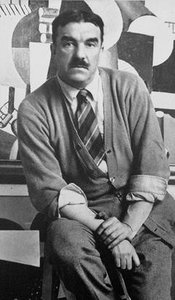
1881–1955, Frankrijk
Fernand Léger
Het Leven van Fernand Léger Het verhaal van Fernand Léger begint in het dorp Argentan, gelegen in de regio Orne in Neder-Normandië. Hij kwam op 4 februari 1881 ter wereld als enige zoon. Zijn vroege jaren werden gevormd door de stilte van het Franse platteland en de aanwezigheid van zijn moeder, Marie-Adèle Daunou. Zijn vader, een man die zijn brood verdiende als veehandelaar, overleed toen Fernand nog een jong jongetje was, waardoor het kind werd opgevoed door zijn moeder in een huishouden dat werd gekenmerkt door haar vroomheid en een zekere bescheidenheid.
Alle werken van Fernand Léger, inclusief afmetingen en prijzen → Kunstenaarspagina Bekende werken van Fernand Léger
Andere werken van Fernand Léger
 De Stad1919
 De Mechanicus1920
 Drie vrouwen1921
 Nadenken in het Bos1910
Artikelen over Composition
 10 Iconic Masterpieces That Defined Geometric AbstractionAmidst the radical global transformations of the early 20th century, artists moved beyond representation to find the mathematical heartbeat…
 French artworks of the 1950sIn 1952, Matisse moved beyond traditional painting with Blue Nude III, using a revolutionary cut-paper technique to redefine the human form.
 Mastering the Machine Age: The Top 25 Fernand Léger Artworks1919 saw the birth of The City, where Léger replaced organic textures with the rhythmic, mechanical symphony of the industrial machine age.…