


 Bekijk op ware grootte
 Verstuur
 Delen
Delen
 Details bekijken
 Gids voor studentenkunstwerken

 Download
 Vergelijkbare items
 Röntgenonderzoek
 Diavoorstelling
 Statistieken
Composition in yellow bottle
 Acrylic On Canvas
- WallArt
- Purist Cubism
 Modern
 36.0 x 27.0 cm
 Lees meer
Handgemaakte olieverfreproductie
Met de hand geschilderd in olieverf op canvas in uw gewenste maat en lijst, op bestelling gemaakt door onze kunstenaars. ( Schakel over naar print Schakel over naar digitale afbeeldingen)




P118B €10

P118H €10

P118W €10

P438Z €10

P508JH €12

P508YH €12

P805H €10

P805Z €10

P919BZ €10

P919G €10

P919XJ €10

P959ZH €10

P968JZ €12

W106C €8

W218G €10

W218JH €8

W218Y €10

W307PJ €10

W316G €10

W316PJ €8

W316Y €10

W398PJ €8

W4111J €10

W500HY €15

W500JH €15

W692G €12

W849H €8

W940BG €15

W953PJ €8




Kies uit onze vooraf ingestelde maten die overeenkomen met de originele verhoudingen van het kunstwerk.

Voer de breedte en de hoogte in die u nodig heeft, passend bij uw lijst of uw muur. Dit is handgeschilderd, dus bij een afmeting met een andere vormverhouding kan de kunstenaar iets meer rondom het schilderij schilderen of juist iets meer weglaten — u kiest zelf. Wij sturen u een digitaal mockup ter goedkeuring voordat het schilderwerk begint. De afbeelding die op deze pagina wordt getoond, is niet het uiteindelijke resultaat — alleen de mockup geeft dit weer.
Na de bestelling zal het team van AllPaintingsStore.com per e-mail contact opnemen met de klant voor instructies en een mockup-voorbeeld sturen.
Wereldwijde levering () binnen 3 tot 4 weken in plaats van de standaard 5 weken. (25 oktober). Zonder concessies aan de kwaliteit.

Gratis wereldwijde expressverzending

Hoogwaardig linnen canvas

Volledige verzendverzekering

Garantie op terugbetaling van invoerrechten

Garantie op exacte kleurweergave

Retourbeleid van 100 dagen (alleen bij defecten)

100% Geld-terug-garantie

Korting bij meerdere afnames
 De optie voor glas is alleen beschikbaar bij een formaat kleiner dan 110 cm.

Composition in yellow bottle
Reproductiemethode
Formaat reproductie
-


Totaalprijs
€ 226
Composition in Yellow Bottle by Fernand Léger: A Purist's Ode to Modernity
Fernand Léger’s “Composition in Yellow Bottle” is more than just a still life; it’s a carefully constructed dialogue between the rustic past and the burgeoning industrial present. Executed in 1920, this intimate work – measuring a modest 36 x 27 cm – exemplifies Léger's pivotal role within the Purist movement, a reaction against the increasingly fragmented and subjective approaches of early modernism. Born in Argentan, Normandy, Léger’s upbringing amidst the rhythms of rural life profoundly shaped his artistic sensibility, informing his later exploration of geometric forms and his fascination with the machine age.
- Subject Matter: The painting centers on a glass bottle adorned with a yellow label, surrounded by a carefully arranged collection of utilitarian objects – a knife, spoon, and cup. These commonplace items are elevated to symbolic significance through Léger’s deliberate composition.
- Purist Style: Léger rejected the prevailing abstraction of his time, instead seeking to represent reality in a simplified, geometric manner. This “Purism” aimed for clarity and directness, stripping away unnecessary detail to reveal the underlying structure of objects.
- Technique: Léger employed a bold, almost brutalist technique characterized by thick, angular brushstrokes and a limited palette dominated by yellows, ochres, and grays. This approach emphasized the materiality of the objects themselves, highlighting their form and texture.
Decoding the Symbolism
Within Léger’s Purist framework, the yellow bottle itself becomes a potent symbol. The bright color – reminiscent of industrial dyes and machinery – immediately associates it with modernity and technological advancement. The surrounding objects—the knife, spoon, and cup—are not merely props; they represent the everyday tools of labor, subtly referencing the agricultural roots of Léger’s upbringing while simultaneously acknowledging the shift towards mechanized production. The arrangement isn't random; it suggests a carefully considered balance between natural forms and geometric abstraction, reflecting Léger’s core artistic philosophy.
- Geometric Forms: The bottle and its surroundings are rendered with sharp, angular shapes – a hallmark of Purism. These forms evoke the impression of machinery, hinting at the influence of industrial design on Léger's vision.
- Color as Symbol: The dominant yellow color represents energy, industry, and progress—themes central to Léger’s exploration of the modern world.
Historical Context and Artistic Significance
Created around 1920, “Composition in Yellow Bottle” reflects a crucial moment in Léger's artistic development. Following his initial explorations of Cubism, he solidified his Purist style, seeking to create a visual language that was both aesthetically compelling and intellectually rigorous. This work demonstrates his commitment to representing the world as it appeared to him – filtered through the lens of modern technology and industrialization. Léger’s influence extended beyond the Parisian art scene, impacting artists across Europe who were grappling with the challenges and opportunities presented by the rapidly changing 20th century.
Artist Biography Snippet: Fernand Léger (1881-1955) was a French painter and sculptor whose work is characterized by its geometric forms, bold colors, and exploration of modern themes. He was a key figure in the Purist movement and his art reflects his fascination with machinery and industrial design.Emotional Impact and Artistic Value
“Composition in Yellow Bottle” possesses a quiet intensity that belies its seemingly simple subject matter. Léger’s masterful use of color, form, and texture creates a visually arresting composition that invites contemplation. This piece offers a unique window into the mind of one of modern art's most innovative figures, capturing both the beauty and the anxieties of a world undergoing profound transformation. A hand-painted reproduction allows you to bring this powerful artwork into your own space, celebrating Léger’s legacy and adding a touch of modernist elegance to your interior design.
Vragen & Antwoorden
Hoe komen contrast en harmonie samen in "Composition in yellow bottle"?
In "Composition in yellow bottle" wordt een Statement contrast gecombineerd met een Softly Mixed Palette harmonie.
Wat is de dominante kleur van "Composition in yellow bottle" door Fernand Léger?
De dominante kleur van "Composition in yellow bottle" door Fernand Léger is Golden Yellow Range. Deze kleur vormt de onderliggende toon van het palet.
Wat voegt "Composition in yellow bottle" door Fernand Léger toe aan een interieur?
"Composition in yellow bottle" door Fernand Léger heeft een Industrial atmosfeer en wordt aanbevolen voor een Living Room. De stemming is wat het werk toevoegt aan de omringende ruimte.
Gerelateerde kunstwerken


Biografie van de kunstenaar
Fernand Léger: Een Leven Gebeeldhouwd in Vorm
Fernand Léger, geboren Joseph Fernand Henri Léger in 1881 in het rustige Argentan, Normandië, staat als een cruciale figuur in de evolutie van moderne kunst. Zijn reis van de landelijke gebieden van zijn jeugd naar de voorhoede van de Parijse avant-garde is een bewijs van een onwrikbare artistieke visie en een voortdurende zoektocht naar het vastleggen van de geest van de machine-tijdperk. Anders dan veel van zijn tijdgenoten die abstractie omarmden als een terugtrekking uit representatie, zocht Léger naar *integratie* van moderniteit – haar dynamiek, haar mechanische vormen, haar essentie – in een nieuwe visuele taal die zowel krachtig abstract als diep geworteld was in de waargenomen wereld. Zijn vroege leven, doordrenkt met de fysieke ervaringen van landbouwwerk, bood een contrasterende basis ten opzichte van de geindustrialiseerde toekomst waar hij zo gepassioneerd over zou schilderen. In eerste instantie was Léger bestemd voor architectuur, maar zijn pad veranderde naar schilderkunst na aankomst in Parijs rond 1900, waar hij zichzelf steunde door tekenwerk terwijl hij zijn artistieke vaardigheden verder ontwikkelde. Deze periode werd gekenmerkt door traditionele academische training, maar het was pas toen hij de baanbrekende werken van Paul Cézanne ontmoette dat een ware transformatie begon.De Geboorte van ‘Tubism’ en de Section d’Or
Cézanne's retrospectief in 1907 diende als katalysator, bevrijd Léger van conventionele representatie en stuwde hem naar een meer geometrische en structurele benadering. Hij begon vormen te ontmantelen, hun onderliggende structuren te analyseren en ze op het doek opnieuw op te bouwen met nadruk op soliditeit en volume. Deze verkenning leidde snel tot zijn omgang met Cubisme, maar Léger was niet tevreden om Picasso's of Braque's stijlen simpelweg te kopiëren. In plaats daarvan ontwikkelde hij zijn eigen onderscheidende idiom – een persoonlijke vorm van Cubisme die critici humoristisch ‘Tubism’ noemden. Karakteristiek voor Tubism waren cilindrische vormen, platte vlakken en felle kleurcontrasten, die de mechanische esthetiek vierden nog voordat deze wijdverspreid werd. Het was kunst geboren uit het observeren van de opkomende industriële wereld, met een erkenning van schoonheid in haar functionele vormen en mechanische ritmes. Deze periode zag Léger actief deelnemen aan de avant-garde scène, zich verenigen met kunstenaars zoals Jean Metzinger, Henri Le Fauconnier, Francis Picabia en Marcel Duchamp binnen de Puteaux Group, ook bekend als de Section d’Or (De Gouden Schnitt). De groep onderzocht wiskundige principes van harmonie en proportie, strevend naar het inbrengen van een gevoel van orde en rationaliteit in hun kunst. Hun gezamenlijke onderzoek bracht de grenzen van artistieke expressie op de proef, legde de basis voor toekomstige ontwikkelingen in abstracte kunst.Oorlog, Mechanisatie en Een Nieuwe Esthetiek
Het uitbreken van de Eerste Wereldoorlog had een diepgaande impact op Léger's leven en werk. Zijn dienstplicht vanaf 1914 leidde hem naar het front, waar hij getuige was van de gruwelen van de moderne oorlogsvoering – artillerievuur, luchtgevechten en de dehumaniserende effecten van mechanische oorlogvoering. Deze ervaring leidde niet tot ontgoocheling of een afwijzing van moderniteit; eerder versterkte het zijn fascinatie voor machines en hun kracht. Schetsen die hij tijdens zijn dienst maakte documenteerden de schitterende schoonheid van militaire technologie, transformeerden instrumenten van vernietiging in onderwerpen voor artistieke contemplatie. Na terugkeer naar de burgerlijke wereld onderging Léger's esthetiek een verdere evolutie. Zijn schilderijen begonnen te reflecteren op een meer gestroomlijnde, mechanische sensatie, die de dynamiek en efficiëntie van de industriële wereld vierden. *Soldier met een pijp* (1916) illustreert deze verschuiving, waarbij vereenvoudigde vormen en felle kleuren een gevoel van mechanische precisie oproepen. Dit was niet alleen een esthetische keuze; het was een filosofisch statement – een bevestiging van de potentie van moderniteit voor vooruitgang en wederopbouw, ondanks de verwoestingen van de oorlog.Erfgoed en Laatste Invloed
In zijn latere jaren bleef Léger de kruising tussen kunst en industrie verkennen, werken creërend die de moderne levenswijze vierden met een unieke combinatie van abstractie en figuratie. Zijn *Paysages animés* (Geanimeerde Landschappen) reeks uit 1921 toonde figuren en dieren die naadloos in gestroomlijnde composities waren geïntegreerd, waardoor de grenzen tussen organisch en onorganisch werden vervaagd. Hij experimenteerde ook met beeldhouwkunst en filmmaken, breidde zijn artistieke praktijk uit tot buiten de traditionele schilderkunst. Léger's invloed op latere generaties kunstenaars is onmiskenbaar. Zijn gedurfde vereenvoudiging van vorm, zijn omhelzing van industriële beelden en zijn viering van populaire cultuur anticipeerden op het ontstaan van Pop Art decennia later. Kunstenaars als Roy Lichtenstein en Andy Warhol schuldigen een duidelijke staatgenoot aan Léger's baanbrekende werk. Hij bracht de kloof tussen abstracte kunst en figuratieve representatie in kaart, waardoor het mogelijk werd om werken te creëren die zowel intellectueel uitdagend als visueel boeiend waren. Vandaag de dag blijven Fernand Léger's schilderijen worden bewaard in belangrijke musea wereldwijd, waaronder het Musée d’Art et d’Histoire in Frankrijk en het Musée National Fernand Léger, gewijd uitsluitend aan zijn werk. Hij blijft een toonaangevende figuur van de 20e eeuwse kunst – een visionair die durfde schoonheid te vinden in de machine-tijdperk en deze op het doek met ongeëvenaarde moed en originaliteit vast te leggen. Zijn nalatenschap is niet alleen als schilder, maar als profeet van de moderniteit. *Een ware pionier wiens werk nog steeds resoneren met het publiek.*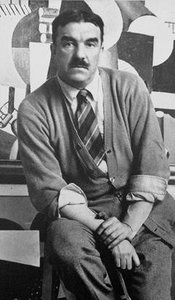
Fernand Léger
1881 - 1955 , Frankrijk
Snelle feiten
- Artistic Movement Or Style: Cubisme, Tubisme
- Artists Or Movements Influenced By This Artist: ['Pop Art']
- Artists Who Influenced This Artist: ['Paul Cézanne']
- Date Of Birth: 4 feb 1881
- Date Of Death: 17 aug 1955
- Full Name: Fernand Léger
- Nationality: Frans
- Notable Artworks:
- Nudes in de Bos
- Machine Element
- De Grote Parade
- De Stad
- Place Of Birth: Argentan, Frankrijk
Gerelateerde artikelen

Contemporary Abstract Art: A Professional Buyer's Guide to Large-Scale Modern Decor for Hospitality and Corporate Interiors
A professional procurement guide for hotel designers and architects. Discover how to integrate large-scale contemporary abstract art into hospitality projects through high-volume, custom-sized oil reproductions, multi-panel layouts, and reliable global logistics.


