


 Voorvertoning
 Verstuur
 Delen
Delen
 Details bekijken

 Download
 Vergelijkbare items
 Röntgenonderzoek
 Diavoorstelling
Laughing Boy


 Lees meer
Giclée / Kunstafdrukken
Giclée- of canvasafdruk van museumkwaliteit met een snelle productie en flexibele afwerkingsmogelijkheden. ( Bestel handgeschilderde reproductie Koop afbeelding)




P118B $10

P118H $10

P118W $10

P438Z $10

P508JH $12

P508YH $12

P805H $10

P805Z $10

P919BZ $10

P919G $10

P919XJ $10

P959ZH $10

P968JZ $12

W106C $8

W218G $10

W218JH $8

W218Y $10

W307PJ $10

W316G $10

W316PJ $8

W316Y $10

W398PJ $8

W4111J $10

W500HY $15

W500JH $15

W692G $12

W849H $8

W940BG $15

W953PJ $8




Kies uit onze vooraf ingestelde maten die overeenkomen met de originele verhoudingen van het kunstwerk.

U kunt uw eigen afmetingen opgeven om in een specifieke lijst of ruimte te passen. Als de door u gekozen maat niet overeenkomt met de proporties van het originele kunstwerk, zullen wij de afbeelding bijsnijden of uitbreiden met een gespiegelde of effen rand. Een digitaal mockup wordt ter goedkeuring naar u verzonden voordat de productie begint.
Houd er rekening mee dat de preview op het scherm de werkelijke bijsneding of uitbreiding niet weergeeft. Alleen de mockup toont de uiteindelijke compositie nauwkeurig.
Hoewel aangepaste maten beschikbaar zijn, raden wij aan een afmeting uit de vooraf bepaalde lijst te kiezen om de originele proporties te behouden.
Wereldwijde levering () binnen 2 weken in plaats van de standaard 4/5 weken. (20 augustus)

Gratis wereldwijde expressverzending

Hoogwaardig linnen canvas

Volledige verzendverzekering

Garantie op terugbetaling van invoerrechten

Garantie op exacte kleurweergave

Retourbeleid van 60 dagen (alleen bij defecten)

100% Geld-terug-garantie

Korting bij meerdere afnames
 De optie voor glas is alleen beschikbaar bij een formaat kleiner dan 110 cm.

Laughing Boy
Giclée / Kunstafdrukken
Afmetingen reproductie
-


Eindtotaal
$ 65
Beschrijving verzamelobject
A Moment of Unburdened Joy: Frans Hals’ “Laughing Boy”
Frans Hals' "Laughing Boy," painted around 1625, isn’t merely a portrait; it’s a distillation of youthful exuberance captured with an unprecedented immediacy. This small, circular canvas—a ‘tondo,’ as these intimate portraits are known—immediately draws the viewer in with its subject’s open-mouthed grin and wide, innocent eyes. It's a scene brimming with life, a fleeting moment frozen in time that speaks volumes about the spirit of childhood and the artist’s remarkable ability to convey personality through subtle brushstrokes.
The painting exists within the context of Hals’ innovative approach to portraiture during the Dutch Golden Age. He deliberately moved away from the stiff formality prevalent at the time, favoring a looser, more spontaneous style that prioritized capturing the subject's essence rather than adhering to rigid conventions. Hals was fascinated by the ‘tronie,’ a genre of informal character studies—often depicting young boys or girls—that allowed him to explore expressive gestures and fleeting emotions. “Laughing Boy” exemplifies this approach perfectly; it’s not a meticulously posed likeness, but a vibrant portrayal of a boy lost in his own world, radiating an infectious joy.
The Dance of the Brush: Technique and Style
Hals' distinctive technique is immediately apparent upon closer inspection. His brushwork isn’t blended or smoothed; instead, it’s visible, dynamic, and full of energy. He employed a ‘wet-in-wet’ method—applying paint while the previous layer was still wet—which creates soft edges and luminous effects. This technique contributes significantly to the painting's sense of immediacy and spontaneity. Notice how the brushstrokes follow the contours of the boy’s face, capturing the play of light and shadow with remarkable sensitivity.
The color palette is restrained yet effective. The predominantly white shirt provides a bright backdrop for the boy’s youthful features, while subtle variations in tone suggest the texture of his skin and clothing. Hals masterfully uses highlights to draw attention to the boy's face, emphasizing his open mouth and sparkling eyes – the very source of the painting’s captivating charm. The lack of background detail further focuses our attention on the subject, intensifying the feeling of intimacy.
Symbolism and Interpretation
While seemingly simple, “Laughing Boy” is rich in symbolic potential. The boy's laughter isn’t just a display of happiness; it represents freedom, innocence, and a carefree spirit—qualities highly valued during the turbulent times of the Dutch Republic. Some art historians have suggested that the soap bubble floating above his head – a detail often overlooked – symbolizes fleeting beauty and the ephemeral nature of childhood joy. It's a visual reminder that these moments are precious and should be cherished.
The circular format itself is significant. Tondos were popular in Hals’ time, offering a sense of intimacy and immediacy. They also allowed him to experiment with composition and create a visually engaging portrait. The round shape mirrors the boy's face, further emphasizing his youthful appearance and creating a harmonious whole.
A Timeless Echo: Emotional Impact
"Laughing Boy" transcends its historical context and continues to resonate with viewers today because of its profound emotional impact. It’s a painting that evokes feelings of warmth, nostalgia, and pure joy. The boy's genuine smile is infectious, inviting us to share in his carefree spirit. It serves as a poignant reminder of the simple pleasures of life—a moment of unburdened happiness captured forever on canvas.
Whether viewed in person or reproduced, “Laughing Boy” remains a testament to Frans Hals’ genius and a timeless celebration of childhood innocence. It's more than just a portrait; it’s an invitation to rediscover the joy within ourselves.
Vergelijkbare kunstwerken
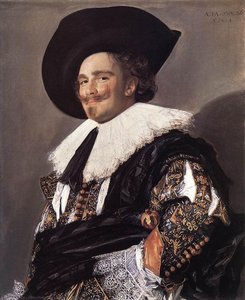


Biografie van de kunstenaar
Frans Hals: Life and Legacy
Early Life and Training
Frans Hals the Elder, born in Antwerp, Belgium around 1582, was a pivotal figure in Dutch Golden Age painting. His family moved to Haarlem, Netherlands, when he was still young, escaping the religious conflicts of the time. Details about his early life and artistic training remain somewhat scarce, but it is believed he entered the Haarlem Guild of St. Luke – a prestigious artists’ association – where he likely received foundational instruction.
Artistic Development and Style
Hals distinguished himself through a remarkably innovative style. He moved away from the highly polished, idealized portraits common at the time, opting for a more dynamic and spontaneous approach. His brushwork was loose and visible, creating a sense of immediacy and capturing the personality of his subjects with unprecedented realism. This technique foreshadowed later developments in Impressionism.
- Loose Brushwork: Hals’ signature style involved applying paint in free, energetic strokes.
- Capturing Personality: He excelled at conveying the character and emotions of those he painted.
- Genre Scenes: Beyond portraits, Hals also created lively genre scenes depicting everyday life.
Major Works and Achievements
Throughout his career, Hals produced a substantial body of work, including individual portraits, group portraits (a field he significantly advanced), and genre paintings. Some of his most celebrated pieces include:
- The Laughing Cavalier (1624): Perhaps his most famous work, showcasing his mastery of capturing a fleeting expression.
- Portrait of a Man with a Black Hat (c. 1635): Demonstrates his skill in rendering textures and conveying character.
- Regents of the St. Elisabeth Hospital (1641): A complex group portrait displaying his ability to organize multiple figures within a composition.
- Malle Babbe (c. 1633-1635): An intriguing and unconventional portrayal of an elderly woman.
Influences and Legacy
While Hals’ influences are not definitively documented, it is likely he was impacted by the work of earlier Dutch and Flemish painters. However, his style was largely original and profoundly influenced subsequent generations of artists.
- Nicolaes Pieterszoon Berchem: A fellow Dutch painter known for his pastoral landscapes, who adopted Hals’ looser brushwork.
- Cornelis Hendrickszoon Vroom: Another prominent figure in the Dutch Golden Age, influenced by Hals's dynamic compositions.
Hals’ impact extended far beyond his own time. His emphasis on capturing personality and his innovative technique paved the way for later artists like Édouard Manet and the Impressionists. He remains a central figure in the history of portraiture and Dutch Golden Age painting.
Historical Significance
Frans Hals lived during a period of immense prosperity and cultural flourishing in the Netherlands – the Dutch Golden Age. His work reflects the values of this era: realism, individualism, and a celebration of everyday life. He died in Haarlem in 1666, leaving behind a legacy as one of the most important and innovative painters of his time. Today, his paintings are held in major museums worldwide, including the Frans Hals Museum in Haarlem, dedicated to his life and work.

frans hals the elder
1582 - 1666 , Belgium
Belangrijkste feiten
- Birth Date: 1582
- Birth Place: Antwerp, Belgium
- Death Date: 1666
- Influenced:
- Nicolaes Pieterszoon Berchem
- Cornelis Hendrickszoon Vroom
- Movement: Dutch Golden Age painting, Baroque
- Name: Frans Hals the Elder
- Nationality: Dutch
- Notable Works:
- The Laughing Cavalier
- Portrait of a man with a black hat
- Regents of the St. Elisabeth Hospital
Gerelateerde artikelen

Frans Hals I: Innovation, Intimacy & the Dutch Golden Age Portrait
Explore the revolutionary portraiture of Frans Hals I, a master of the Dutch Golden Age. Discover his innovative techniques, captivating character studies & lasting impact on art history. Learn more at AllPaintingsStore.
Top 10 Nederlandse Barok Meesterwerken: Kunstgeschiedenis voor uw Interieur
Ontdek de 10 meest iconische meesterwerken van de Nederlandse Barok! Leer over Rembrandt, Vermeer en andere Hollandse meesters. Prachtige reproducties voor uw interieur op AllPaintingsStore.com – museumkwaliteit kunstprints & decoratie.
Top 10 Meesterwerken van de Gouden Eeuw: Kunst voor uw interieur | AllPaintingsStore.nl
Ontdek de 10 meesterwerken van de Gouden Eeuw! Leer over Rembrandt, Vermeer & andere Hollandse schilders. Prachtige kunst reproducties voor uw interieur. Museumkwaliteit prints op AllPaintingsStore.com.

Golden Light & Dutch Skies: The Timeless Magic of Dutch Golden Age Landscapes
Discover the breathtaking beauty of Dutch Golden Age landscapes. Explore the mastery of light, chiaroscuro, and 17th-century realism through an expert art history lens, celebrating the enduring legacy of the Dutch Masters for discerning collectors and art lovers.

Illuminating Innovation: Exploring the Dutch Golden Age of Painting
Explore the Dutch Golden Age of painting with AllPaintingsStore. Discover Rembrandt, Vermeer & other Masters. Learn about key characteristics, iconic artworks, and lasting influence. Expert insights for collectors & enthusiasts.


