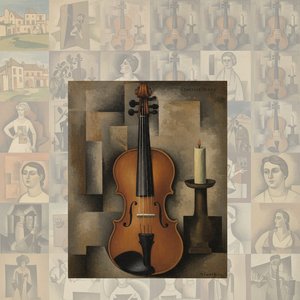
1961. Oil On Canvas.

§ 1Catalogue data


Dit kunstwerk is auteursrechtelijk beschermd
De kunstwerken die op deze pagina worden weergegeven, zijn beschermd door de auteursrechtwetgeving, wat betekent dat het ons wettelijk niet is toegestaan om identieke reproducties te maken of te verkopen. Deze bescherming wordt gehandhaafd onder internationale overeenkomsten zoals de Conventie van Bern en door nationale wetgeving, waaronder de bepalingen van de Amerikaanse auteurswet - Titel 17. Alle rechten voorbehouden. Reproduceren of distribueren van afbeeldingen is niet toegestaan zonder uitdrukkelijke schriftelijke toestemming van WahooArt.com en de rechthebbenden.
Als een respectvol en legaal alternatief bieden wij op maat gemaakte, handgeschilderde kunstwerken aan die geïnspireerd zijn op het origineel. Onze bekwame en professionele kunstenaars bestuderen zorgvuldig de stijl, sfeer en artistieke essentie van het origineel om een nieuw, uniek werk te creëren dat dezelfde emotie oproept – terwijl het een op zichzelf staande, originele creatie blijft.
Deze methode voldoet volledig aan de auteursrechtwetgeving, omdat het niet gaat om het kopiëren of dupliceren van het beschermde kunstwerk. In plaats daarvan is er sprake van een creatieve herinterpretatie — een nieuw schilderij dat door het origineel wordt geïnspireerd, maar er niet identiek aan is.
 Lees meer over
§ 2Abstract
Beschrijving verzamelobject
Explore Georges Braque’s ‘The Bicycle,’ a surreal Fauvist masterpiece! Vibrant colors & expressive brushwork depict stillness through dynamic abstraction. A unique art piece.
Biografie kunstenaar
Georges Braque (1882-1963): Pionier van het kubisme & fauvisme. Ontdek zijn baanbrekende kunst, van 'Houses at L'Estaque' tot indrukwekkende collages. Een meester van de moderne kunst!
§ 3Commentary
A Vision of Modernity: Decoding Braque’s ‘The Bicycle’
Georges Braque's 1961 painting, *The Bicycle*, is far more than a depiction of a common object; it’s a compelling exploration of modernity, movement, and the evolving relationship between humanity and technology. While Braque is celebrated as a pioneer of Cubism, this work reveals his continued engagement with Fauvist principles – a vibrant palette and expressive brushwork – applied to a subject matter that speaks to the burgeoning 20th century.Subject & Composition: Stillness Within Motion
The painting centers around a bicycle, an emblem of freedom and progress at the time. However, Braque doesn’t present it in dynamic action. Instead, the bicycle appears almost suspended, static within a swirling composition of abstracted forms and bold colors. This deliberate stillness invites contemplation – what does this symbol of movement *mean* when divorced from motion? The surrounding shapes aren't merely background; they seem to interact with the bicycle, perhaps representing the environment it traverses or even the rider’s experience.Style & Technique: Fauvism Reimagined
Braque masterfully employs a Fauvist sensibility in *The Bicycle*. The canvas explodes with intense hues – purples, pinks, and blues dominate, creating a dreamlike atmosphere. His brushstrokes are visible and energetic, contributing to the painting’s overall dynamism despite the bicycle's stillness. This isn’t a precise rendering; it’s an emotional response *to* the object, conveyed through color and texture. The impasto technique – applying paint thickly – adds depth and physicality to the work, drawing the viewer in.Historical Context: Post-War Reflections
Painted in 1961, after the devastation of World War II, *The Bicycle* can be interpreted as a reflection on rebuilding and reimagining life. The bicycle, though simple, represents personal transportation and independence – qualities that would have resonated deeply during a period of recovery and societal shift. Braque’s continued exploration of non-Cubist styles in his later years demonstrates an artistic restlessness and a desire to continually redefine his approach.Symbolism & Emotional Impact: A Fragmented Dreamscape
The ambiguity inherent in the painting is key to its power. The distorted forms and surreal atmosphere evoke a sense of unease, perhaps mirroring the anxieties of the modern world. Is this bicycle a symbol of hope or a relic of a bygone era? The lack of clear narrative allows for multiple interpretations, making it a deeply personal experience for each viewer. It’s a fragmented dreamscape where recognizable elements are juxtaposed with fantastical shapes, prompting questions about identity, progress, and the human condition.Braque's Legacy: Beyond Cubism
While Braque is rightfully remembered as a founding father of Cubism alongside Pablo Picasso, works like *The Bicycle* demonstrate his versatility and enduring artistic vision. He wasn’t confined by labels; he continually experimented with different styles and techniques throughout his career. This painting serves as a reminder that even the most groundbreaking artists are capable of surprising us with new facets of their creativity.Collecting & Interior Design
A reproduction of *The Bicycle* would be a striking addition to any art collection or interior space. Its bold colors and dynamic composition make it a focal point, while its underlying themes invite conversation and contemplation. It complements modern and contemporary interiors particularly well, adding a touch of intellectual sophistication and artistic flair. The painting’s energy can enliven a living room, study, or office, sparking creativity and inspiring thought.- Style: Fauvism, Modern Art
- Technique: Oil on Canvas, Impasto
- Colors: Purple, Pink, Blue, with vibrant accents
- Emotional Impact: Thought-provoking, Surreal, Dynamic yet Still
Veelgestelde vragen
Waar wordt het Portrait-formaat van "The Bicycle" aanbevolen te tonen?
Het Portrait-formaat van "The Bicycle" door Georges Braque wordt aanbevolen voor een Living Room. Formaat en ruimte samen bepalen de ideale plaatsing van een reproductie.
Wat voor soort kunstwerk is "The Bicycle" door Georges Braque?
"The Bicycle" is een WallArt-werk.
Hoe komen medium en beweging samen in "The Bicycle"?
"The Bicycle" door Georges Braque combineert de Oil On Canvas-techniek met de Cubism-stijl. Techniek en stroming beschrijven de vervaardiging en de stijl van het werk.



 Schakel over naar print


 Voor kunstwerken of reproducties die aan één zijde groter zijn dan 105 cm (ongeveer 41 inch), wordt de lijst als een losse set verzonden. Deze methode garandeert een veilige levering en voorkomt schade tijdens het transport.