

Acrylic On Canvas.

§ 1Catalogusgegevens

Dit kunstwerk is auteursrechtelijk beschermd
De kunstwerken die op deze pagina worden weergegeven, zijn beschermd door de auteursrechtwetgeving, wat betekent dat het ons wettelijk niet is toegestaan om identieke reproducties te maken of te verkopen. Deze bescherming wordt gehandhaafd onder internationale overeenkomsten zoals de Conventie van Bern en door nationale wetgeving, waaronder de bepalingen van de Amerikaanse auteurswet - Titel 17. Alle rechten voorbehouden. Reproduceren of distribueren van afbeeldingen is niet toegestaan zonder uitdrukkelijke schriftelijke toestemming van WahooArt.com en de rechthebbenden.
Als een respectvol en legaal alternatief bieden wij op maat gemaakte, handgeschilderde kunstwerken aan die geïnspireerd zijn op het origineel. Onze bekwame en professionele kunstenaars bestuderen zorgvuldig de stijl, sfeer en artistieke essentie van het origineel om een nieuw, uniek werk te creëren dat dezelfde emotie oproept – terwijl het een op zichzelf staande, originele creatie blijft.
Deze methode voldoet volledig aan de auteursrechtwetgeving, omdat het niet gaat om het kopiëren of dupliceren van het beschermde kunstwerk. In plaats daarvan is er sprake van een creatieve herinterpretatie — een nieuw schilderij dat door het origineel wordt geïnspireerd, maar er niet identiek aan is.
 Lees meer over
§ 2Abstract
Beschrijving verzamelobject
Biografie kunstenaar
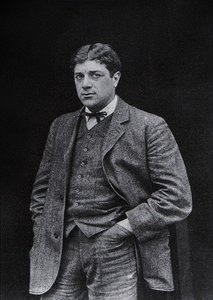
Georges Braque (1882-1963): Pionier van het kubisme & fauvisme. Ontdek zijn baanbrekende kunst, van 'Houses at L'Estaque' tot indrukwekkende collages. Een meester van de moderne kunst!
§ 3Toelichting
Georges Braque’s Vision of Rural Tranquility: An Exploration of Cubist Influence
Georges Braque’s “untitled (2719)” presents a deceptively simple scene—a village nestled amongst rolling hills and shadowed by a distant forest. Yet, beneath this tranquil exterior lies the profound intellectual engagement characteristic of Braque's artistic endeavors during his pivotal period alongside Pablo Picasso. This artwork exemplifies the core tenets of Cubism, demonstrating how Braque skillfully dismantled traditional perspective to convey spatial complexity and textural richness.
- Subject Matter: The painting captures a quintessential rural landscape—houses constructed from cardboard or paper—a deliberate choice that underscores Braque’s fascination with materiality and fragmentation. It's not merely depicting what is seen; it’s investigating how visual perception itself operates.
- Style & Technique: Braque employed a technique rooted in Cubism, specifically Analytical Cubism. This approach involved fracturing objects into geometric planes—primarily cubes—and presenting them simultaneously from multiple viewpoints. The yellowish tint of the buildings isn't accidental; it serves to heighten visual interest and contributes to the overall tonal palette.
- Historical Context: Created around 1908-1912, “untitled (2719)” emerged during a period of intense artistic experimentation following Impressionism. The influence of Cézanne’s sculptural approach is palpable, informing Braque's desire to represent form in three dimensions despite the limitations of two-dimensional representation. This was a reaction against the illusionistic conventions prevalent at the time, marking a decisive step toward abstraction.
- Symbolism & Emotional Impact: While seemingly devoid of overt narrative, the painting speaks volumes about Braque’s preoccupation with exploring fundamental questions regarding perception and representation. The muted colors—primarily yellows and browns—evoke feelings of serenity and contemplation, inviting viewers to consider the beauty inherent in everyday scenes.
The Influence of Cézanne: Sculptural Form Revisited
Braque’s artistic sensibilities were profoundly shaped by Paul Cézanne's groundbreaking explorations into capturing the essence of form rather than merely reproducing its appearance. Cézanne famously declared, “I do not paint what I see; I paint what I feel,” a sentiment that resonated deeply with Braque and fueled his determination to move beyond traditional illusionism.
- Cézanne’s Legacy: Cézanne's insistence on simplifying forms into geometric shapes—particularly cylinders, cones, and cubes—provided Braque with a crucial conceptual framework. This approach encouraged artists to consider the underlying structure of objects and landscapes, prioritizing solidity and volume over superficial detail.
- Braque’s Response: Braque embraced Cézanne's principles, applying them to his own canvases in ways that subtly yet powerfully differentiated him from Impressionists. He sought to convey a sense of spatial depth and sculptural presence—a characteristic absent from Impressionistic renderings—demonstrating the transformative potential of artistic innovation.
Collage: Expanding Artistic Boundaries
Alongside his painting explorations, Braque pioneered the technique of collage – incorporating non-traditional materials like newspaper, fabric scraps, and printed images into his artworks. This bold move further challenged established conventions and signaled a willingness to experiment with new visual languages.
- Material Exploration: Collage allowed Braque to juxtapose disparate textures and surfaces—creating surprising visual effects that disrupted conventional notions of composition. The inclusion of printed matter reflected the burgeoning influence of photography and mass media on artistic discourse.
- Conceptual Significance: More importantly, collage represented a conceptual breakthrough – demonstrating how artists could actively manipulate materials to convey ideas and emotions beyond mere representation. It was a deliberate rejection of academic painting’s focus on meticulous realism.
A Lasting Impression: Braque's Contribution to Modern Art
“untitled (2719)” stands as a testament to Georges Braque’s unwavering commitment to artistic experimentation and his pivotal role in shaping the trajectory of modern art. By synthesizing Cézanne’s sculptural vision with Cubist fragmentation and the innovative possibilities of collage, Braque created an artwork that transcends its apparent simplicity—inviting viewers to contemplate the fundamental questions surrounding perception, representation, and the very nature of visual experience.
Veelgestelde vragen
Hoe wordt de stemming van "untitled (2719)" door Georges Braque beschreven?
"untitled (2719)" door Georges Braque wordt qua stemming beschreven als Serene. Deze classificatie kan helpen om het werk te laten aansluiten bij een bepaalde omgeving.
Hoe verhoudt het onderwerp van "untitled (2719)" zich tot de gebruikelijke thema's van Georges Braque?
Binnen de bekende thema's van Georges Braque - deconstructing reality, geometric spatial vision, collaboration picasso legacy, exploring artistic boundaries, cubist formal innovation - legt "untitled (2719)" een eigen focus op village landscape, cardboard architecture, mountain silhouette, wooden structure, geometric forms, warm palette, cubist composition.
Kan ik een röntgenopname van "untitled (2719)" door Georges Braque bekijken?
De Röntgenanalyse-pagina van "untitled (2719)" door Georges Braque is een interactieve viewer waarmee u door elf optische lagen van het kunstwerk kunt glijden, inclusief een weergave in röntgenstijl.


 Schakel over naar print


 Voor kunstwerken of reproducties die aan één zijde groter zijn dan 105 cm (ongeveer 41 inch), wordt de lijst als een losse set verzonden. Deze methode garandeert een veilige levering en voorkomt schade tijdens het transport.


