

Oil On Canvas.

§ 1Catalogue data


Dit kunstwerk is auteursrechtelijk beschermd
De kunstwerken die op deze pagina worden weergegeven, zijn beschermd door de auteursrechtwetgeving, wat betekent dat het ons wettelijk niet is toegestaan om identieke reproducties te maken of te verkopen. Deze bescherming wordt gehandhaafd onder internationale overeenkomsten zoals de Conventie van Bern en door nationale wetgeving, waaronder de bepalingen van de Amerikaanse auteurswet - Titel 17. Alle rechten voorbehouden. Reproduceren of distribueren van afbeeldingen is niet toegestaan zonder uitdrukkelijke schriftelijke toestemming van WahooArt.com en de rechthebbenden.
Als een respectvol en legaal alternatief bieden wij op maat gemaakte, handgeschilderde kunstwerken aan die geïnspireerd zijn op het origineel. Onze bekwame en professionele kunstenaars bestuderen zorgvuldig de stijl, sfeer en artistieke essentie van het origineel om een nieuw, uniek werk te creëren dat dezelfde emotie oproept – terwijl het een op zichzelf staande, originele creatie blijft.
Deze methode voldoet volledig aan de auteursrechtwetgeving, omdat het niet gaat om het kopiëren of dupliceren van het beschermde kunstwerk. In plaats daarvan is er sprake van een creatieve herinterpretatie — een nieuw schilderij dat door het origineel wordt geïnspireerd, maar er niet identiek aan is.
 Lees meer over
§ 2Abstract
Beschrijving verzamelobject
Explore Georges Braque’s "untitled (8613)", a Cubist harbor scene of fragmented forms & warm tones. Discover this dynamic, layered oil painting – a key work by a 20th-century master.
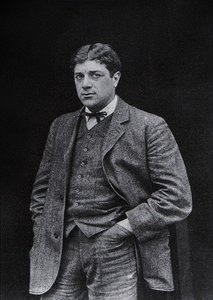
Biografie kunstenaar
Georges Braque (1882-1963): Pionier van het kubisme & fauvisme. Ontdek zijn baanbrekende kunst, van 'Houses at L'Estaque' tot indrukwekkende collages. Een meester van de moderne kunst!
§ 3Commentary
A Fragmented Harbor: Exploring Braque’s Cubist Vision
This untitled work by Georges Braque is a compelling example of his pivotal role in the development of Cubism. Created during a period of radical artistic experimentation, it presents a harbor scene – boats and a lighthouse – not as realistically depicted, but *deconstructed* into geometric forms. The painting invites viewers to reconsider how we perceive space and representation itself.Deconstructing Reality: Style & Technique
Braque, alongside Pablo Picasso, pioneered Cubism, moving away from traditional perspective and embracing a fragmented visual language. Here, the harbor is rendered through an interplay of angular planes and overlapping shapes – primarily rectangles and triangles – creating a dynamic yet somewhat chaotic composition. This isn’t about *showing* what a harbor looks like; it's about presenting multiple viewpoints simultaneously, capturing its essence in a new way.- Cubist Principles: The artwork embodies core Cubist tenets: the rejection of single-point perspective, the breakdown of objects into geometric components, and the exploration of form over realistic representation.
- Color Palette: A warm palette dominates – shades of yellow, brown, and gray – lending a sense of earthy solidity to the fractured forms. The limited color range focuses attention on the interplay of shapes and textures.
- Technique: Braque employed thin washes of oil paint, building up layers to create a slightly grainy surface. This technique contributes to the flattened appearance of the image, further emphasizing its two-dimensionality.
Historical Context: The Birth of Modernism
Braque’s artistic journey began with Fauvism, but his collaboration with Picasso around 1907 led to the birth of Cubism. This movement was a revolutionary response to the changing world – the rise of industrialization, new scientific discoveries (like Einstein's theory of relativity), and a desire to break free from academic traditions. Braque’s work represents a crucial step in the transition from representational art to abstraction, profoundly influencing 20th-century painting.Symbolism & Emotional Resonance
While largely non-representational in its approach, the subject matter – a bustling harbor – hints at themes of industrial activity and movement. The fragmentation itself can be interpreted as reflecting the disruption and dynamism of modern life. The absence of strong shadows and the diffused lighting contribute to a sense of ambiguity and detachment. It’s not necessarily about evoking a specific emotion, but rather prompting contemplation on the nature of perception and reality.Interior Design & Collectible Appeal
This artwork's sophisticated aesthetic makes it an excellent choice for modern or contemporary interiors. Its geometric forms and muted color palette complement minimalist spaces while adding depth and intellectual intrigue. As a key work by a foundational figure of Cubism, this piece holds significant collectible value, representing not just artistic beauty but also a pivotal moment in art history. A high-quality reproduction would serve as a striking focal point, sparking conversation and enriching any collection.Veelgestelde vragen
Hoe komen contrast en harmonie samen in "untitled (8613)"?
In "untitled (8613)" wordt een Balanced contrast gecombineerd met een Unified Palette harmonie.
Welke stemming en emotie straalt "untitled (8613)" door Georges Braque uit?
"untitled (8613)" door Georges Braque roept een Reflective gevoel op binnen een algeheel Minimalist stemmigheid.
Is "untitled (8613)" door Georges Braque een portret, landschap of vierkante compositie?
"untitled (8613)" door Georges Braque heeft een Square-formaat. Het formaat beschrijft de verhoudingen van de compositie.


 Schakel over naar print


 Voor kunstwerken of reproducties die aan één zijde groter zijn dan 105 cm (ongeveer 41 inch), wordt de lijst als een losse set verzonden. Deze methode garandeert een veilige levering en voorkomt schade tijdens het transport.


