


 Bekijk op ware grootte
 Verstuur
 Delen
Delen
 Details bekijken
 Gids voor studentenkunstwerken

 Download
 Vergelijkbare items
 Röntgenonderzoek
 Diavoorstelling
 Statistieken
Winter
 Oil
Oil- WallArt
- Mannerism
 84.0 x 57.0 cm
 Bayerische Staatsgemäldesammlungen
 Lees meer
Handgemaakte olieverfreproductie
Met de hand geschilderd in olieverf op canvas in uw gewenste maat en lijst, op bestelling gemaakt door onze kunstenaars. ( Schakel over naar print Schakel over naar digitale afbeeldingen)




P118B €10

P118H €10

P118W €10

P438Z €10

P508JH €12

P508YH €12

P805H €10

P805Z €10

P919BZ €10

P919G €10

P919XJ €10

P959ZH €10

P968JZ €12

W106C €8

W218G €10

W218JH €8

W218Y €10

W307PJ €10

W316G €10

W316PJ €8

W316Y €10

W398PJ €8

W4111J €10

W500HY €15

W500JH €15

W692G €12

W849H €8

W940BG €15

W953PJ €8




Kies uit onze vooraf ingestelde maten die overeenkomen met de originele verhoudingen van het kunstwerk.

Voer de breedte en de hoogte in die u nodig heeft, passend bij uw lijst of uw muur. Dit is handgeschilderd, dus bij een afmeting met een andere vormverhouding kan de kunstenaar iets meer rondom het schilderij schilderen of juist iets meer weglaten — u kiest zelf. Wij sturen u een digitaal mockup ter goedkeuring voordat het schilderwerk begint. De afbeelding die op deze pagina wordt getoond, is niet het uiteindelijke resultaat — alleen de mockup geeft dit weer.
Na de bestelling zal het team van AllPaintingsStore.com per e-mail contact opnemen met de klant voor instructies en een mockup-voorbeeld sturen.
Wereldwijde levering () binnen 3 tot 4 weken in plaats van de standaard 5 weken. (25 oktober). Zonder concessies aan de kwaliteit.

Gratis wereldwijde expressverzending

Hoogwaardig linnen canvas

Volledige verzendverzekering

Garantie op terugbetaling van invoerrechten

Garantie op exacte kleurweergave

Retourbeleid van 100 dagen (alleen bij defecten)

100% Geld-terug-garantie

Korting bij meerdere afnames
 De optie voor glas is alleen beschikbaar bij een formaat kleiner dan 110 cm.

Winter
Reproductiemethode
Formaat reproductie
-


Totaalprijs
€ 226
A Winter’s Enigma: Giuseppe Arcimboldo's "Winter"
Giuseppe Arcimboldo’s “Winter,” painted circa 1563 and now residing within the Kunsthistorisches Museum in Vienna, isn’t merely a portrait; it’s an immersive allegory, a frozen tableau vivant constructed entirely from the bounty of nature. More than just a clever visual puzzle, this masterpiece embodies the Renaissance fascination with symbolism, classical mythology, and the cyclical rhythms of life and death – all rendered with a startlingly modern sensibility. Arcimboldo, already renowned for his inventive character portraits crafted from fruits, vegetables, and books, pushes the boundaries of representation here, transforming a human form into an evocative embodiment of winter’s stark beauty and inherent melancholy.
The central figure, often interpreted as a wizened old man or perhaps a spirit emerging from a rustic sack – rendered in rough, textured burlap – dominates the composition. His face is deeply etched with wrinkles, roots, and branches, a deliberate blurring of human and plant characteristics that speaks to the interconnectedness of all living things. The careful arrangement of elements—the vibrant oranges nestled beneath, the cascading vines and foliage framing his head—immediately evoke associations with fertility, abundance, and the promise of spring hidden within the heart of winter’s dormancy. The inclusion of these fruits isn't arbitrary; they are potent symbols of renewal and hope, subtly counterbalancing the somber tones of the overall scene.
A Mannerist Masterpiece: Technique and Composition
Arcimboldo’s skill lies not just in his imaginative subject matter but also in his meticulous execution. “Winter” is a testament to the artist's mastery of oil painting, utilizing a technique that builds up layers of texture with painstaking detail. The chiaroscuro – the dramatic interplay of light and shadow – is particularly striking, emphasizing the rough surfaces of the fruits and vegetables while simultaneously creating an atmosphere of profound depth and mystery. The perspective is subtly distorted, lending the image a dreamlike quality, as if peering into a world both familiar and unsettlingly strange. The composition itself is carefully balanced, drawing the eye to the central figure while allowing the surrounding elements to contribute to the overall narrative.
Notice the deliberate use of color – predominantly browns, greens, and ochre—that evokes the muted palette of a winter landscape. These earthy tones are punctuated by the vibrant oranges, creating a compelling contrast that draws attention to their symbolic significance. The background remains deliberately dark and undefined, serving only to isolate the subject and heighten its presence within the scene. The overall effect is one of controlled chaos, where disparate elements coalesce into a cohesive and profoundly moving whole.
Roots in Mythology and Renaissance Thought
To fully appreciate “Winter,” it’s crucial to understand the context in which Arcimboldo worked – the vibrant intellectual climate of the late 16th century. The painting draws heavily on classical mythology, particularly the figure of Vertumnus, the Roman god of fertility, change, and seasons. Vertumnus was often depicted as a shapeshifter, embodying both the destructive and generative forces of nature. Arcimboldo’s portrait clearly echoes this mythological archetype, suggesting that the central figure is not merely a representation of winter but also a manifestation of the cyclical processes of life, death, and rebirth.
Furthermore, the Renaissance fascination with allegory – the use of symbolic imagery to convey deeper meanings – played a significant role in Arcimboldo’s artistic practice. His portraits were often intended as visual riddles, challenging viewers to decipher their hidden messages. “Winter,” like many of his other works, invites contemplation on themes such as mortality, time, and the relationship between humanity and nature. The painting's ambiguity—the figure’s expression open to interpretation—further enhances its symbolic power.
A Timeless Resonance: Emotional Impact and Legacy
Despite its historical context, “Winter” continues to resonate with viewers today due to its arresting imagery and profound emotional impact. There is a palpable sense of melancholy woven into the fabric of the painting – a quiet acknowledgement of winter’s stark beauty and inherent sadness. Yet, amidst this somber mood, there's also an underlying current of hope, symbolized by the vibrant oranges and the promise of spring. Arcimboldo’s ability to evoke such complex emotions through seemingly simple objects is a testament to his artistic genius.
Reproductions of “Winter” offer a remarkable opportunity to experience this masterpiece firsthand, allowing us to appreciate Arcimboldo's extraordinary skill and imaginative vision. Whether displayed in a grand salon or a cozy corner, this painting serves as a timeless reminder of the beauty and mystery of the natural world – and the enduring power of art to capture its essence.
Vragen & Antwoorden
Heeft "Winter" een augmented reality-preview?
"Winter" heeft een augmented reality-preview: de AR-voorvertoning-pagina van het kunstwerk toont het in uw eigen ruimte op een compatibel apparaat.
Wat is het kleurenpalet van "Winter" door Giuseppe Arcimboldo?
"Winter" wordt gekenmerkt door een Earthy palet met Black (#0f101a) als dominante kleur.
Hoe bekend is "Winter" van Giuseppe Arcimboldo?
Het populariteitsniveau dat is vastgelegd voor "Winter" door Giuseppe Arcimboldo is Iconic.
Gerelateerde kunstwerken


Biografie van de kunstenaar
Giuseppe Arcimboldo (1527-1593): De Mysticus van de Composite Hoofd
Giuseppe Arcimboldo, een naam die onlosmakelijk verbonden is met een wereld van bizarre schoonheid en verbluffende illusies, blijft een van de meest unieke figuren uit de Renaissance. Geboren in Milaan in 1527, ontvouwde zijn artistieke carrière zich tegen de achtergrond van Europa, doordrenkt van intellectuele opwinding, religieuze verschuivingen en een onstilende nieuwsgierigheid naar de natuurlijke wereld. Hoewel aanvankelijk erkend voor meer conventionele werken – fresco’s die kathedralen sieren en portretten die zich houden aan gevestigde hofstandaarden – ligt Arcimboldo's blijvende nalatenschap in een reeks composiethoofden, volledig samengesteld uit zorgvuldig geplaatste objecten: fruit, groenten, bloemen, boeken, zelfs muziekinstrumenten. Deze waren niet simpelweg speelse oefeningen in visuele truckunst; ze waren complexe allegorieën, doordrenkt van symboliek die resoneren met de Renaissance-wereldvisie en het publiek tot op de dag van vandaag fascineren. Zijn vader, Biagio Arcimboldo, was zelf een kunstenaar, waardoor hij Giuseppe een vroege artistieke training gaf en waarschijnlijk ook zijn eerste pogingen tot ontwerpwerk voor glasramen en fresco’s in de kathedraal van Milaan rond 1549 beïnvloedde. Deze fundamentele ervaring scherpte zijn technische vaardigheid en oog voor detail – kwaliteiten die later kenmerken zouden worden van zijn meer onconventionele creaties.
Hofelijke Opdrachten en de Opkomst van een Unieke Stijl
Arcimboldo's traject nam een significante wending in 1562, toen hij benoemd werd tot hofportretist van Ferdinand I bij de Habsburgse vorstendynastie in Wenen. Dit markeerde het begin van meer dan twee decennia aan artistieke polyvalentie voor drie opeenvolgende Habsburgse heersers: Maximiliaan II en zijn zoon, Rudolf II. Naast het schilderen van portretten – hoewel zelfs deze vaak subtiele excentriciteiten vertoonden – omvatten Arcimboldo's taken kostuumontwerp, festivaldecoraties en de organisatie van keizerlijke collecties. Binnen dit milieu van verfijnde smaak en intellectuele nieuwsgierigheid begon zijn kenmerkende stijl te bloeien. De hofelijke vraag naar vernieuwing en spektakel bood vruchtbare grond voor experimenten, waardoor hij verder kon gaan dan traditionele portrettuur richting de creatie van zijn beroemde “composiethoofden”. Deze werden niet geboren uit een plotselinge impuls, maar ontwikkelden zich geleidelijk, gebaseerd op de Renaissance-fascinering voor raadsels, puzzels en het verkennen van verborgen betekenissen in alledaagse objecten. De invloed van eerdere kunstenaars die experimenteerden met *trompe l'oeil*-effecten en vervormde perspectieven kan worden waargenomen, maar Arcimboldo synthetiseerde deze elementen tot iets radicaals – een unieke visuele taal die conventionele representaties uitdaagt. Zijn vader’s ervaring met glasramen en fresco’s gaf hem de technische vaardigheden om dit te realiseren.
Het Ontcijferen van Symboliek: Meer Dan Het Eerst Aanzien
Om Arcimboldo's werk simpelweg als speels te beschouwen, is te negeren dat het diepe intellectuele betekenis bevat. Elk object binnen zijn composiethoofden werd zorgvuldig gekozen, geladen met symbolische betekenis gerelateerd aan de identiteit van de persoon, hun beroep of sociale status. *De Bibliothecaris*, bijvoorbeeld, is niet alleen een gezicht samengesteld uit boeken; het is een subtiele kritiek op academische pretentie – een commentaar op degenen die kennis vergaren zonder zich daadwerkelijk met haar inhoud te verdiepen. De dierlijke staarten die de baard vormen, duiden op stofdoeken, wat wijst op vergeten boeken die stof verzamelen op planken. Vergelijkbare symboliek is aanwezig in zijn portretten van de seizoenen – vooral *Vertumnus*, die keizer Rudolf II afbeeldt als de Romeinse god van tuinen en verandering – en zijn composities zijn rijk aan botanische symboliek, die de keizerlijke patronage van wetenschap en natuurkunde weerspiegelen. Deze waren niet bedoeld om onmiddellijk te worden ontcijferd; ze waren ontworpen om contemplatie te stimuleren, het publiek uit te nodigen om lagen betekenis te ontrafelen die verborgen liggen in de schijnbaar speelse opstelling van objecten. Het zelf creëren van een menselijk portret uit onstoffelijke voorwerpen was een meditatie over de onderlinge verbondenheid van alle dingen – een weerspiegeling van de Neoplatonische filosofie, die geloofde in de onderliggende harmonie van het universum.
Erfgoed en Ontdekking: Een Voorloper van Surrealisme
Ondanks zijn succes tijdens zijn leven, vervaagde Arcimboldo's reputatie na zijn dood in 1593. Zijn werk werd vaak vergeten in de wereld van kunst, beschouwd als een curiositeit – gewaardeerd om zijn technische vaardigheid maar afgewezen als het gebrek aan serieuze artistieke waarde. Het was pas in de 20e eeuw dat een hernieuwde waardering voor zijn kunst ontstond, aangedreven door de opkomst van Surrealisme. Kunstenaars zoals Salvador Dalí herkenden in Arcimboldo een gelijkgestemde – een visionair die conventionele percepties uitdaagde en het onderbewustzijn verkende via onverwachte juxtaposities van beelden. De invloed van Arcimboldo is te zien in Dalí's eigen dromerige composities en zijn fascinatie voor transformatie en illusie. Vandaag de dag wordt Arcimboldo gevierd als een sleutelfiguur in kunstgeschiedenis – een voorloper van Surrealisme wiens innovatieve gebruik van symboliek en speelse vervorming nog steeds kunstenaars inspireert en het publiek fascineert wereldwijd. Zijn schilderijen worden tentoongesteld in prestigieuze musea, zoals het Kunsthistorisches Museum in Wenen en het Louvre in Parijs.
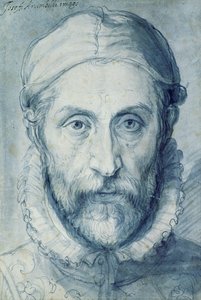
Giuseppe Arcimboldo
1527 - 1593 , Italië
Snelle feiten
- Artistic Movement Or Style: Manierisme, Surrealisme
- Artists Or Movements Influenced By This Artist: ['Salvador Dalí']
- Artists Who Influenced This Artist: ['Leonardo da Vinci']
- Date Of Birth: 5 april 1527
- Date Of Death: 11 juli 1593
- Full Name: Giuseppe Arcimboldo
- Nationality: Italiaans
- Notable Artworks:
- De Vier Seizoenen
- Vertumnus
- De Bibliothecaris
- Place Of Birth: Milaan, Italië
Gerelateerde artikelen

Victorian Botanical Art: A Professional Guide to Sourcing Timeless Floral Reproductions for Luxury Hotel Interiors
Elevate hospitality interiors with premium Victorian botanical art reproductions. A professional guide for hotel designers on sourcing hand-painted oils and large-scale murals, featuring expert procurement advice, bulk ordering, and reliable global logistics for luxury spaces.


