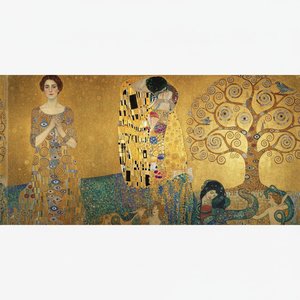
1903. Acryl op canvas, 44.0 x 30.0 cm. National Gallery of Canada.

§ 1Catalogusgegevens

- 44.0 x 30.0 cm


§ 2Abstract
Beschrijving verzamelobject
Ontdek Gustav Klimts "Study for" – een aangrijpende potloodschets van een zittende vrouw. Bewonder de Art Nouveau-lijnen en sombere tinten, een sleutelwerk uit het oeuvre van de meester.
 Lees meer
Biografie kunstenaar
Ontdek Gustav Klimt (1862-1918), de Oostenrijkse meester van Art Nouveau! Verken zijn iconische 'Gouden Fase', sensuele portretten & meesterwerken zoals *De Kus*. Leer over zijn leven, invloeden & nalatenschap.
§ 3Toelichting
A Glimpse into Klimt’s Preparatory Process: Study for a Portrait
This captivating pencil sketch offers a rare look into the working method of Gustav Klimt, one of Austria's most celebrated artists. Created in 1903 – a pivotal period in his artistic development – this *Study for* a portrait isn’t a finished work, but rather an intimate exploration of form and composition. Measuring 44 x 30 cm, the piece reveals Klimt’s masterful draftsmanship and provides valuable insight into how he approached capturing the human figure.Subject & Style: The Essence of Feminine Form
The artwork depicts a seated woman in profile, rendered with a delicate yet assured hand. While the identity of the sitter remains unknown, her pose suggests quiet contemplation or repose. Klimt’s style here leans towards realism, but is infused with an expressive quality characteristic of his broader oeuvre. This isn't merely a photographic likeness; it’s an interpretation – a distillation of the subject’s essence through line and form. The focus is entirely on the figure, filling the frame and creating a sense of immediacy.Technique & Materials: Lines that Breathe
Executed in graphite pencil on paper, the sketch relies heavily on varying line weights to define contours and suggest volume. There’s minimal shading or highlighting; instead, Klimt utilizes the tonal qualities of the paper itself alongside the pressure applied with his pencil. This technique creates a dynamic sense of movement and energy within the composition. The lines aren't rigid but flow organically, hinting at the subject’s inner life. It is evident that this was likely executed quickly – a spontaneous capturing of an idea before it fully materialized into a larger work.Historical Context: Vienna Secession & Klimt’s Golden Phase
1903 falls squarely within Klimt's most innovative period, coinciding with his active involvement in the Vienna Secession movement. This group of artists rebelled against the conservative artistic establishment, advocating for a more modern and expressive style. While this sketch doesn’t yet exhibit the opulent gold leaf that would come to define Klimt’s “Golden Phase,” it demonstrates the foundational skills and exploratory spirit that paved the way for his iconic works like *Water Serpents I* and *The Kiss*. His contemporaries, such as Josef Maria Auchentaller, were also pushing boundaries within the Secession, contributing to a vibrant artistic climate.Symbolism & Emotional Impact: Introspection & Melancholy
Though primarily a study of form, the artwork subtly conveys a sense of introspection and perhaps even melancholy. The somber tones – derived from the natural hue of the paper and graphite – contribute to this mood. The lack of vibrant color directs attention towards the subject’s inner state, inviting viewers to contemplate her thoughts and feelings. While symbolic elements are minimal, the very act of capturing a fleeting moment in time imbues the sketch with a sense of poignancy.For Collectors & Designers: A Timeless Aesthetic
This *Study for* is more than just a preparatory drawing; it’s a testament to Klimt's genius and a beautiful object in its own right. Its understated elegance makes it suitable for a variety of interior styles, from classic to contemporary. A high-quality reproduction would bring a touch of Viennese Secession sophistication to any space, offering a subtle yet powerful statement about artistic appreciation and refined taste. It’s an opportunity to own a piece of art history – or a beautiful echo of it.Veelgestelde vragen
Welke afdrukinstellingen worden aanbevolen voor "Studie voor" door Gustav Klimt?
Formaat Groot formaat, Staand formaat oriëntatie: dit is de aanbevolen printinstelling voor "Studie voor" door Gustav Klimt.
Uit welk land komt het Art Nouveau werk "Studie voor"?
"Studie voor" werd gecreëerd door Gustav Klimt, geboren in Oostenrijk, binnen de Art Nouveau-stroming. De herkomst van de kunstenaar verbindt het werk met Art Nouveau, zoals beoefend door kunstenaars uit Oostenrijk.
Wat stelt "Studie voor" voor?
"Studie voor" door Gustav Klimt toont: vrouwelijk portret, potloodschets, art nouveau-stijl, bezonken figuur, sombere toon, oostenrijkse kunst.


 Schakel over naar print


 Voor kunstwerken of reproducties die aan één zijde groter zijn dan 105 cm (ongeveer 41 inch), wordt de lijst als een losse set verzonden. Deze methode garandeert een veilige levering en voorkomt schade tijdens het transport.