


 Voorvertoning
 Verstuur
 Delen
Delen
 Details bekijken
 Gids
Gids

 Download
 Vergelijkbare items
 Röntgenonderzoek
 Diavoorstelling
 Statistieken
Carnaval sur la plage 1


 Lees meer
Giclée / Kunstafdrukken
Giclée- of canvasafdruk van museumkwaliteit met een snelle productie en flexibele afwerkingsmogelijkheden. ( Bestel handgeschilderde reproductie Schakel over naar digitale afbeeldingen)




P118B €10

P118H €10

P118W €10

P438Z €10

P508JH €12

P508YH €12

P805H €10

P805Z €10

P919BZ €10

P919G €10

P919XJ €10

P959ZH €10

P968JZ €12

W106C €8

W218G €10

W218JH €8

W218Y €10

W307PJ €10

W316G €10

W316PJ €8

W316Y €10

W398PJ €8

W4111J €10

W500HY €15

W500JH €15

W692G €12

W849H €8

W940BG €15

W953PJ €8




Kies uit onze vooraf ingestelde maten die overeenkomen met de originele verhoudingen van het kunstwerk.

Voer de gewenste breedte en hoogte in, passend bij uw lijst of muur. Een afdruk kan alleen worden ingekort en nooit groter worden gemaakt dan het origineel; een formaat met andere verhoudingen zal daarom een deel van de afbeelding verliezen. Wij sturen u een digitaal mockup ter goedkeuring voordat we tot drukwerk overgaan. De afbeelding op deze pagina toont niet de werkelijke uitsnede — dit is alleen te zien op het mockup.
Wereldwijde levering () binnen 2 weken in plaats van de standaard 4/5 weken. (25 oktober)

Gratis wereldwijde expressverzending

Hoogwaardig linnen canvas

Volledige verzendverzekering

Garantie op terugbetaling van invoerrechten

Garantie op exacte kleurweergave

Retourbeleid van 100 dagen (alleen bij defecten)

100% Geld-terug-garantie

Korting bij meerdere afnames
 De optie voor glas is alleen beschikbaar bij een formaat kleiner dan 110 cm.

Carnaval sur la plage 1
Giclée / Kunstafdrukken
Afmetingen reproductie
-


Eindtotaal
€ 57
A Glimpse into the Grotesque: The World of James Ensor
James Ensor’s “Carnaval sur la Plage” (Carnival on the Beach), painted around 1887, isn't merely a depiction of a seaside gathering; it’s an immersive plunge into the artist’s uniquely unsettling and profoundly evocative world. Born in Ostend, Belgium, a town renowned for its exuberant Carnival celebrations, Ensor was inextricably linked to this spectacle from his childhood. His parents operated a souvenir shop overflowing with masks, curiosities, and the paraphernalia of a festive gathering – a veritable treasure trove that fueled his imagination and became the cornerstone of his artistic vocabulary. This early exposure to the theatricality of disguise and the unsettling beauty of the bizarre profoundly shaped his approach to painting, leading him away from conventional academic styles and toward a deeply personal and often disconcerting vision.
Ensor’s work is characterized by a deliberate rejection of naturalism in favor of psychological intensity. He wasn't interested in faithfully rendering reality; instead, he sought to capture the *feeling* of an event – the sense of unease, mystery, and perhaps even madness that can permeate such gatherings. This approach aligns him with the burgeoning Symbolist movement, though his style is distinctly singular, marked by a bold palette, distorted figures, and a pervasive atmosphere of theatricality.
The Language of Masks: Form and Symbolism
Central to “Carnaval sur la Plage” are the masks themselves. Ensor’s subjects aren't simply individuals enjoying a day at the beach; they are enveloped in layers of disguise, their identities obscured and transformed. These aren’t charming or celebratory masks—they possess an unsettling quality, hinting at hidden desires, anxieties, and perhaps even sinister intentions. The repetition of mask motifs throughout his oeuvre suggests a preoccupation with the duality of self – the visible persona versus the concealed inner world. The figures are rendered in a flattened perspective, almost like stage characters, further emphasizing the theatrical nature of the scene.
Beyond the masks, the composition itself is laden with symbolic weight. The blurred background, dominated by the sea and distant boats, creates a sense of disorientation and isolation. The foreground figures, though numerous, seem strangely detached from one another, lost in their own private dramas. The use of vibrant, almost jarring colors – reds, yellows, blues – contributes to the painting’s overall unsettling effect, amplifying the feeling that something is fundamentally *wrong* with this seemingly idyllic scene.
Technique and Atmosphere: A Masterclass in Expressive Painting
Ensor's technique in “Carnaval sur la Plage” is both meticulous and deliberately rough. He employs a layered approach, building up the image through multiple glazes of paint, creating a rich surface texture that seems to shimmer with an inner light. The brushstrokes are visible, adding to the sense of immediacy and spontaneity. Notably, Ensor’s treatment of space departs from traditional perspective; he utilizes atmospheric effects—particularly in the depiction of the sea—to create a dreamlike quality, blurring the boundaries between reality and illusion.
The painting's emotional impact is profound. It evokes a sense of both fascination and unease, inviting the viewer to contemplate the hidden depths beneath the surface of social interaction. “Carnaval sur la Plage” isn’t simply a record of a seaside event; it’s a powerful meditation on identity, performance, and the unsettling beauty of the human condition – a testament to James Ensor's unique vision and enduring legacy as one of art history's most original and challenging figures.
Veelgestelde vragen
Uit welke historische periode stamt "Carnaval sur la plage 1" door James Ensor?
"Carnaval sur la plage 1" behoort tot de 19th Century-periode.
Welk palet en welke emotie komen samen in "Carnaval sur la plage 1"?
Het Neutrals palet van "Carnaval sur la plage 1" door James Ensor vloeit prachtig samen met de Mysterious emotionele toon. Kleur is een van de manieren waarop een kunstwerk gevoel overbrengt.
Hoe verzadigd is het kleurenpalet van "Carnaval sur la plage 1"?
De kleuren van "Carnaval sur la plage 1" door James Ensor hebben een Subtle Color verzadiging. Verzadiging beschrijft hoe levendig of gedempt de kleuren zijn.
Vergelijkbare kunstwerken


Biografie kunstenaar
Een leven ondergedompeld in maskers en schaduwen: De wereld van James Ensor
Geboren in Oostende, België, in 1860, kwam James Sidney Edouard Ensor voort uit een fascinerende samensmelting van culturen—zijn vader Engels, zijn moeder Belgisch. Deze dualiteit vormde wellicht de voorbode van de levenslange fascinatie van de kunstenaar voor maskers en vermommingen, thema's die zijn verontrustende maar meeslepende oeuvre zouden gaan dominerende. Opgegroeid te midden van de bruisende energie van een badplaats, werd de jonge James diep beïnvloed door de sfeer van kermissen en rariteiten. Zijn ouders runden een souvenirwinkel vol schelpen, carnavalsmaskers en bijzondere objecten—een waarlijk kabinet van curiositeiten dat zijn verbeelding prikkelde en een rijke visuele woordenschat bood voor zijn toekomstige kunst. Hoewel hij aanvankelijk aarzelde om traditionele academische paden te bewandelen, schreef Ensor zich uiteindelijk in aan de Académie Royale des Beaux-Arts in Brussel, maar vond de rigide structuur verstikkend voor zijn ontluikende artistieke visie. Hij realiseerde zich snel dat hij zijn eigen weg moest banen, een pad dat hem ver voorbij de conventionele grenzen zou leiden.
Van somber realisme naar groteske visioenen
Ensors vroege schilderijen weerspiegelden een meer traditionele benadering, met scènes uit het dagelijks leven in sombere tinten. Werken zoals Russische muziek (1881) en De dronkaards (1883) onthullen een ontluikend talent dat worstelt met het realisme, maar zelfs in deze vroege stukken zijn de sporen van de latere verontrustende beeldspraak al aanwezig. Een cruciale verschuiving vond plaats toen het palet van Ensor lichter werd en zijn onderwerpkeuze steeds bizarrer werd. Hij begon zijn doeken te bevolken met kermissen, skeletten, poppen en allegorische figuren—een wereld doordrenkt van fantasie en vaak grenzend aan het groteske. Dit was niet louter een stilistische verandering; het was een bewuste verkenning van de duistere aspecten van het menselijk bestaan, een afwijzing van maatschappelijke normen en een omarming van het irrationele. Zijn stijl werd direct herkenbaar aan de gedurfde penseelstreken, levendige kleuren en theatrale kwaliteit—een visuele taal die uniek voor hem was. De invloed van zijn jeugdige omgeving is onmiskenbaar: die carnavalsmaskers waren niet simpelweg decoratelijke elementen; ze waren symbolen van verborgen identiteiten, sociale kritiek en de broosheid van de schijn.
Meesterwerken van onrust: Kernwerken en terugkerende thema's
Gedurende zijn carrière produceerde Ensor een reeks werken die het publiek tot op de dag van vandaag blijven choqueren en fascineren. De gescandaleerde maskers (1883) staat als een vroeg getuigenis van zijn fascinatie voor de kracht van vermomming en het vermogen om verborgen emoties te onthullen. Wellicht zijn meest controversiende werk, De opkomst van Christus in Brussel (1888-1889), blijft een krachtige satire op religieuze hypocrisie en maatschappelijke onverschilligheid—een schilderij dat aanvankelijk met harde kritiek werd ontvangen, maar nu wordt gevierd als een meesterwerk. Het verontrustende beeld van Christus die een stad binnenkomt vol groteske, gemaskerde figuren is een krachtig commentaar op de kloof tussen spirituele idealen en menselijk gedrag. Skeletten die vechten om een opgehangene (1891) biedt een rauwe meditatie over sterfelijkheid, verval en de absurditeit van het leven, terwijl De beproevingen van de heilige Antonius (1887) duikt in complexe allegorische thema's van verleiding, zonde en spirituele strijd. Terugkerend in zijn werk zijn de verkenningen van de dood, sociale kritiek, religieuze satire en de grenzeloze kracht van de verbeelding—thema's die een tijdloze relevantie bezitten.
Een pionier van het modernisme: Invloeden en nalatenschap
Hoewel Ensor zich verzette tegen eenvoudige categorisering, is zijn artistieke stamboom complex en fascinerend. Hij erkende invloeden van meesters als Pieter Bruegel de Oude, wiens drukke scènes en moraliserende verhalen resoneerden met zijn eigen visie, evenals Francisco Goya, wiens zwarte humor en onverbloemde weergaven van menselijk lijden een blijvende indruk achterlieten. Ook de nadruk op estheticisme door James Abbott McNeill Whistler speelde een rol in de vorming van Ensors artistieke gevoel. Ensor was echter niet louter een imitator; hij synthetiseerde deze invloeden tot iets geheel nieuws en origineels. Hij wordt nu algemeen erkend als een sleutelfiguur in de overgang van het 19e-eeuwse symbolisme naar het vroeg-20e-eeuwse expressionisme en surrealisme—een ware pionier van de moderne kunst. Zijn onbevreesde verkenning van het onderbewuste, zijn omarming van groteske beelden en zijn afwijzing van academische conventies plaveiden de weg voor toekomstige generaties kunstenaars die de moed hadden om artistieke normen uit te dagen. Ondanks de aanvankelijke weerstand kreeg Ensor in zijn latere jaren uiteindelijk erkenning, waarbij hij in 1929 door koning Albert I tot baron werd benoemd en in 1933 de Légion d'honneur ontving. Hij stierf in Oostende in 1949, en liet een oeuvre na dat blijft boeien, verontrusten en inspireren. Zijn nalatenschap blijft voortbestaan als een getuigenis van de kracht van kunst om ongemakkelijke waarheden onder ogen te zien en de diepten van de menselijke conditie te verkennen.
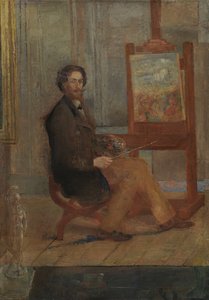
James Ensor
1860 - 1949 , België
Belangrijkste feiten
- Artistic Movement Or Style: Symbolisme, Expressionisme
- Artists Or Movements Influenced By This Artist:
- Bruegel
- Goya
- Expressionisme
- Artists Who Influenced This Artist:
- Bruegel
- Goya
- Whistler
- Date Of Birth: 13 april 1860
- Date Of Death: 19 november 1949
- Full Name: James Sidney Edouard Ensor
- Nationality: Belgische kunstenaar
- Notable Artworks:
- Masks Confronting Death
- Skeletons Fighting...
- Christ's Entry...
- Place Of Birth: Oostende, België
Gerelateerde artikelen

Oil on Canvas: The Professional Guide to Durable, High-Quality Art Reproductions for Hospitality and Large-Scale Interior Projects
A professional guide for hotel designers and procurement managers on selecting durable, high-quality oil on canvas reproductions. Learn about material longevity, custom multi-panel layouts, and efficient bulk ordering solutions for large-scale hospitality projects.


